
BEYOND VANITY METRICS: UNVEILING THE REAL ROI OF SOCIAL MEDIA MARKETING
In the world of social media marketing, it’s easy to get caught up in the allure of vanity metrics likes, shares, and follower counts. However, true social media roi and social media success isn’t just about visibility; it’s about tangible, measurable returns on investment (ROI). Today, we’ll delve into the real roi of social media, exploring how brands are leveraging marketing strategies, social media analytics, and data-driven tracking metrics that matter to drive meaningful business outcomes and connect social media efforts to real business growth.
Imagine a clothing brand that meticulously tracks their social media campaigns using google analytics and advanced analytics tools. By analyzing conversion rates, customer acquisition cost, and new customer acquisition alongside metrics like click-through rate, they discover that their Instagram ads targeting a specific audience segment generated a 20% increase in online sales compared to traditional print advertising. This actionable insight enables them to allocate resources more effectively, maximizing marketing roi and revenue generated.
Consider a tech startup that uses social listening tools to monitor online conversations about their products. By identifying pain points, addressing customer concerns in real-time, and tracking meaningful engagement, they strengthen customer relationships and improve brand perception. As a result, customer retention rates soar, translating into measurable lifetime value and long-term ROI, reflecting real growth.
Now, let’s explore how brands are moving beyond vanity metrics to unlock the real ROI of social media marketing and measuring social media roi:
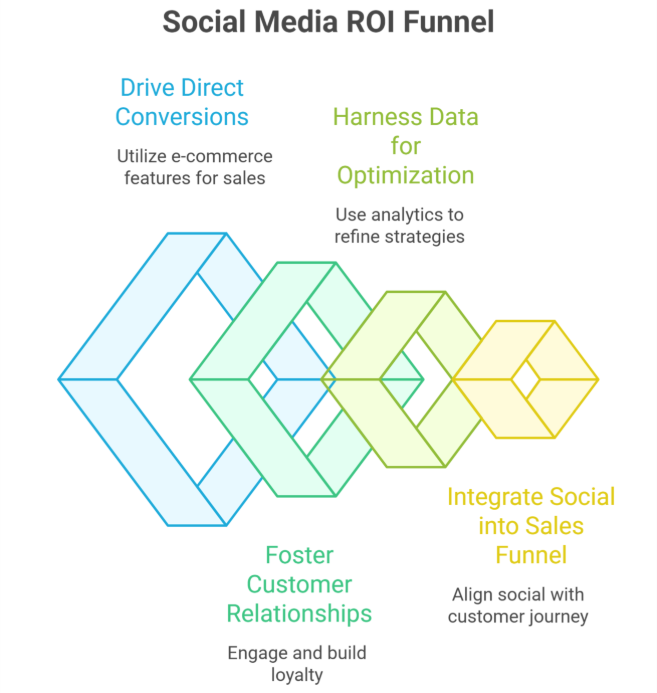
1. Driving Direct Conversions
Gone are the days when social media was solely a brand awareness tool. Today, platforms like Instagram and Facebook offer robust e-commerce functionalities, allowing users to discover, explore, and purchase products without leaving the app. Brands are leveraging these direct purchasing features to drive conversions and measure social media roi more effectively, making sure metrics like impression, click-through, and acquisition cost contribute to positive ROI.
Imagine a beauty brand that integrates Instagram Shopping into their social media strategy. By tagging products in posts and stories, they create a seamless shopping experience for their followers. As a result, they see a significant uptick in online sales directly attributed to their social media efforts, demonstrating clear roi metrics and measurable business results.
2. Fostering Customer Relationships
Social media isn’t just a broadcast channel; it’s a two-way conversation. Brands that prioritize engagement rate, meaningful metrics, and relationship-building see tangible returns in customer loyalty and advocacy, contributing to the real impact and actual business growth.
Take the example of a restaurant that actively engages with customers on Twitter. By responding to reviews, sharing user-generated content, and running interactive polls, they foster a sense of community and loyalty among their followers. This investment in relationships translates into repeat business, positive word-of-mouth referrals, and measurable roi data—key indicators of social media roi and business outcomes.
3. Harnessing Data for Optimization
Data is the cornerstone of effective social media marketing. Brands that leverage analytics tools, track metrics such as likes, and experiment with marketing campaigns to optimize social media analytics can improve metrics that reveal meaningful ROI.
Consider a fitness app that uses A/B testing to refine their ad copy and visuals on Facebook. By experimenting with different messaging strategies, they identify the most compelling approach that resonates with their target audience. This iterative optimization process leads to improved click-through rates, app downloads, and new customer acquisition, directly impacting roi calculation and marketing roi.
4. Integrating Social into the Sales Funnel
Successful brands understand that social platforms play a crucial role at every stage of the customer journey. By integrating social into the sales funnel from awareness to consideration to conversion and tracking social media, brands can attribute specific metrics to each stage and measure overall ROI more accurately, connecting your social activity to real business results.
Imagine a travel agency that runs a Facebook campaign targeting users who have expressed interest in vacation destinations. By retargeting these users with personalized offers, testimonials, and email marketing follow-ups, they drive qualified leads through the sales funnel, resulting in bookings, revenue generated, and positive marketing ROI directly attributable to their social media’s real roi.
Conclusion: Unlocking the True Value of Social Media Marketing
In conclusion, the real ROI of social media marketing extends beyond surface-level metrics like follower count, vanity metrics like likes, and metrics such as likes. Brands that focus on driving direct conversions, fostering customer relationships, harnessing data for optimization, and integrating social into the sales funnel see meaningful metrics, truly meaningful ROI, and tangible returns on their investment.
As we navigate the evolving landscape of digital marketing, let’s shift our focus from vanity metrics to metrics that actually matter, marketing activities that drive real business, and actionable metrics that reveal the true social media ROI. By adopting data-driven strategies, tracking metrics that matter, prioritizing engagement and conversion, and discovering how to measure social effectively, brands can unveil the real roi of social media marketing and maximize the impact of their digital presence, moving beyond vanity metrics to actual business growth.
Frequently Asked Questions (Beyond Vanity Metrics Unveiling the Real ROI of Social Media Marketing)
What are vanity metrics in social media?
Vanity metrics in social media are superficial measurements like likes, followers, or shares that appear impressive but don’t reflect real business impact. They don’t indicate engagement quality, conversions, or ROI, making them less useful for assessing the true effectiveness of marketing campaigns.
What is the ROI on social media marketing?
ROI on social media marketing measures the return generated from social media efforts compared to the investment made. It evaluates campaign effectiveness by tracking metrics like conversions, sales, lead generation, and engagement, helping businesses determine the financial impact and optimize strategies for better results.
How to prove ROI on social media?
To prove ROI on social media, track key metrics such as conversions, sales, leads, and website traffic generated from campaigns. Compare these results to the cost of advertising, tools, and resources used. Using analytics and attribution models helps demonstrate the tangible financial impact of social media efforts.
What is the 50 30 20 rule for social media marketing?
The 50-30-20 rule for social media marketing suggests allocating content strategy as follows: 50% valuable, educational, or informative content; 30% engaging or entertaining posts to build community; and 20% promotional content to drive sales or conversions, ensuring a balanced and effective social media presence.
Leave a Reply