
Why High-Revenue Shopify Stores Look Very Different After 2025
Why do some Shopify stores generate exceptional revenue while others stall despite using the same platform? The answer lies in multiple factors, including site performance, professional development, strategic integrations, and ongoing maintenance. As a shopify store owner, you may already rely on the Shopify platform, but without expert execution, even high-potential stores can underperform.
High-revenue Shopify stores look very different after 2025 due to strategic adoption of advanced integrations, performance-focused updates, and professional development practices. Store owners leveraging optimized shopify store design, AI-assisted workflows, and scalable infrastructure achieve higher profitability, better ecommerce performance, and long-term growth heading into 2026.
Performance is influenced by site architecture, loading speed, checkout optimization, and scalability. Professional development ensures your store is built for long-term growth, while good design, UX-focused layouts, and reliable support increase ecommerce conversions and customer trust. Maintenance and updates protect your investment, keeping your store competitive as Shopify evolves. For instance, while a basic setup may cost a few hundred dollars, a fully optimized, scalable store often requires higher upfront investment but delivers measurable returns over time.
This blog explores why high-revenue Shopify stores look very different after 2025, highlighting key changes that affect profitability, the impact of 2026 trends, and how strategic choices in design, integration, and development help store owners achieve sustainable growth in the evolving global ecommerce landscape.
How Shopify stores evolve for profitability in 2026
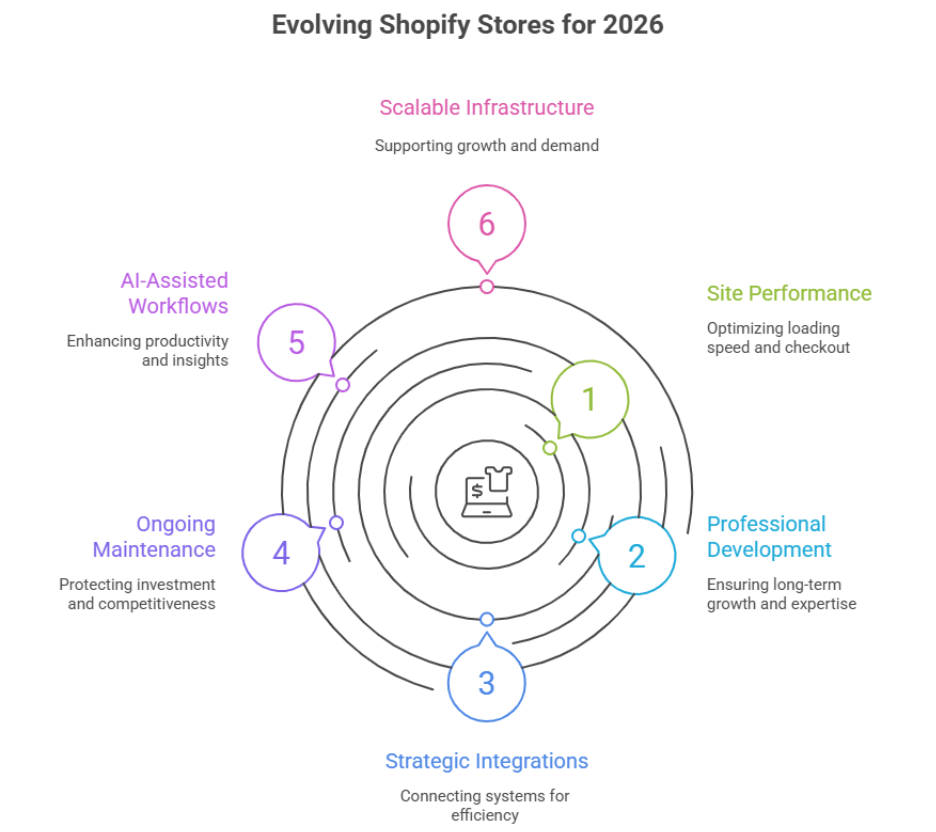
High-performing Shopify store owners know that profitability in 2026 depends on strategic evolution, not just platform adoption. The Shopify platform continues to expand, offering advanced integration options, scalable infrastructure, and tools that support global ecommerce growth. Businesses that adapt their workflows, design, and technology stack now are better positioned to achieve sustained revenue growth.
Leveraging Integrations for Enhanced Performance
Modern online stores thrive by connecting multiple systems through integration. From payment gateways and inventory management to loyalty programs and marketing automation, Shopify store owners can streamline operations and reduce manual effort. Efficient backend management improves order processing, while integrations with third-party apps from the app store enable faster implementation of features that directly impact profitability.
Optimizing Product Pages and Checkout
A focus on optimized product pages and streamlined checkout experiences drives higher conversions. Clear product descriptions, intuitive navigation, and responsive design ensure shoppers complete purchases efficiently. Shopify merchants who continually refine these elements see measurable revenue growth, particularly when leveraging analytics and Shopify in 2025 insights to anticipate trends in 2026.
Expanding Through Global Ecommerce
Expanding into global ecommerce markets allows Shopify store owners to increase gross merchandise volume (GMV) and overall sales. Multi-currency support, localized content, and region-specific payment processing help businesses tap into international audiences while maintaining profitability. Strategic integrations with shipping and tax tools further simplify cross-border operations.
Strategic Use of Shopify Plus and Advanced Features
For larger businesses, Shopify Plus provides advanced features such as custom APIs, automation, and high-volume processing capabilities. By leveraging these tools alongside a well-planned Shopify setup, store owners can scale efficiently while controlling costs. Integrating AI-powered analytics and marketing workflows ensures stores remain competitive and continue delivering profitability in 2026.
Continuous Monitoring and Adaptation
Sustaining profitability requires ongoing attention. Regular audits, performance checks, and updates to integrations or Shopify ecosystem tools keep the store optimized. Shopify store owners who invest in continual improvement are better prepared for shifting market demands, evolving consumer behavior, and the expanding opportunities within global ecommerce.
Key Shopify 2025 changes shaping global ecommerce growth
The landscape of global ecommerce shifted significantly in 2025, with changes that continue to influence how Shopify stores perform today. Understanding these updates is critical for store owners who want to remain competitive, optimize traffic and sales, and ensure their margins are tighter don’t compromise long-term growth.
Platform Enhancements Driving Efficiency
Several core updates to Shopify in 2025 improved operational efficiency and store management:
- Enterprise-grade tools: Larger Shopify websites gained better scalability and headless commerce options, allowing seamless integration with third-party systems.
- Seamless backend improvements: The Shopify dashboard was updated for streamlined workflows, reducing administrative burden for stores using Shopify.
- Transaction fees and shipping costs: Adjustments in transaction fees and optimized shipping costs encouraged more efficient operations and improved profit margins.
Marketing and Customer Engagement Updates
Shopify expanded its marketing capabilities, helping e-commerce store owners increase visibility and engagement:
- Social media integration: Tools for linking social media accounts including TikTok Shop boosted discoverability and sales volume.
- AI-driven insights: Integration of chatGPT and other AI-powered tools allowed store owners to refine product recommendations, improve brand presence, and optimize traffic and sales.
- Email and automation: Enhanced Klaviyo integrations provided better targeting for email campaigns and customer segmentation.
Design, Customization, and Store Appearance
Store aesthetics and flexibility became a major differentiator in 2025:
- Go custom and headless commerce: High-growth Shopify stores could implement unique designs, improving user experience and brand presence.
- Template and theme updates: Both standard Shopify stores and enterprise-grade solutions benefited from modern templates that make the store look professional and optimized for conversions.
- Top categories optimization: Adjustments in layout and navigation helped increase sales by emphasizing top categories for better shopper engagement.
Long-Term Impact on Profitability
- Tighter margins: Many Shopify store owners recognized that while profitability was achievable, margins are tighter, necessitating strategic updates and investment in professional shopify website management.
- Sustaining growth: Stores that adopted AI-driven analytics, streamlined shipping costs, and leveraged enterprise-grade tools continue to run a still a profitable business heading into Shopify in 2026.
Conclusion
High-revenue Shopify stores look very different after 2025 because success is no longer just about choosing a platform—it’s about strategic execution, professional development, and smart integration. Store owners who optimize design, streamline checkout processes, and leverage AI-driven insights achieve higher profitability, improved traffic and sales, and sustainable growth heading into Shopify in 2026.
The updates introduced in 2025 from enhanced backend efficiency and enterprise-grade tools to social media integration and headless commerce capabilities have reshaped the way shopify store owners operate. By adopting these changes, monitoring performance, and continuously refining workflows, high-growth stores maintain competitive advantage and maximize gross merchandise volume (GMV) while keeping margins tighter under control.
Ultimately, the stores that thrive are those that combine professional shopify website management with forward-thinking strategies, ensuring their e-commerce store remains scalable, adaptable, and still a profitable business well beyond 2025. Embracing these practices today positions your store to capture new opportunities, enhance brand presence, and sustain long-term success in the evolving global ecommerce landscape.
Frequently Asked Questions (Why High-Revenue Shopify Stores Look Very Different After 2025)
Are Shopify stores still profitable in 2025?
Yes Shopify stores are still profitable in 2025 if you execute well with strong products, marketing, and customer retention. Many merchants report average net profits around 15–30%, and some niche or branded stores earn much more, though results vary by strategy and effort.
Where will Shopify be in 5 years?
In 5 years (2030) Shopify is likely to evolve from a basic online store builder into a broader global commerce platform, powering payments, logistics, checkout APIs, and enterprise solutions, expanding internationally and across channels with strong AI integration and deeper ecosystem services.
What is the outlook for Shopify in 2025?
In 2025, Shopify’s outlook remains strong with robust revenue and growth, expecting mid-to-high-20% revenue increases and continued profitability through the year. It’s expanding AI tools, global reach, and merchant adoption, though growth may face competition and marketing cost challenges.
What is the highest earning Shopify store?
The highest-earning Shopify-powered store today is Herman Miller, with an estimated $821.7 million in revenue, followed by big brands like Peloton and waterdrop® also earning hundreds of millions annually. These are among the top-grossing Shopify stores in 2025.
Leave a Reply