What Webflow Designers Had to Unlearn in 2025
Why do some websites scale smoothly while others stall even when built on the same tools? The answer often lies not in the platform, but in the assumptions behind how it’s used. In 2025, many webflow professionals realized that success required unlearning habits that once felt efficient but no longer supported performance, scalability, or long-term growth.
In 2025, Webflow designers had to unlearn over-reliance on templates, visual-only decisions, and quick builds without scalability. They shifted toward performance-focused structures, AI-assisted workflows, cleaner interactions, and closer collaboration with developers to deliver websites that support long-term business growth.
Website performance is influenced by multiple factors: clean structure, optimized interactions, thoughtful animations, and how well ai-driven workflows are integrated. When these elements are handled without professional oversight, even visually impressive work can result in slow load times, poor conversions, and difficult maintenance. A skilled designer working alongside a developer understands that strong web design is not just about aesthetics it’s about systems, consistency, and measurable outcomes.
Businesses also began to recognize the real cost of shortcuts. A website priced at $500–$800 may look acceptable initially, but without proper support, updates, and optimization, it often demands costly fixes later. Strategic development, ongoing maintenance, and informed decision-making deliver far greater value over time.
This blog explores what webflow designers had to unlearn in 2025, how expectations changed, and which smarter design and development choices are shaping more sustainable digital results moving forward.
Webflow in 2025 Taught Startups Smarter Web Design Choices Toward 2026
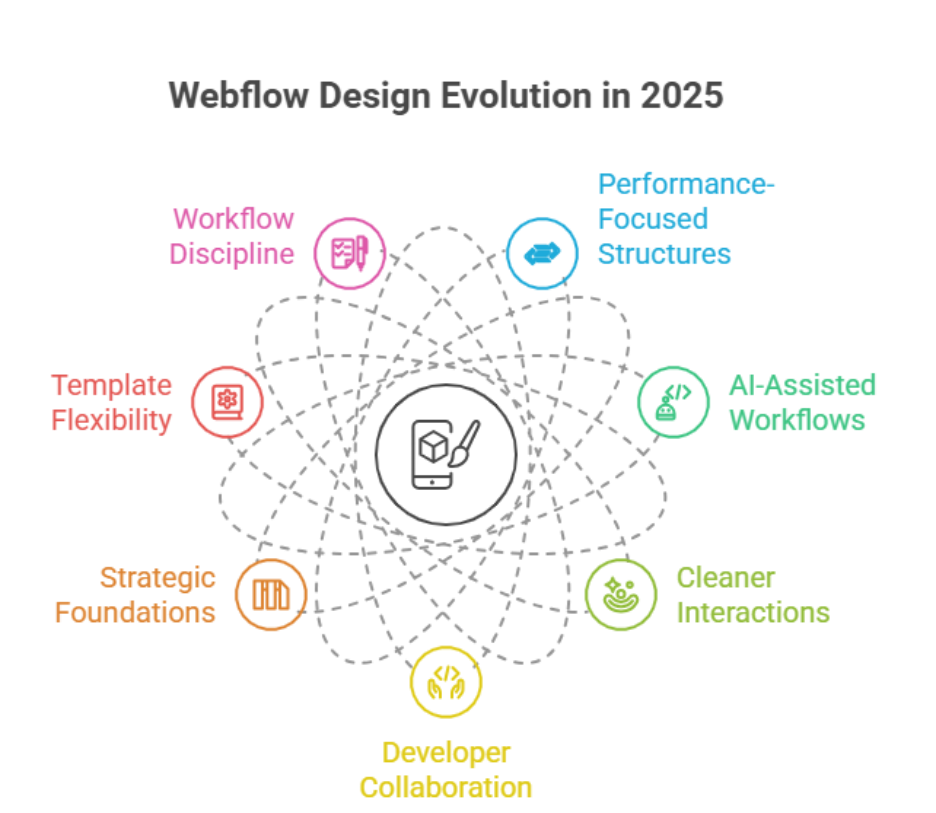
Startups Moved From Speed-First Builds to Strategic Foundations
For many early-stage companies, speed was once the main decision driver. Launch fast, adjust later. Webflow in 2025 challenged that mindset. Startups learned that rushed execution often created long-term inefficiencies especially when structure, scalability, and performance were ignored. Modern web design decisions began focusing on systems rather than screens, ensuring that early choices would not block future expansion.
Templates Became a Starting Point, Not a Strategy
A common lesson was understanding the role of a template. While templates helped accelerate launches, startups realized they should never dictate architecture. Over-customized templates frequently led to bloated layouts and inconsistent logic. Instead, teams adopted cleaner frameworks that supported flexibility, maintainability, and measurable outcomes as the business evolved.
Workflow Discipline Defined Sustainable Growth
Another major shift was the importance of a documented workflow. Startups stopped treating design and deployment as isolated tasks. Clear workflows improved collaboration, reduced rework, and created repeatable processes that could scale. This operational clarity directly influenced performance, stability, and long-term cost control especially when web design decisions aligned with business goals.
Designing With 2026 in Mind
By the end of 2025, a forward-looking startup no longer asked what worked now, but what would still work in 2026. The lesson was clear: smarter web design choices are those that anticipate growth, not just launch dates.
Conclusion
The lessons from Webflow in 2025 highlight that effective web design goes beyond aesthetics or speed it requires strategic thinking, disciplined workflows, and collaboration between designers and developers. Startups and businesses learned to move away from over-reliance on templates, rushed builds, and purely visual decisions, instead prioritizing scalable structures, AI-assisted workflows, and performance-driven design.
Investing in professional development, ongoing maintenance, and thoughtful design choices ensures websites not only launch successfully but continue to support growth into 2026 and beyond. Ultimately, the key takeaway for anyone learning Webflow in 2025 is that unlearning outdated habits is as important as adopting new tools and strategies delivering websites that are faster, cleaner, and more resilient for the long term.
Struggling to implement these smarter design strategies on your website? Why not contact Integriti Studio and get expert guidance today?
Frequently Asked Questions (What Webflow Designers Had to Unlearn in 2025)
Is Webflow still relevant in 2025?
Yes Webflow is still relevant in 2025. It’s widely used for professional, responsive, no‑code website design, with growing market adoption, advanced features, and strong performance and SEO tools. Its role in no‑code/AI‑assisted web development keeps it valuable for designers and businesses.
Do professional web designers use Webflow?
Yes, professional web designers use Webflow for client projects, startups, and agency work. Its visual no‑code interface, responsive design capabilities, CMS integration, and fast prototyping make it ideal for delivering polished, scalable websites efficiently, while still allowing custom code for advanced functionality.
Is Webflow still popular?
Yes Webflow is still popular in 2025. It powers millions of websites globally, has a growing user base, and continues increasing its market share among CMS platforms. Designers, freelancers, and businesses still choose it for no‑code, responsive web design and visual development.
Are Webflow designers in demand?
Yes Webflow designers are in demand in 2025. Businesses, agencies, and startups increasingly hire Webflow pros for fast, responsive, and custom websites. Job openings and freelance gigs continue growing as Webflow adoption rises, especially in no‑code development and digital design roles.
Leave a Reply