
Shopify Trends To Start Adapting Before 2026 Begins
Why do some brands grow faster on Shopify while others struggle to scale profitably? The difference rarely lies in the platform itself. It comes down to how performance, structure and long-term decisions are handled as competition increases toward 2026. From page speed and optimization to data flow and scalability multiple factors directly influence results across modern ecommerce environments.
Shopify trends to start adapting before 2026 include AI-driven personalization, faster checkout optimization automation headless commerce and performance-focused design. Brands investing in scalable Shopify development smarter shopper experiences and data-led ecommerce decisions will stay competitive and future-ready as 2026 approaches.
A professionally built Shopify store is no longer just a digital catalog. Strategic development thoughtful design systems, and consistent maintenance create real business value especially as shopper expectations rise in 2026. Smart personalization supported by ai helps brands adapt faster while poor execution increases costs over time. In practice, businesses often invest between $2,000–$5,000 for professional builds to avoid expensive fixes later. Shopify solutions planned correctly protect margins and reduce technical debt as 2026 approaches.
This blog breaks down key Shopify trends shaping 2026 explains what matters beyond features and shows how informed decisions help Shopify brands stay competitive resilient and ready for what’s next in 2026.
Shopify 2026 FAQ trends to watch shaping ecommerce future
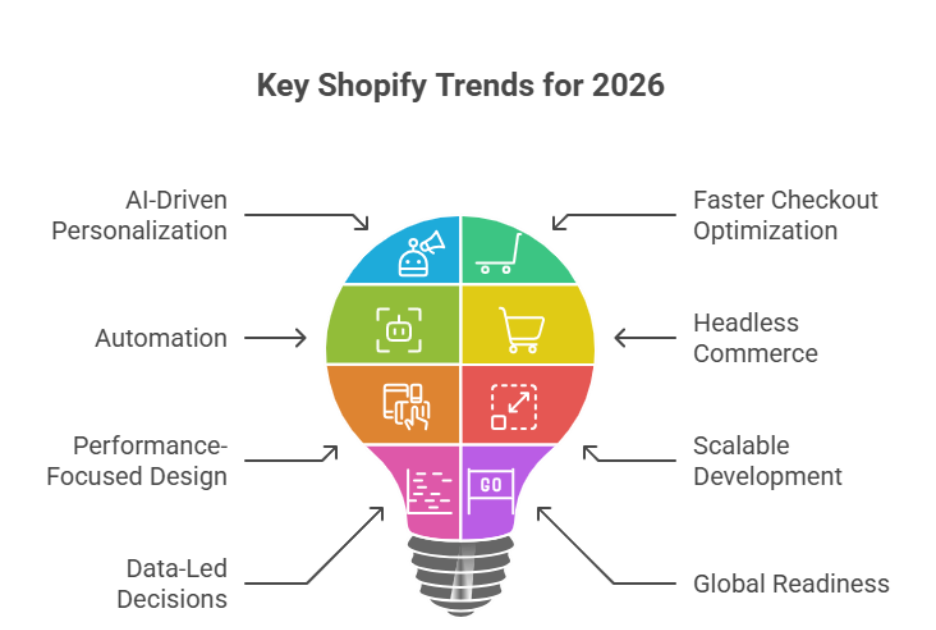
As 2026 approaches, many Shopify brands ask similar questions about scalability performance, and long-term growth. This faq section highlights the most important trends to watch not as predictions, but as trends shaping how modern ecommerce operates and competes globally.
Understanding What’s Driving Shopify in 2026
The ecommerce industry is evolving due to changing consumer behavior, rising competition and platform maturity. Insights from google trends show increasing demand for faster experiences, flexible architecture and global selling. These trends for 2026 reflect a clear shift toward smarter systems that support growth efficiency and adaptability.
Headless Commerce Becomes Strategic
One of the most impactful shifts is headless commerce, allowing brands to separate frontend experiences from backend systems. This approach helps Shopify brands deliver faster interfaces integrate a mobile app and align with unified commerce strategies. For larger operations, solutions like shopify plus make this transition more manageable.
Payments, Markets, and Global Readiness
Modern shoppers expect diverse payment methods, localized pricing, and seamless international access. Tools such as shopify payments and shopify markets support expansion while reducing operational friction. This enables business owners to respond to market demand and sell in 2026 with confidence.
What This Means for Store Owners
For every store owner planning a serious business plan, these top shopify development trends are no longer optional. Whether launching a new business, refining a product idea, or scaling an ecommerce store understanding the future of Shopify helps brands stay competitive improve customer experience and drive sustainable sales growth in 2026 Shopify ecosystems.
Personalization AI optimization for Shopify store shoppers in 2026
Personalization is no longer an advanced feature it is a core expectation. As shopper behavior evolves, AI-led personalization is shaping 2026 by redefining how brands build relevance loyalty and measurable growth across every ecommerce touchpoint.
Step 1: Understand Why Personalization Matters
In a competitive landscape a generic experience limits performance. AI-driven personalization allows an ecommerce store to respond to browsing behavior purchase history and intent in real time. This creates meaningful interactions that increase engagement and long-term value especially for a new business entering the market.
Step 2: Use Data to Guide Smarter Decisions
AI analyzes patterns faster than manual review ever could. Using insights from customer actions brands can recommend relevant products, optimize content placement and improve conversion paths. This step is essential to align personalization with real demand rather than assumptions.
Step 3: Apply AI Where It Impacts the Shopper Most
Focus personalization efforts on product discovery, homepage content and on-site messaging. These areas influence decision-making early and directly support stronger performance without overcomplicating the user journey.
Step 4: Operationalize Through Shopify Systems
Centralized data and workflows within the shopify admin help manage personalization efficiently at scale. When aligned with collaboration tools such as shopify collective, brands can extend personalization across partners while maintaining consistency.
Step 5: Build for Long-Term Growth
AI personalization is not a one-time setup it evolves as your business journey grows. When implemented strategically it helps brands adapt to ecommerce trends, respond to global ecommerce sales patterns, and deliver experiences that keep shoppers returning well beyond 2026.
Conclusion
Adapting to Shopify trends before 2026 is no longer optional it’s essential for brands aiming to stay competitive, scalable and profitable. From AI-driven personalization and headless commerce to optimized checkout experiences and smart use of shopify payments, every decision impacts shopper engagement sales growth and long-term sustainability. Investing in professional development thoughtful design, and robust maintenance ensures your ecommerce store performs at its peak while reducing costly fixes later. By leveraging data, automation, and modern shopify admin tools, brands can respond to evolving customer needs, global market demand, and emerging ecommerce trends, positioning themselves as leaders in 2026 Shopify ecosystems.
Now the tricky part are you ready to stay ahead of competitors and grow your Shopify store faster with expert guidance? Maybe it’s time to contact Integriti Studio and see how we can help your business adapt smarter before 2026.
Frequently Asked Questions (Shopify Trends To Start Adapting Before 2026 Begins)
Is Shopify still worth it in 2026?
Yes Shopify is still worth it in 2026 for many online sellers because it’s easy to set up, scales from small shops to big brands, and offers strong e-commerce tools, AI features, and multi-channel selling support. It has widespread use but costs and limitations should be considered.
Is Shopify profitable in 2026?
Yes Shopify is profitable in 2026 with strong revenue and free-cash-flow margins, continuing double-digit profitability even as it grows and invests in AI and expansion.
What is the future for Shopify?
The future of Shopify looks strong and evolving: it will keep expanding AI tools for automation, personalization, and store setup, improve omnichannel commerce, support headless and immersive shopping experiences, and grow internationally. It will remain a major e-commerce platform adapting to trends through 2026 and beyond.
What are the small business trends in 2026?
Small business trends in 2026 include AI-integration, e-commerce and omnichannel growth, remote/hybrid work, stronger cybersecurity, hyper-personalized customer experiences, and sustainability practices driving growth.
Leave a Reply