
WordPress vs. Shopify: Which Platform is Right for You?
Choosing the right e-commerce platform is crucial for online success. WordPress with WooCommerce and Shopify are two of the most popular website builders globally. Understanding their features, SEO capabilities, customization options, and custom vs off-the-shelf solutions will help you select the best platform to maximize online store growth and efficiency.
What is WordPress?
Over 40% of websites worldwide are powered by WordPress, an open source content management system. When paired with WooCommerce, it enables businesses to build fully customizable WordPress sites.
Through custom WordPress development, companies can create a custom-built online store using custom themes, plugins and themes, third-party integration, and unique code. WordPress website development services help businesses tailor functionality, design, and branding to meet business objectives while improving online presence.
What is Shopify?
Shopify is a comprehensive e-commerce platform designed for small businesses. Its user-friendly drag-and-drop interface and pre-built templates simplify building a website, management, and scaling as your business grows.
With Shopify app development, stores can expand features without dealing with custom code or complex maintenance, making it ideal for limited budgets.
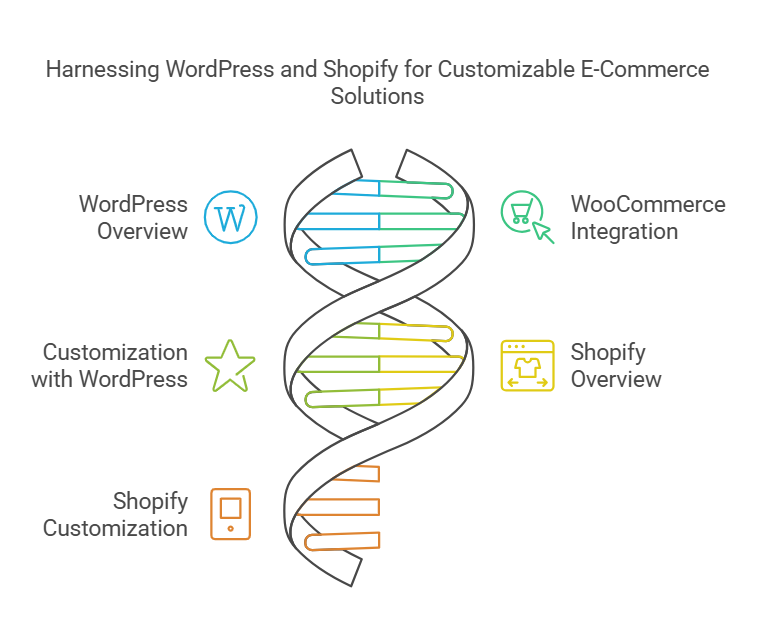 Key Differences Between WordPress and Shopify
1. Ease of Use
WordPress
Offers unmatched customization but requires technical knowledge of hosting, design, and WooCommerce. Using WordPress also requires maintenance to avoid vulnerability and performance issues, especially when using templates and plugins.
Shopify
Extremely user-friendly and handles hosting, security, and updates automatically. An ideal off-the-shelf solution for beginners.
2. Customization Options
WordPress
Provides almost unlimited customization through plugins, third-party tools, WordPress themes, and custom WordPress development. A fully custom WordPress website allows tailored solutions, advanced SEO, improved user experience, and designs tailored to your business.
Shopify
Uses pre-built platforms, themes, and apps. Experienced developers can add custom solutions, but customization is still limited compared to WordPress.
3. Cost
WordPress
The CMS is free. Costs depend on hosting, pre-built WordPress themes, plugins, or custom web development. It’s flexible for different budgets but may require a higher initial investment if opting for fully custom development.
Shopify
Subscription-based (starting at $29/month). Costs increase with premium apps and transaction fees. Works best for those who prefer off-the-shelf solutions without complexity.
4. SEO and Marketing Tools
WordPress
Excellent SEO through tools like Yoast and Rank Math. Ideal for content marketing, optimize performance, and long-term growth and success.
Shopify
Offers built-in SEO features and marketing tools. Good for beginners but less powerful than WordPress in terms of content management and deep customization.
5. Scalability
WordPress
Highly scalable with proper hosting and professional support. Fully custom development can help you create websites that grow with your business.
Shopify
Built for scalability without worrying about servers or security. A great pre-built platform that ensures faster load times and smooth performance.
When to Choose WordPress
WordPress is ideal for businesses that:
- Require extensive customization through WordPress website development services.
-
Want a store tailored to your business needs
-
Require strong blogging and content management
-
Prefer deep integration options and custom WordPress themes
When to Choose Shopify
Shopify is best for businesses that:
-
Prefer off-the-shelf themes and ready-made tools
-
Want a simple, user-friendly setup
-
Need built-in payments, shipping, and marketing
- Plan to rely on Shopify app development for enhanced functionality.
Real-World Examples
WordPress Use Case
A niche retailer wanting unique branding may choose WordPress with WooCommerce. Using custom WordPress development and custom code, they can build a store fully aligned with their brand identity and unique requirements.
Shopify Use Case
A beginner launching their first store may prefer Shopify. With pre-built themes, apps, and simple setup, they can focus on customers rather than technical tasks.
Conclusion
Both platforms are powerful. WordPress offers deep customization, custom-built solutions, and long-term scalability, while Shopify excels as a pre-built, off-the-shelf, easy-to-manage solution.
To make an informed decision , carefully analyze your needs and think about engaging with expert Shopify developers or WordPress.
Your choice depends on your business needs, budget, and technical skill level.Ready to launch a high-performing online store? Explore our custom WordPress development, Shopify services, and web solutions to build the best website for your business!
Frequently Asked Questions (WordPress vs. Shopify: Which Platform is Right for You?)
WordPress vs. Shopify: Which Platform is Right for You?
WordPress offers unmatched customization and flexibility, ideal for businesses wanting full control over design and functionality. Shopify excels in simplicity and eCommerce-focused features, perfect for those seeking a quick, secure, and scalable online store. Your choice depends on technical comfort, business needs, and growth plans.
Which platform is better than Shopify?
WooCommerce (with WordPress) is often better than Shopify if you want full control, lower long‑term costs, and customisation. It’s free to use, supports almost unlimited plugins and payment gateways, and gives you complete ownership of your data ideal for flexible, scalable and SEO‑focused stores.
Can I switch from WordPress to Shopify?
Yes, you can switch from WordPress to Shopify. The process involves migrating your products, content, and customer data, often using migration tools or expert services. Shopify simplifies store management, offers built-in hosting, and provides secure eCommerce features, making the transition smooth for growing online businesses.
Is Shopify still a thing in 2025?
Yes, Shopify is absolutely still a thing in 2025. Millions of businesses continue using it, its revenue and merchant base keep growing, and it’s still one of the most reliable, scalable eCommerce platforms. Brands choose it for ease of use, strong apps, and powerful sales features.
Leave a Reply