Category: Wordpress

  • Is Your WordPress Site Ready For 2026? A Simple Readiness Checklist

    Is Your WordPress Site Ready For 2026? A Simple Readiness Checklist

    Is Your WordPress Site Ready For 2026? A Simple Readiness Checklist

    Why do some WordPress websites perform flawlessly while others struggle with speed, security, and conversions? The difference is rarely the platform itself. It lies in how well your WordPress site is built, managed, and maintained as expectations rise in 2026. For business growth, relying on an outdated setup is no longer sustainable in 2026.

    A WordPress site ready for 2026 follows a clear checklist covering performance, SEO, security, hosting, mobile experience, backups, and AI-driven optimization. Regular updates, reliable support, and professional maintenance ensure faster loading, better rankings, higher conversions, and long-term stability for growing businesses.

    Website performance is influenced by multiple factors, including hosting quality, code standards, design decisions, and ongoing support. A professionally developed WordPress site integrates SEO, reliable host infrastructure, regular backup systems, and smart use of AI to maintain efficiency and scalability in 2026. Without a clear checklist, even strong brands risk slow performance, weak trust, and missed opportunities.

    Many business owners underestimate the real value of professional design, proactive maintenance, and technical support. While basic development may cost a few hundred dollars, long-term stability, security, and performance require a strategic investment backed by expertise and planning.

    This blog presents a practical checklist to assess whether your WordPress website is truly ready for 2026, outlining key areas to review, risks to address, and improvements that support sustainable business success.

    2026 WordPress SEO Checklist For Business Owners Platform
    2026 WordPress SEO Checklist For Business Owners Platform

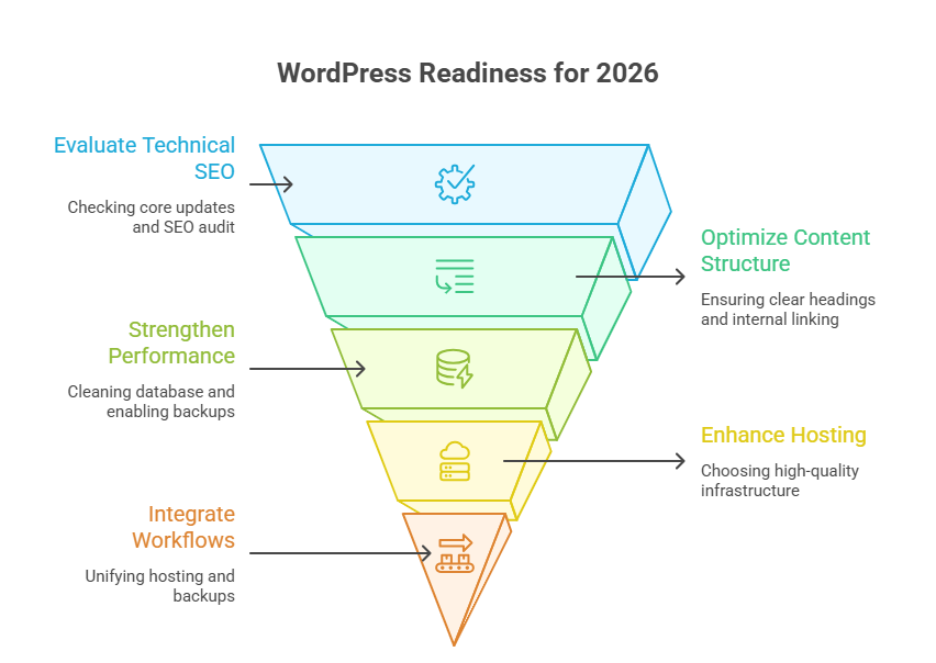
    Step 1: Evaluate Technical SEO Foundations

    website ready for search growth in 2026 and beyond starts with strong technical foundations. Begin by reviewing wordpress core updates to ensure no outdated software is exposing security vulnerabilities. Perform a full SEO audit covering ssl configuration, core web vitals, and proper cdn integration to reduce downtime. This step protects your site from hacker risks while improving visibility and crawl efficiency for search engines.

    Why it matters

    For business owners, technical gaps directly affect trust, rankings, and long-term stability. Ignoring these basics often leads to performance drops and hidden risks.

    Step 2: Optimize Content Structure And User Flow

    Search engines reward clarity and relevance. Review your service pages, blog posts, and faqs to ensure consistent format, clear headings, and strong internal linking. Strategic calls to action should guide users toward booking or inquiries without disrupting the user experience. Clean css, readable font, and logical page hierarchy strengthen accessibility and engagement.

    Step 3: Strengthen Performance, Data, And Reliability

    Effective performance optimization includes database cleanup, malware scanning, and enabling daily backups. Properly configure your hosting plan to support peak traffic and smooth mobile experience. A reliable workflow for updates and monitoring ensures stable functionality and protects revenue during traffic surges.

    2026 WordPress Host Backup Advantage Reducing Downtime Workflow

    A strong hosting setup is the first advantage in reducing website downtime and protecting business continuity. In 2026, hosting is no longer just about server space; it is about performance, security, and seamless integration across your WordPress workflow.

    Key hosting advantages

    • Use a latest stable server environment to prevent unexpected crashes
    • Choose high-quality infrastructure that supports traffic spikes during any marketing campaign
    • Enable automated monitoring to protect real user experience
    • Maintain secure admin accounts to limit unauthorized access
    • Build user trust through consistent uptime and fast response times

    Backup Systems That Minimize Risk And Recovery Time

    Backups are your safety net when technical failures occur. A structured backup strategy ensures fast recovery without data loss or reputational damage.

    Backup workflow best practices

    • Store backups in secure cloud storage for off-server protection
    • Schedule backups using automation to eliminate manual errors
    • Ensure compatibility with third-party tools and services
    • Regularly test restore points to avoid failed recovery scenarios

    Integrated Workflow For Downtime Reduction

    Hosting and backups should not operate in isolation. When you integrate them into a single workflow, recovery becomes faster and more predictable.

    Why integration matters

    • Simplifies technical operations through unified control
    • Reduces dependency on manual fixes during failures
    • Supports search visibility across platforms like Bing
    • Improves long-term reliability through seamless system alignment

    Conclusion

    Preparing yourWordPress website for 2026 is no longer a technical luxury it is a business necessity. From SEO foundations and content structure to hosting stability and backup workflows, every element discussed above directly impacts performance, security, user trust, and long-term growth. A clear readiness checklist helps you identify gaps before they turn into downtime, ranking loss, or missed conversions.

    For business owners, the real advantage lies in proactive decisions: keeping systems updated, integrating hosting and backups into a reliable workflow, and investing in professional oversight rather than reactive fixes. When these elements work together, your WordPress platform becomes scalable, resilient, and aligned with future expectations instead of struggling to catch up.

    Isn’t it time to see how Integriti Studio can strengthen your WordPress site for 2026?

    Frequently Asked Questions (Is Your WordPress Site Ready For 2026? A Simple Readiness Checklist)

    How to build a website checklist?

    To build a website, start with a clear purpose and target audience. Choose a domain and reliable hosting, plan your site structure, and design a responsive layout. Add quality content, optimize for SEO, ensure fast loading, implement security, and test across devices before launch.

    What are the 7 steps to building a good website?

    The 7 steps to building a good website are: 1) Define purpose and audience, 2) Choose domain and hosting, 3) Plan site structure, 4) Design responsive layout, 5) Create quality content, 6) Optimize for SEO and speed, 7) Test, secure, and launch.

    What is the basic information of WordPress?

    WordPress is a popular open-source content management system (CMS) used to create websites and blogs. It offers customizable themes, plugins for added functionality, and a user-friendly interface. WordPress supports SEO, responsive design, and content management, making it suitable for beginners and professionals alike.

    What are the requirements for a website?

    The requirements for a website include a clear purpose, target audience, and domain name. You need reliable web hosting, a responsive design, quality content, and user-friendly navigation. Additionally, SEO optimization, fast loading speed, security measures, and regular updates are essential for a successful website.
  • The New WordPress Skill Set Developers Needed By the End of 2025

    The New WordPress Skill Set Developers Needed By the End of 2025

    The New WordPress Skill Set Developers Needed By the End of 2025

    Why do some WordPress websites perform flawlessly while others face constant issues despite using the same platform? The difference often comes down to the skill set of the WordPress developer and their ability to implement effective WordPress development practices. Performance, scalability, and maintainability are shaped by coding quality, proper use of plugins, theme customization, and adherence to best practices.

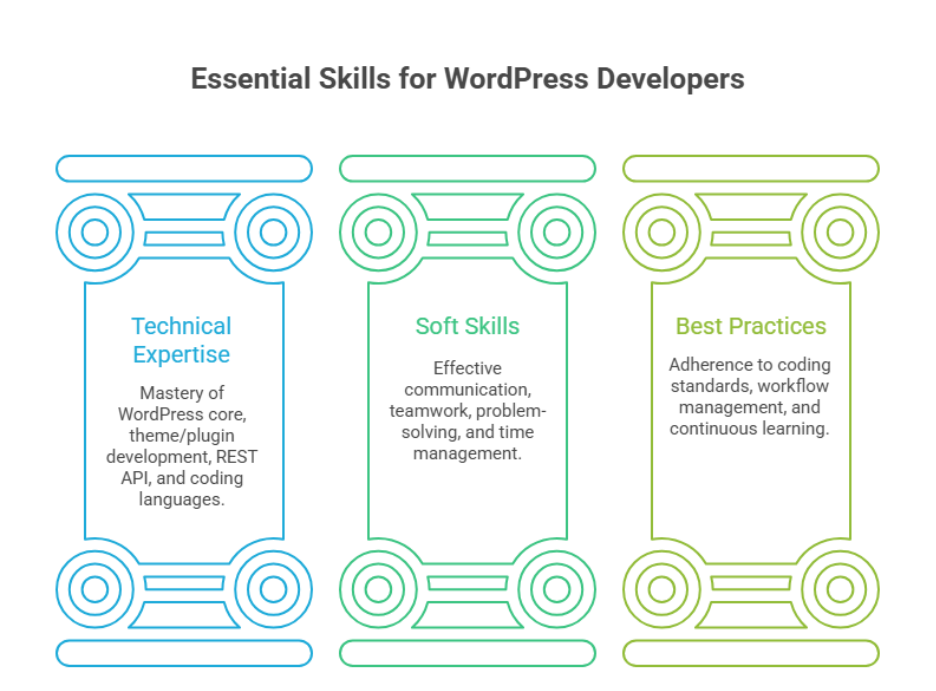
    By the end of 2025, successful WordPress developers need a combination of technical and soft skills, including expertise in WordPress development, plugin and theme customization, REST API integration, SEO best practices, and headless WordPress. Mastery of these areas ensures scalable, high-performing, and maintainable WordPress websites.

    As a WordPress developer, professional development is critical. Understanding how to optimize a WordPress site for speed, security, and SEO ensures long-term reliability. Good design, structured workflows, and ongoing WordPress maintenance not only improve user experience but also protect your investment. For example, while a basic setup may cost a few hundred dollars, hiring a skilled developer to create a robust, scalable site ensures sustainable performance and future-proofing.

    This blog explores the new WordPress skill set developers need by the end of 2025, highlighting technical competencies, soft skills, and emerging trends like headless WordPress and API integrations. You’ll learn which abilities set top developers apart, how to demonstrate your skills, and why mastering these areas is essential for a successful career as a WordPress developer.

    Essential WordPress development skills every developer needs 2025

    Essential WordPress development skills every developer needs 2025

    Step 1: Master WordPress Core

    Understand how the WordPress core works, including its architecture and database structure. This knowledge is essential for building custom WordPress solutions and maintaining WordPress websites efficiently.

    Step 2: Learn Theme and Plugin Development

    Develop skills to create and customize themes and plugins. This allows you to add unique functionalities and design elements, making your projects more versatile and client-ready.

    Step 3: Understand WordPress REST API

    Learn to integrate external applications and services using the WordPress REST API. This is crucial for building advanced features, headless WordPress setups, and modern workflows.

    Step 4: Strengthen Coding Skills

    Master PHP, HTML, CSS, and JavaScript. Writing clean, efficient code ensures scalability, performance, and easier debugging across WordPress development projects.

    Step 5: Follow Modern Development Practices

    Implement proper development workflow, use version control, and follow best practices. This improves collaboration, reduces errors, and maintains site security and performance.

    Step 6: Develop Soft Skills

    Enhance soft skills such as communication, teamwork, problem-solving, and time management. These skills are vital for working with clients, collaborating with other developers, and delivering projects successfully.

    Soft skills and best practices for WordPress developers

    Essential Soft Skills for WordPress Developers

    Soft skills are just as important as technical expertise. Effective communication, collaboration, problem-solving, and time management allow developers to work efficiently with clients, designers, and other team members. These skills help ensure that projects stay on track and meet expectations in a fast-paced modern WordPress development environment.

    Coding Standards and WordPress Architecture

    A deep understanding of WordPress architecture and adherence to coding standards is essential. Developers should write clean, modular, and maintainable code for theme and plugin development. Following best practices ensures that WordPress websites are secure, scalable, and easy to maintain over time.

    Workflow Management and Project Best Practices

    Maintaining a structured development workflow improves efficiency and reduces errors. Using version control, staging environments, and thorough testing allows developers to deliver reliable projects while keeping WordPress installations optimized and up to date.

    Continuous Learning and Adaptability

    The WordPress ecosystem evolves constantly, so developers must stay updated with new tools, technologies, and WordPress software updates. Continuous learning ensures they can implement modern solutions and remain competitive in the world of web development.

    Importance of Soft Skills and Best Practices in Career Growth

    Combining technical expertise with soft skills positions developers for a successful career as a WordPress developer. Skilled developers can deliver high-quality WordPress solutions, meet client expectations, and adapt to industry changes, making them valuable assets in any WordPress project.

    Conclusion

    By the end of 2025, WordPress developers need both technical expertise like theme and plugin development, REST API integration, and headless WordPress and soft skills such as communication and problem-solving. Mastering these ensures scalable, high-performing, and maintainable websites while supporting a successful WordPress career.

    Want to future-proof your site? Contact Integriti Studio.

    Frequently Asked Questions (The New WordPress Skill Set Developers Needed By the End of 2025)

    Which skills will be most required by 2025?

    By 2025, the most required skills include AI literacy, data analysis, cybersecurity, cloud computing, digital marketing, UX/UI design, automation, and problem-solving. Soft skills like adaptability, communication, and critical thinking will be equally important as technology continues to evolve rapidly across industries.

    What is the scope of WordPress in 2025?

    WordPress continues to be highly relevant in 2025, powering about 43 % of all websites and over 60 % of sites using a CMS, meaning huge demand for site creation, customization, e-commerce (WooCommerce) and content jobs. It’s a strong platform for freelancers, agencies and businesses globally.

    What skills should a WordPress developer have?

    A WordPress developer in 2025 should have PHP, JavaScript, HTML, CSS, and MySQL proficiency, plus experience with Gutenberg/block editor, theme and plugin development, REST API, WooCommerce, security, performance optimization, and basic SEO. Problem-solving, adaptability, and version control (Git) are also essential.

    Is WordPress still relevant in 2025?

    Yes WordPress remains highly relevant in 2025, powering around 43% of all websites and dominating the CMS market. With continuous updates, AI integration, full-site editing, and strong e-commerce support via WooCommerce, it stays a top choice for businesses, creators, and developers worldwide.

  • WordPress in 2026 which 2025 Changes Will Matter long-term

    WordPress in 2026 which 2025 Changes Will Matter long-term

    WordPress in 2026 which 2025 Changes Will Matter long-term

    Why do some WordPress websites scale smoothly while others struggle to keep up with business goals? The difference rarely lies in the platform itself. Website performance is shaped by multiple factors, including development quality, architectural decisions, long-term maintenance, and how well evolving technologies are adopted. As a site owner, you may already rely on WordPress for flexibility, but without professional execution, even powerful tools can underperform.

    WordPress in 2026 will be shaped by key 2025 changes, including enhanced AI integration, improved plugin ecosystems, and performance-focused updates from WordPress 6.9. Site owners who adopt professional development, maintain their builds, and leverage these tools will gain long-term business benefits, future-proofing their websites for real-time collaboration and growth.

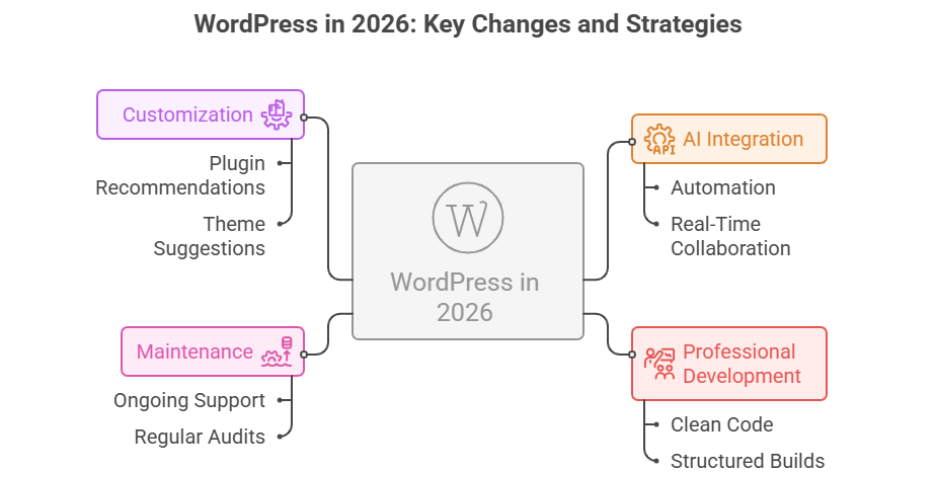
    Professional development plays a critical role in turning a website into a business asset. Clean code, structured builds, and informed updates ensure stability as platforms evolve. Good design is not only visual it improves usability, conversion flow, and trust. Ongoing support and maintenance protect your investment, especially when updates introduce new capabilities. For example, while a basic setup may cost a few hundred dollars, long-term-ready builds often require thoughtful planning and higher upfront investment to deliver measurable returns.

    Looking ahead to WordPress in 2026, the shifts introduced during 2025 and the growing role of ai will define which websites stay competitive. This blog explores which changes matter long-term, how WordPress adapts, and how smart decisions today support sustainable growth beyond 2026.

    How site owners rely on WordPress AI in 2026

    How site owners rely on WordPress AI in 2026

    As WordPress evolves, site owners are increasingly relying on WordPress AI to streamline workflows, enhance performance, and deliver better user experiences. The future of WordPress in 2026 will emphasize automation, real-time collaboration, and smart integrations, allowing businesses to achieve measurable business benefits while maintaining flexibility.

    AI Integration and Real-Time Collaboration

    One of the most significant 2025 changes is the integration of AI directly into the WordPress dashboard. With the abilities API and other AI tools, site owners can automate repetitive tasks, optimize content, and gain insights for performance optimization. Real-time collaboration features allow teams to work on WordPress websites simultaneously, improving efficiency and minimizing errors. This is especially critical for businesses relying on WooCommerce or multi-user blogging platforms, where content speed and accuracy directly impact revenue.

    Customization and Automation for Business Needs

    Modern WordPress development now supports custom development and AI-driven automation. For instance, a WordPress AI client can suggest plugins and themes, recommend performance optimization features, and help maintain core security and bug fixes. This reduces the dependency on expensive plugins and allows site owners to focus on content strategy and business needs rather than manual site management.

    Staying Updated with the WordPress Roadmap

    The WordPress AI team continues to evolve the platform based on feedback from the State of the Word 2025 report. By understanding the roadmap and future development, site owners can prioritize updates, adopt new features, and ensure their WordPress sites remain competitive. Leveraging AI for real-time collaboration, workflow management, and customization ensures that every site aligns with modern best practices while offering business benefits that extend well into 2026.

    Preparing for the Future of WordPress

    To maximize the advantages of WordPress AI, site owners should invest in training, regular audits, and customization aligned with their business needs. The combination of professional development, core platform enhancements, and AI-driven automation positions WordPress in 2026 as a platform where efficiency, innovation, and scalability converge. Companies that embrace these tools now will gain a competitive edge, ensuring that their WordPress websites deliver long-term value and measurable ROI.

    Conclusion

    The journey of WordPress in 2026 is built on the critical shifts introduced during 2025, from AI integration to improved plugin ecosystems and performance-focused updates. For site owners, success is no longer just about choosing a platform—it’s about leveraging professional development, smart customization, and AI-driven automation to maximize efficiency and deliver measurable business benefits.

    By staying updated with the WordPress roadmap, adopting real-time collaboration, and prioritizing structured maintenance, you can future-proof your WordPress website while enhancing user experience, security, and scalability. Thoughtful investment in design, development, and ongoing support ensures your site not only performs well today but continues to grow and adapt to emerging technologies.

    Ultimately, WordPress in 2026 rewards those who make informed, strategic decisions. By embracing AI, automation, and professional best practices, site owners can transform their WordPress websites into resilient, high-performing business assets that drive long-term value, efficiency, and competitive advantage.

    Frequently Asked Questions (WordPress in 2026 which 2025 Changes Will Matter long-term)

    Is WordPress still in demand in 2025?

    Yes WordPress is still in demand in 2025 because it powers around 43% of all websites worldwide and dominates the CMS market with over 60% share, keeping strong need for developers, designers, and site maintenance work.

    What is the future of WordPress?

    In 2025 and beyond, WordPress’s future is strong with AI-driven tools, full-site editing, and no-code design making site building easier, plus headless architecture and enhanced performance/security improvements keeping it modern and competitive for businesses, creators, and developers.

    Will AI replace WordPress?

    No AI won’t replace WordPress itself, but it will transform how sites are built and managed. AI can automate content, design suggestions, and basic tasks, but WordPress’s core platform, plugins, developers, and complex custom work remain essential into the future.

    How much does WordPress pay for 1000 views?

    On WordPress you don’t get a fixed pay per 1,000 views it depends on how you monetize your site. With ads (like AdSense), typical earnings are roughly $1–$8 per 1,000 views, and in top niches it can reach $10+ per 1,000 views. Premium ad networks or affiliate income can boost this further.

  • Lessons from wordpress in 2025 that will shape 2026

    Lessons from wordpress in 2025 that will shape 2026

    Lessons from wordpress in 2025 that will shape 2026

    Why do some WordPress websites thrive effortlessly while others struggle to convert visitors into customers? The difference often goes beyond the platform itself and lies in how a site is designed, built, and maintained. Factors influencing website performance such as optimization, user experience, and plugin integration play a critical role in determining whether your WordPress site can scale effectively.

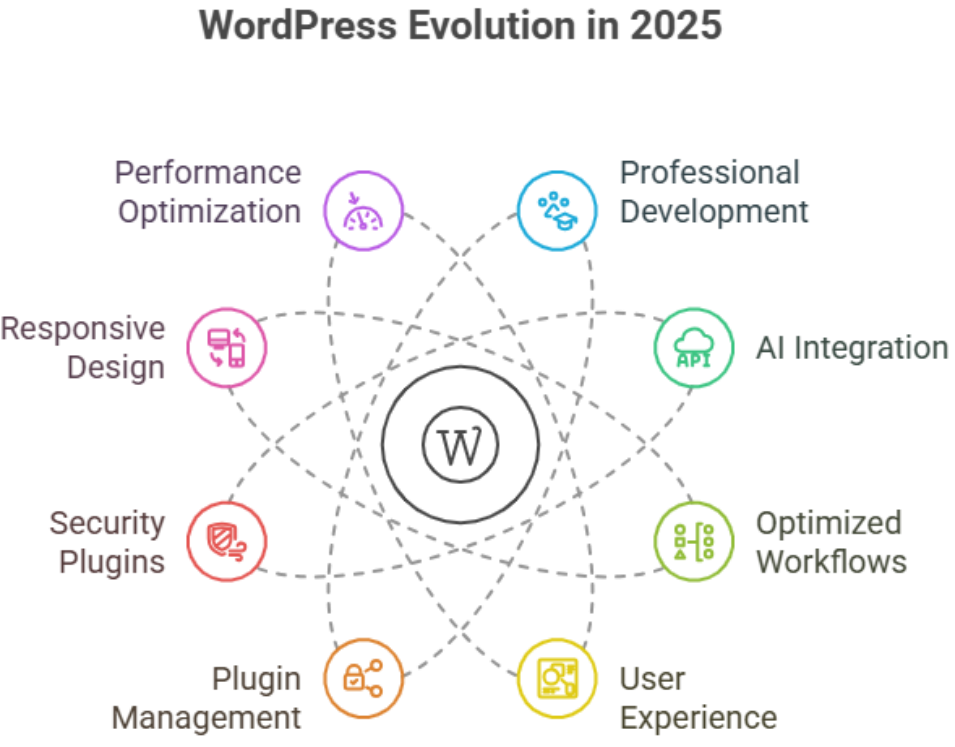
    WordPress in 2025 highlighted the importance of professional development, AI integration, and optimized workflows. Developers and site owners who focused on user experience, plugin management, and intuitive design gained a competitive edge. These lessons will shape 2026, guiding smarter site redesigns, efficient maintenance, and future-ready WordPress roadmaps.

    Professional development for developers and site owners is more important than ever. In 2025, we saw how investing in AI-powered tools, careful workflow planning, and advanced builder techniques not only speeds up development but ensures sites remain flexible for future updates. Good design, ongoing support, and maintenance deliver real value, helping avoid costly errors and downtime. For example, a professional WordPress redesign or plugin integration can vary in pricing, reflecting the complexity and level of expertise required.

    This blog will explore key lessons from WordPress in 2025, including practical insights for developers and site owners, the evolving role of AI, and strategies to optimize workflow, plugins, and overall functionality. By following these lessons, you can shape your roadmap for 2026 and ensure your WordPress projects are smarter, faster, and more future-ready.

    WordPress AI Tools Helping Developers with Real-Time Collaboration

    WordPress AI Tools Helping Developers with Real-Time Collaboration

    As WordPress continues to evolve, AI tools have become essential for developers aiming to streamline workflows, optimize performance, and enhance real-time collaboration. These tools allow developers and site owners to reduce errors, accelerate site redesigns, and ensure WordPress websites remain future-ready.

    How AI Tools Enhance Real-Time Collaboration

    AI tools enable multiple developers and site owners to work simultaneously on a WordPress website without conflicts. Tasks such as content creation, plugin customization, and code updates can now happen in a synchronized environment. This reduces bottlenecks during redesign phases and ensures new features are integrated efficiently.

    Optimizing WordPress Core and Plugins

    With AI-powered insights, developers can natively optimize WordPress core, themes, and plugins for performance and scalability. AI can suggest caching improvements, highlight redundant PHP code, and recommend strategies for performance optimization, creating smoother experiences for users.

    Streamlined Content and Feature Management

    AI tools assist with content creation and management systems, allowing site owners to maintain original content, blog posts, and product updates efficiently. This ensures that sites stay current with web design trends and align content with business objectives.

    Benefits for Site Owners and Developers

    For site owners, AI-enabled collaboration means faster redesign cycles, better portability of WordPress websites, and enhanced analytics. Developers gain seamless repository management, phase updates without disruption, and plan future development efficiently.

    A Strategic Investment for Long-Term Success

    Investing in AI tools is a powerful move for WordPress site owners and developers who want to optimize workflow, reduce reliance on freelance resources, and maintain a competitive edge. Every redesign, plugin integration, and core update is executed efficiently, saving time and costs.

    WordPress 2025 Insights Every Developer Needs for 2026

    WordPress in 2025 offered developers crucial lessons that will directly impact strategies and site performance in 2026. Understanding these insights ensures developers can deliver responsive, secure, and future-ready WordPress websites while optimizing workflows and enhancing real-time collaboration.

    Key Performance and Security Takeaways

    • Invest in Security Plugins: Implementing reliable security plugins in 2025 proved essential for safeguarding WordPress websites against emerging threats. Developers should continue prioritizing these tools in 2026.
    • Optimize for Responsiveness: Responsive design ensures websites perform well across devices, a non-negotiable expectation from users and site owners.
    • Performance Optimization: Efficient caching, code management, and AI-driven tools enhance speed and reliability.

    Enhancing Collaboration and Workflow

    • Real-Time Collaboration: 2025 highlighted how AI-driven real-time collaboration tools streamline teamwork between developers and site owners.
    • Project Management Integration: Embedding project management systems within WordPress workflows improves task tracking, deadlines, and transparency.
    • API Utilization: Leveraging APIs facilitates smoother integrations, especially for SaaS solutions and e-commerce platforms.

    Content and Design Strategies

    • Structured Content: Maintaining a clear content structure improves SEO, user experience, and manageability.
    • Preview Functionality: Allowing site owners to preview content in real-time reduces errors and speeds up the redesign process.
    • Portfolio and E-Commerce Sites: Specific design strategies from 2025 emphasize creating intuitive layouts for both portfolio sites and e-commerce platforms, enhancing engagement and conversions.

    Preparing for 2026

    By integrating lessons from WordPress 2025, developers can deliver smarter, more secure, and user-focused websites. Focusing on security plugins, responsive design, real-time collaboration, and AI-driven tools ensures that workflows are optimized and sites are future-ready, setting a strong roadmap for 2026.

    Conclusion

    The lessons from WordPress in 2025 provide a clear roadmap for success in 2026. Developers and site owners who embrace AI tools, prioritize real-time collaboration, and focus on performance optimization, responsive design, and security plugins are better positioned to deliver WordPress websites that are efficient, scalable, and user-focused. Investing in professional development, strategic workflow planning, and thoughtful site redesigns ensures that your WordPress projects remain future-ready, flexible, and aligned with business objectives. By applying these insights, you can not only streamline development and maintenance but also create websites that engage users, support growth, and maintain a competitive edge in the rapidly evolving digital landscape.

    Frequently Asked Questions (Lessons from wordpress in 2025 that will shape 2026)

    Why do some WordPress websites perform better than others?

    Performance depends on factors like optimization, user experience, plugin integration, and professional development. Sites with efficient workflows, responsive design, and strategic plugin management tend to convert better and scale more effectively.

    How is AI shaping WordPress development in 2025?

    AI tools enhance real-time collaboration, streamline content creation, optimize workflows, and provide insights for plugin and core management. Developers and site owners using AI can reduce errors and accelerate redesigns.

    What should developers focus on for WordPress in 2026?

    Developers should prioritize security plugins, responsive design, real-time collaboration, performance optimization, and future-ready workflows. Understanding lessons from 2025 ensures smoother site updates and better scalability.

    How important is professional development for WordPress site owners?

    Extremely important. Investing in learning AI tools, builder techniques, and best practices ensures site owners can maintain and optimize their websites efficiently while reducing reliance on external resources.

  • What WordPress Taught Us in 2025 About Better Websites 

    What WordPress Taught Us in 2025 About Better Websites 

    What WordPress Taught Us in 2025 About Better Websites

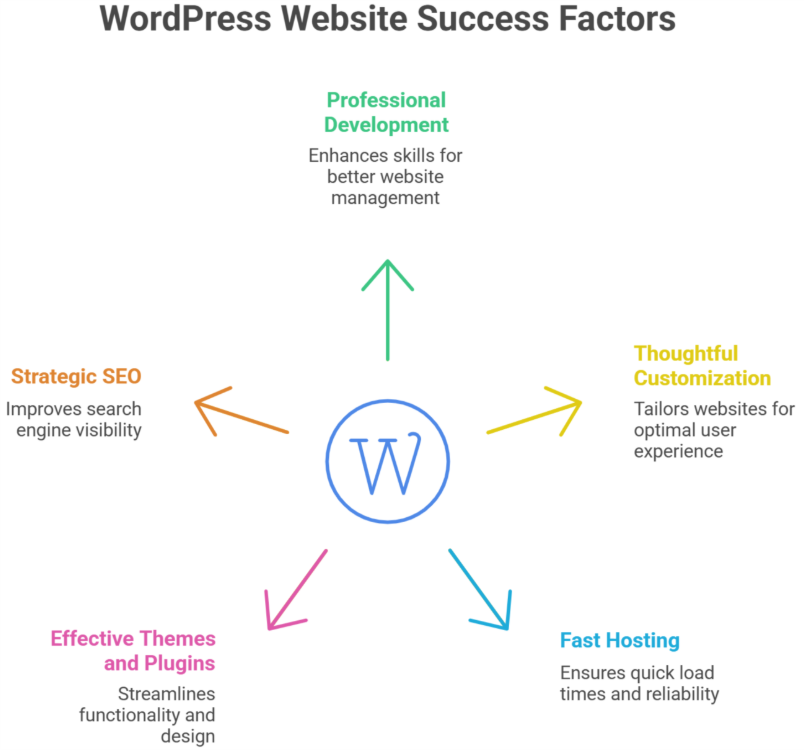
    Why do some WordPress websites consistently outperform others, even when built on the same platform? In 2025, the answer goes beyond simply choosing a website builder. Factors like professional development quality, thoughtful customization, fast hosting, effective use of themes and plugins, and strategic SEO all shape website performance. Even small differences in coding standards or plugin choices can influence load times, conversion rates, and user experience. 

    In 2025, WordPress taught us that website success depends on more than the platform itself. High performance, effective SEO, smart use of themes and plugins, professional development, and ongoing maintenance are key. A well-built WordPress website delivers better user experience, higher conversions, and long-term business value. 

    Working with professionals ensures that your WordPress site not only looks polished but functions seamlessly, with ongoing support and maintenance that protect your investment. High-quality design, robust plugins, and tailored customization are no longer optional—they directly impact your website’s ability to engage visitors and generate results. For perspective, basic professional development for a WordPress website often starts in the hundreds of dollars, while fully optimized ecommerce setups or customizations can scale higher depending on complexity. 

    This blog will explore what WordPress taught us in 2025 about building better websites. You’ll discover actionable insights on performance optimization, leveraging the right plugins, designing for usability, and maintaining long-term SEO and functionality. By the end, you’ll understand how to make informed choices when you use WordPress to grow your online presence effectively. 

    Why WordPress Thrives in 2025 for SEO 

    Why WordPress Thrives in 2025 for SEO 

    WordPress continues to dominate as the platform of choice for websites worldwide, and its SEO capabilities are a major reason why. In 2025, businesses, developers, and marketers recognize that WordPress gives you the tools to build websites that are not only visually appealing but also optimized for search engines. From flexible themes to advanced plugins, WordPress thrives by making SEO implementation accessible and effective. 

    Built-In SEO Advantages 

    One of the reasons WordPress is the best platform for SEO is its inherent structure. WordPress websites have clean, crawlable code, mobile-friendly themes, and semantic HTML—all crucial for search engine ranking. With thousands of free plugins and themes available, WordPress makes it easy to optimize meta tags, URLs, and content without deep coding knowledge. 

    Plugins That Enhance SEO 

    Tools like Yoast SEO, Rank Math, and other WordPress plugins help implement seo best practices efficiently. A well-chosen WordPress plugin can guide you through keyword optimization, XML sitemaps, structured data, and more. These capabilities make WordPress still worth using for both new websites and established online stores. 

    Flexibility for Different Types of Websites 

    Whether you are launching a blog, ecommerce site, or corporate website, WordPress can handle your needs. Self-hosted WordPress offers unmatched customization, letting you make WordPress development decisions that directly improve SEO performance. With headless WordPress, builders like Elementor, and new features in block editors, WordPress gives you the tools to tailor your site for both users and search engines. 

    Professional WordPress Hosting and Speed 

    Website speed and hosting are critical for SEO, and WordPress hosting providers now specialize in fast, secure, and optimized environments. WordPress websites benefit from caching, CDN integration, and automated updates that support both performance and search visibility. 

    Future of WordPress: Website Builder for Any Type 

    WordPress remains one of the most versatile platforms, allowing businesses and individuals to build websites globally with unmatched flexibility. Its future as a website builder is promising, catering to all kinds of websites from blogs and portfolios to ecommerce stores while supporting both beginners and professional developers. 

    Build Websites Without Coding 

    • WordPress excels in enabling users to build a site without writing a single line of code. 
    • Tools like the WordPress editor and page builders like Elementor allow you to design pages visually, giving a better user experience for both creators and visitors. 
    • Thousands of free and premium plugins like WooCommerce extend functionality, letting you manage online stores, memberships, and more. 

    SEO and Optimization Made Easy 

    • Plugins like Yoast SEO simplify search engine optimization, helping your website rank higher in search engines like Google. 
    • WordPress delivers the tools to optimize content, meta descriptions, and site structure, making it a choice for website owners who value performance. 

    Managed Hosting and Performance 

    • Managed WordPress hosting ensures fast load times, security, and automatic updates, reducing technical overhead. 
    • Websites using managed solutions enjoy stability, scalability, and better SEO results. 

    Global Community and Continuous Growth 

    • WordPress has a massive global community, offering support, tutorials, and innovations. 
    • With plenty of free resources and professional guidance, WordPress remains the best platform to build websites of any type. 
    • The ecosystem continues to evolve, making WordPress a reliable choice for website builders worldwide. 

    Conclusion 

    WordPress in 2025 continues to prove why it is the best choice for building websites of any type. From robust SEO capabilities and flexible themes to powerful plugins and managed hosting, WordPress delivers the tools and features needed for high-performing, user-friendly websites. Its ease of use, combined with a massive global community and ongoing innovation, ensures that businesses can create, optimize, and maintain websites efficiently. 

    With professional development, thoughtful customization, and best practices in SEO and performance, WordPress still remains a top platform for achieving long-term digital success. 

    So, if WordPress gives you everything you need, why do some websites still underperform? 

    Frequently Asked Questions (What WordPress Taught Us in 2025 About Better Websites )

    What is the future of WordPress in 2025?

    In 2025, WordPress stays dominant as the world’s top CMS with strong market share and growth. It evolves with AI-powered tools, full-site editing, headless options, better performance, and security, making sites faster and smarter for blogs, businesses, and eCommerce.

    What is the best way to build a website in 2025?

    The best way to build a website in 2025 is to choose the right platform based on goals WordPress, Webflow, or Shopify—focus on performance, mobile-first design, SEO, and accessibility, and use AI tools, clean code, and professional customization to ensure scalability, speed, and long-term growth.

    Which of these is a future of WordPress?

    The future of WordPress includes AI-powered content creation, full-site editing, improved performance and security, headless WordPress adoption, and deeper SEO integration. These advancements allow businesses to build faster, more scalable, and highly customizable websites while maintaining flexibility for evolving digital and marketing needs in 2025 and beyond.

    Is WordPress the future of web design?

    WordPress remains a strong part of the future of web design, but not the only one. In 2025, its flexibility, open-source ecosystem, AI integrations, and customization options keep it relevant, while modern tools like Webflow and headless frameworks complement different design and performance needs.

  • How wordpress sites really evolved in 2025 

    How wordpress sites really evolved in 2025 

    How wordpress sites really evolved in 2025 

    Why do some businesses see strong returns from their WordPress investment while others struggle to scale, convert, or even stay stable? The answer is rarely the platform itself. Performance gaps usually come from development quality, structure, and long-term planning—not from using the wrong system. 

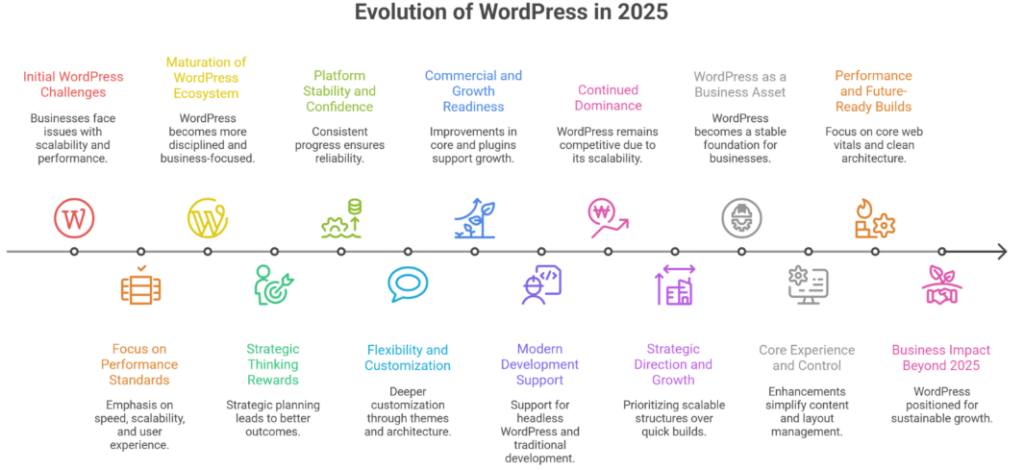
    WordPress sites in 2025 evolved through better performance standards, cleaner development practices, and smarter use of modern tools. Businesses focused more on speed, scalability, and user experience, treating WordPress as a long-term platform rather than just a quick website solution. 

    WordPress matured into a more disciplined, business-focused ecosystem. In 2025, a well-built wordpress site depended on clear architecture, thoughtful customization, reliable hosting providers, and clean php foundations. Speed, seo readiness, and measurable user experience became outcomes of professional decisions, not afterthoughts. When budgets are unclear, even a typical setup ranging from basic builds to premium implementations can deliver very different results based on expertise. 

    WordPress continues to power serious digital operations because wordpress still rewards strategic thinking. A second wordpress site built with the same tools can outperform the first when design, support, and maintenance are handled correctly. WordPress today is less about shortcuts and more about precision. 

    Why Businesses Still Rely on WordPress Websites Today

    Why Businesses Still Rely on WordPress Websites Today

    Step 1: Platform Stability and Long-Term Confidence 

    Updates shared during state of the word 2025 and earlier state of the word sessions showed consistent progress, not disruption. The word 2025 recap reinforced that wordpress is still built for longevity, making it a reliable foundation for growing businesses. 

    Step 2: Flexibility Beyond a Basic Website Builder 

    Compared to a typical website builder, WordPress allows deeper customization using wordpress themes and scalable architecture. Many high-performing platforms run on wordpress because it adapts as business needs evolve. 

    Step 3: Commercial and Growth Readiness 

    With ongoing improvements to wordpress core, businesses extend functionality through wordpress plugins and woocommerce without sacrificing performance. This ecosystem explains the strong market share WordPress maintains today. 

    Step 4: Modern Development Without Lock-In 

    Support for headless wordpress and traditional web development gives teams freedom to build smarter. In wordpress in 2025, this balance is why wordpress powers serious digital operations. 

    Step 5: Why It Continues to Win 

    wordpress isn’t restrictive it scales. wordpress still wins because it offers control, flexibility, and a clear path forward. wordpress websites built with purpose remain competitive, raising the question businesses now ask: what’s next? 

    What WordPress Sites Will Look Like Next After 2025 

    Strategic Direction and Platform Growth 

    • Businesses using wordpress will prioritize scalable, performance-driven structures over quick builds. 
    • wordpress  reflects the broader future of shaping digital strategies in 2025 and beyond. 
    • WordPress continues evolving as a dependable website platform for long-term growth. 

    WordPress as a Business Asset 

    • Many organizations rely on wordpress as a stable foundation rather than a temporary solution. 
    • For small businesses, this means predictable costs, easier expansion, and reduced platform switching. 
    • WordPress remains relevant because it adapts to changing business needs. 

    Core Experience and Site Control 

    • Enhancements inside the wordpress dashboard simplify content and layout management. 
    • Full site editing enables consistent design control without complex redevelopment. 
    • As an open source content management system, WordPress aligns with the values of the open web. 

    Performance and Future-Ready Builds 

    • Future WordPress sites emphasize core web vitals, clean architecture, and maintainable setups. 
    • Modern builds reduce dependency on outdated plugins and focus on stability. 
    • These changes define what modern wordpress looks like for serious businesses. 

    Business Impact Beyond 2025 

    • wordpress today is positioned for sustainability, not experimentation. 
    • Its continued role in the wider web ecosystem shows why WordPress remains a practical, future-ready choice well beyond 2025. 

    Conclusion 

    WordPress in 2025 proved that long-term success is not driven by the platform alone, but by how intentionally it is planned, built, and maintained. Businesses that invested in structure, performance, and professional development saw WordPress evolve from a simple website tool into a reliable digital foundation. Those results came from cleaner architecture, smarter customization, and decisions aligned with real business goals—not shortcuts. 

    As WordPress matured, it became clear that scalability, stability, and user experience are outcomes of disciplined execution. From improved core capabilities to modern workflows and future-ready builds, WordPress now supports growth at every stage. When treated as a strategic asset rather than a quick solution, it continues to deliver measurable value. 

    Looking ahead, WordPress remains positioned for sustainable growth beyond 2025.  

    Is your WordPress site fully optimized for speed, scalability, and modern workflows—and are you leveraging expert guidance from Integriti Studio to unlock its full growth potential? 

    Frequently Asked Questions (How wordpress sites really evolved in 2025 )

    What is the future of WordPress in 2025?

    In 2025, WordPress continues to evolve as a flexible, AI-friendly website builder. With faster performance, improved security, and seamless integration with automation tools, it supports both small businesses and large enterprises. Its future lies in smart, scalable websites that balance design, speed, and functionality for long-term growth.

    Is WordPress a good career in 2025?

    Yes, WordPress remains a strong career choice in 2025. With growing demand for custom websites, e-commerce, and AI-integrated solutions, skilled developers, designers, and SEO specialists can build profitable opportunities. Continuous learning and mastering advanced plugins, performance optimization, and security practices make WordPress expertise highly valuable.

    How many websites use WordPress in 2025?

    In 2025, about 43–44% of all websites globally use WordPress, which translates to roughly 500–600 million websites powered by the platform worldwide, making it the most widely used web platform on the internet.

    How to build a WordPress website in 2025?

    To build a WordPress website in 2025, choose a reliable hosting provider and install WordPress. Select a responsive theme, customize it with the block editor or AI-assisted tools, add essential plugins for SEO, security, and performance, then create content. Finally, optimize and launch for mobile and speed.

  • WordPress in 2025 what changed what worked & what’s next 

    WordPress in 2025 what changed what worked & what’s next 

    WordPress in 2025 what changed what worked & what’s next 

    Why do some WordPress sites thrive while others struggle to deliver results? Performance is not accidental it depends on factors like server reliability, plugin efficiency, theme choices, and overall workflow. For businesses navigating WordPress in 2025, understanding these elements is essential to avoid unnecessary loss and ensure a platform that supports growth. 

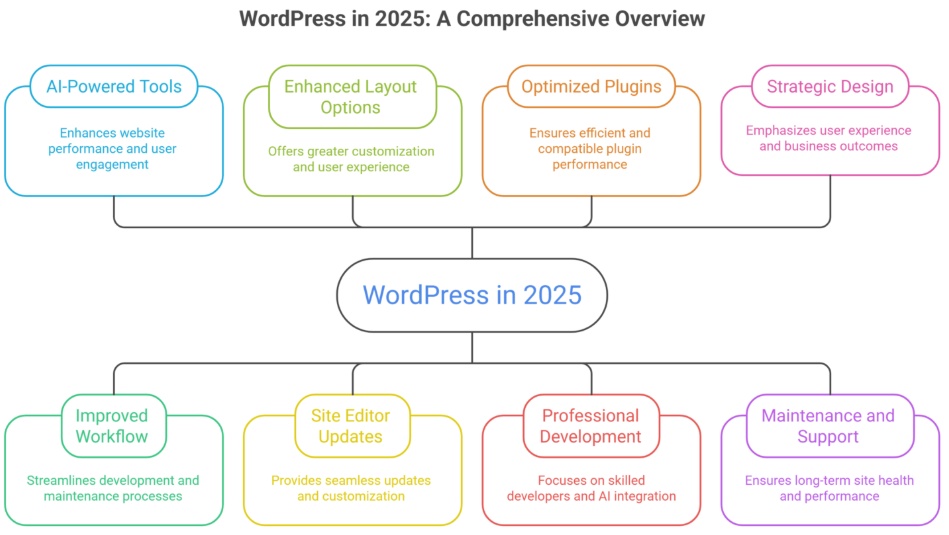
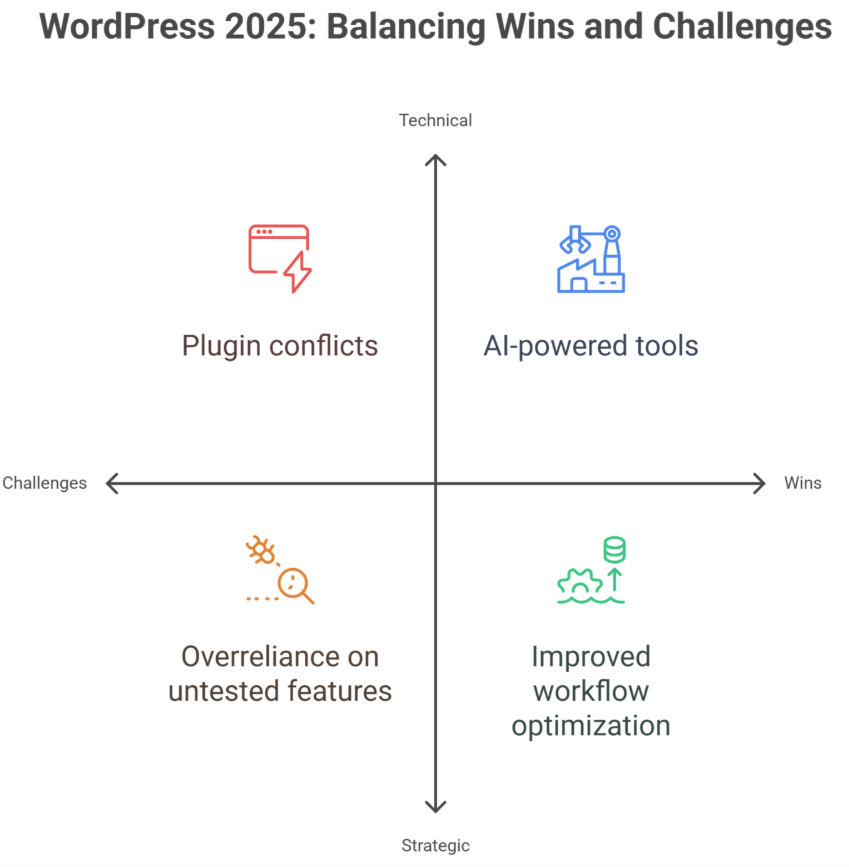
    WordPress in 2025 introduced AI-powered tools, improved workflow, and enhanced layout options, helping websites perform better and engage users. Wins include seamless site editor updates and optimized plugins, while misses involve occasional compatibility issues. Key lessons highlight professional development, maintenance, and strategic design for long-term success. 

    Professional development remains a key differentiator. Investing in skilled developers allows you to leverage AI-powered features, optimize coding standards like PHP, and maintain seamless updates using tools like Gutenberg and the site editor. A well-trained team ensures that design, layout, and user experience are not compromised, turning technical wins into measurable business outcomes. 

    Good design, thoughtful support, and consistent maintenance translate into real value higher engagement, faster load times, better caching, and streamlined workflow. Even small projects can range from a few hundred to several thousand dollars depending on customizations, plugins, and built-in features, reflecting the actual costs behind a high-performing WordPress site

    Key Changes in WordPress 2025 Every Developer Should Know 

    Key Changes in WordPress 2025 Every Developer Should Know 

    WordPress in 2025 continues to evolve, introducing features and workflows that developers need to understand to stay ahead. Here’s a structured overview: 

    WordPress 6.9 and Core Updates 

    • WordPress 6.9 launched with enhanced global styles, better CSS customization, and smoother full site editing. 
    • WordPress core improvements improve page load speed, reduce plugin conflicts, and make sites easier to manage. 
    • Size presets in WordPress 6.9 and radius presets allow faster design adjustments for developers and designers. 

    Full Site Editing and Block Themes 

    • Full site editing expands customization, letting developers control headers, footers, and layouts via the site editor. 
    • Block themes and block patterns streamline web development, offering pre-built design sections that simplify workflow. 
    • Accordion block and other new blocks enhance WordPress web development capabilities for dynamic content. 

    Headless WordPress and API Integrations 

    • Headless WordPress enables developers to build decoupled websites, integrating with modern frameworks for faster performance. 
    • New APIs allow seamless integration with AI tools, third-party apps, and website builder extensions. 
    • Improves flexibility for WordPress hosting and multi-platform deployment. 

    Developer Tools and Workflow Enhancements 

    • WordPress developer blogs now share updates on best practices, new WordPress 6.9 features, and future of WordPress trends. 
    • Playground environments and testing tools allow developers to experiment safely without affecting live sites. 

    What’s Next for WordPress in 2025 and Beyond 

    • Continued evolution towards headless architectures and AI-powered web development. 
    • Enhanced block themes, global styles, and improved pages load performance. 
    • Developers should prepare for WordPress 7.0, focusing on flexibility, scalability, and modern workflows. 

    WordPress 2025: Year in Review and Recommendations 

    WordPress in 2025 introduced key updates, AI-driven tools, and workflow improvements that impacted development, design, and maintenance. Understanding these changes helps you optimize your website strategy and make informed decisions for the future. 

    Key WordPress Development Wins 

    WordPress Development saw improved workflows with AI tools and collaborative editing. Integration with Shopify and Webflow enhanced cross-platform compatibility, while custom CSS and updated APIs made it easier for developers to create personalized, high-performing websites. 

    Design Improvements and User Experience 

    WordPress Design gained new blocks and border radius size presets, improving layout flexibility. Real-time previews and collaborative editing enhanced user experience, while optimized core web vitals ensured faster loading and smoother navigation. 

    Maintenance and Performance Enhancements 

    WordPress Maintenance became more proactive with automated updates and better plugin compatibility. Built-in caching and AI-powered monitoring help maintain site health and performance, making long-term upkeep simpler and more efficient. 

    Cross-Platform and Strategic Recommendations 

    Integration with Shopify and Webflow platforms expands e-commerce and multi-site management. Investing in training, AI tools, and optimized workflows allows businesses to leverage the WordPress ecosystem effectively and prepare for future releases. 

    Conclusion 

    WordPress in 2025 has proven that success depends on understanding both its opportunities and challenges. AI-powered tools, improved workflows, full site editing, and enhanced layouts are clear wins, while plugin conflicts and compatibility issues highlight areas requiring careful attention. Key lessons emphasize professional development, strategic design, and proactive maintenance to ensure your website remains high-performing, user-friendly, and future-ready. 

    By leveraging WordPress DevelopmentWordPress Design, and WordPress Maintenance, along with integrations across Shopify and Webflow, businesses can build scalable, cross-platform websites that drive engagement and improve overall performance. Adopting these best practices and preparing for future updates ensures your website continues to evolve with the platform, delivering measurable results over time. 

    Ready to transform your WordPress site and maximize its potential? Contact Integriti Studio today to discuss how our expert team can enhance your website, streamline workflows, and help you achieve long-term success. What’s the first improvement you’d like to see on your site? 

    Frequently Asked Questions (WordPress in 2025 what changed what worked & what’s next)

    What is the scope of WordPress in 2025?

    The scope of WordPress in 2025 is strong and expanding. It powers a large share of websites, supports AI integrations, e-commerce, and custom development, and remains in demand for businesses, freelancers, and agencies due to its flexibility, scalability, and cost-effectiveness across industries.

    What is the future of WordPress?

    The future of WordPress is promising, with continued focus on AI-powered tools, performance optimization, and full-site editing. It will remain a leading platform for content, e-commerce, and custom websites, supported by a massive global community, open-source innovation, and ongoing adaptability to modern web standards.

    How much does WordPress pay for 1000 views?

    WordPress does not pay for 1,000 views directly. Income depends on how you monetize your site, such as ads, affiliates, or sponsorships. With ad networks like Google AdSense, 1,000 views usually earn around $1–$5, varying by niche, traffic quality, and visitor location.

    How to build a WordPress website in 2025?

    To build a WordPress website in 2025, choose reliable hosting, install WordPress, and select a lightweight theme. Use block or AI-powered editors for design, install essential plugins for SEO, security, and performance, then create optimized content and test responsiveness before launching.

  • WordPress 2025 review wins misses & hard lessons 

    WordPress 2025 review wins misses & hard lessons 

    WordPress 2025 review wins misses & hard lessons

    Why do some WordPress sites thrive while others struggle to deliver results? Website performance isn’t accidental it’s shaped by multiple factors, from server host reliability and theme choices to plugin efficiency and workflow optimization. For businesses navigating WordPress in 2025, understanding these elements is critical to avoid unnecessary loss and ensure a platform that supports growth. 

    WordPress 2025 shows significant wins with AI-powered tools, improved workflow, and enhanced UI, helping websites perform better and engage users. Misses include plugin conflicts, theme limitations, and occasional update issues. Key hard lessons emphasize professional development, proper maintenance, and strategic design to ensure long-term site success. 

    Professional development plays a pivotal role. Investing in skilled developers and designers allows you to leverage the latest AI-generated tools, optimize coding standards, and maintain seamless updates without breaking your site. Good design, thoughtful support, and consistent maintenance translate into tangible business value higher engagement, better SEO ranking, and improved conversion rates. Even small projects can see pricing ranging from a few hundred to several thousand dollars depending on customization and premium plugin usage, reflecting the real costs behind quality WordPress sites. 

    This blog will provide a detailed WordPress 2025 review, highlighting wins, misses, and hard lessons learned. You’ll explore technical insights, workflow improvements, AI tools, and platform updates, along with actionable guidance to help you make informed decisions that evolve your website strategy and maximize long-term success. 

    Challenges and Hard Lessons for Smart WordPress Decisions 

    Challenges and Hard Lessons for Smart WordPress Decisions 

    Navigating WordPress in 2025 requires understanding both its strengths and challenges. While WordPress continues to dominate the CMS market and remains a preferred website builder, businesses face hurdles that can impact performance, user experience, and growth. 

    Plugin and Theme Bloat 

    • Excessive plugins or heavy themes create bloat, slowing down websites and increasing friction during updates. 
    • Gutenberg blocks and block editor offer flexibility, but poor implementation can hurt UI and site performance. 

    Workflow and Maintenance 

    • Regular backup routines and security updates are essential to prevent data loss or costly rebuilds. 
    • AI tools and AI-generated websites can improve workflow, but oversight from a skilled designer or developer is critical. 

    Adapting to Trends 

    • WordPress in 2025 must align with social media apps, mobile apps, and AI-driven solutions to stay competitive. 
    • Overreliance on untested features can create friction and interface issues despite potential engagement gains. 

    Strategic Lessons 

    • Balancing flexibility with performance ensures smoother WooCommerce setups and better cache efficiency. 
    • Observing market share and CMS trends helps predict which features will remain relevant and reduce rebuild needs. 

    Advantages and Smart Wins in WordPress 2025 

    WordPress in 2025 continues to dominate as a flexible and powerful platform. Its enhancements in workflow, AI tools, and maintenance practices offer tangible benefits for businesses and developers. Here’s a step-by-step breakdown of the advantages and smart wins: 

    Step 1: Enhance Functionality and Usability 

    Leverage WordPress Development to build dynamic, responsive websites that adapt to user needs. Improved WordPress Design and AI-powered tools simplify layouts and enhance usability, reducing friction for both teams and visitors. Integrations with e-commerce platforms, Shopify Development, and Webflow Development further extend functionality. 

    Step 2: Optimize Maintenance and Ownership 

    Regular WordPress Maintenance ensures smooth plugin and theme updates, minimizing downtime and technical issues. Businesses gain better ownership of their websites, allowing customization without dependency on external providers. Complementary Webflow Maintenance and Shopify Support make cross-platform management seamless and efficient. 

    Step 3: Invest in Scalability and Long-Term Value 

    Investing in modern WordPress Development prepares websites for growth, supporting both startups and enterprise-scale operations. Enhanced graphic design, layout options, and AI tools improve engagement and make the site more adaptable. Smarter workflows and integrated suites reduce cumbersome processes and maximize ROI. 

    Step 4: Achieve Cross-Platform Efficiency 

    Integration with Shopify Design and Webflow Design expands capabilities and ensures consistent layout and usability across platforms. Reducing friction between platforms streamlines development, saves time, and allows you to focus on strategy, marketing, and user experience. 

    Conclusion 

    WordPress 2025 demonstrates that success is not accidental—it comes from understanding the platform’s strengths, addressing its challenges, and making strategic, informed decisions. While AI-powered tools, improved workflows, and enhanced UI represent major wins, businesses must remain mindful of plugin conflicts, theme limitations, and maintenance demands. 

    Professional development, thoughtful design, and consistent upkeep remain critical for long-term success. By leveraging WordPress Development, Design, and Maintenance effectively—and integrating complementary platforms like Shopify and Webflow—businesses can achieve scalability, better usability, and reduced friction across workflows. 

    Want to transform your website with smart WordPress solutions and AI-powered design? Contact Integriti studio today to discuss how we can help your business thrive, streamline workflows, and maximize long-term results. What’s the first improvement you’d like to see on your site?


    Frequently Asked Questions (WordPress 2025 review wins misses & hard lessons)

    Is WordPress still in demand in 2025?

    Yes, WordPress remains in demand in 2025. Its flexibility, extensive plugin ecosystem, and AI-powered tools make it ideal for businesses, bloggers, and e-commerce sites. While newer platforms exist, WordPress continues to thrive due to ease of use, scalability, and a large developer community supporting constant innovation.

    Is WordPress difficult to learn?

    WordPress is generally easy to learn, especially for beginners. Its intuitive dashboard, drag-and-drop editors, and extensive tutorials simplify website creation. Advanced customization or development may require coding knowledge, but most users can build and manage functional sites quickly without deep technical skills.

    How much does WordPress pay for 1000 views?

    WordPress itself doesn’t pay for views. Earnings depend on monetization methods like ads, affiliate links, or sponsored content. For example, using Google AdSense, 1,000 views (CPM) typically earn $1–$5, but rates vary by niche, audience location, and engagement. WordPress only provides the platform.

    Can I learn WordPress in 3 days?

    You can learn WordPress basics in 3 days, including site setup, themes, and plugins. However, mastering advanced features like custom coding, SEO optimization, or e-commerce integration requires more time. Three days is enough to start building functional sites, but expertise develops with practice and experience.