
There was a time when advertising and marketing meant pretty much the same thing. You had the glitzy brand ads that captivated you with their originality and appeared in periodicals as well as on television. In contrast, there were data-driven, laser-focused digital marketing advertisements that were crafted to maximize views while keeping ad spend low.
However, today, these imitations are becoming less significant. The game has changed drastically, and performance marketing is now the main attraction. In today’s marketing landscape, it is expected that every effort will produce measurable ROI. Simply making a splash isn’t enough; you also need to demonstrate impact. This new marketing strategy is the new approach for marketing leaders facing challenges and opportunities in a rapidly changing landscape.
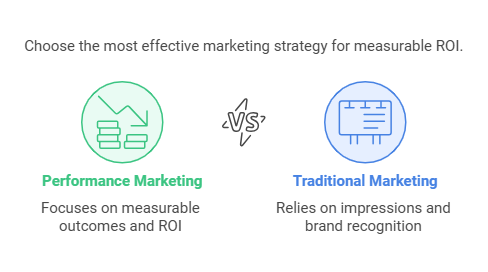
What is Performance Marketing?
Imagine a world where ads are only paid for when they make a sale. Performance marketing boils down to that. Marketers use this results-driven technique to pay just for certain actions, such as leads, sales, or clicks. With this method, companies can zero in on what’s important: accomplishing their objectives and increasing their ROI. They use analytics and data sources, including first-party and third-party data, to understand consumers’ needs and wants.
As of 2024, 70% of marketers recognize the direct impact of performance marketing campaigns on revenue. The digital advertising market was worth $350 billion worldwide in 2020, driven by trends in consumer behavior and shifts in the consumer journey.
It is anticipated that by 2026, this figure will soar to $786 billion, as an increasing number of brands invest in performance models that offer a clear return on ad spend. Generative AI, automated bidding, and dynamic creative optimization are helping marketers achieve better conversion rates while improving customer experience.
Performance marketing is centered around responsibility and measurable outcomes, in contrast to conventional marketing that frequently depends on impressions and brand recognition. Each and every campaign must have a quantifiable effect for the budget to be considered worthwhile, integrating martech solutions to provide a source of truth across digital channels, social commerce, and physical stores.
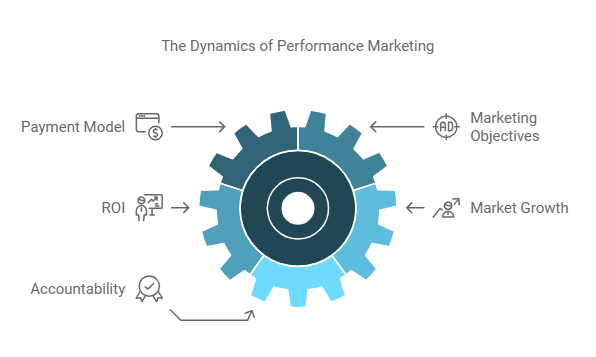
How are Businesses Leveraging Data for Success?
Businesses are reshaping the way they assess marketing initiatives with the advent of data analytics. The ability to pinpoint and track performance has given marketers unprecedented control over their tactics. They monitor metrics like customer lifetime value, retention rates, and conversion across Europe and in the physical world, connecting with consumers in real time.
Performance marketing exemplifies this shift, where every dollar spent is justified by measurable results. Starting with the initial point of contact and continuing through post-purchase loyalty, marketers can monitor the full client experience, including online shopping, subscription behavior, and at-home entertainment trends.
Importantly, metrics like customer lifetime value and retention rates offer deeper insights into the quality of customer relationships.
Performance-Driven Change
Brands are under increasing pressure to provide quantifiable results as advertising budgets decrease and content consumption grows more fragmented. Performance has risen to the forefront as companies seek evidence of an agency’s direct influence on sales.
This shift isn’t just happening in digital channels; even traditional media like radio and TV are embracing digital infrastructures to keep up.
Making sense of the Data Landscape
Businesses in today’s oversaturated media landscape confront the formidable task of unifying their brands’ experiences across all touchpoints, including TikTok, social media, email, television, radio, online advertisements, or physical stores.
Marketers need to measure each channel’s performance accurately. Omnichannel strategies help by providing consistent metrics, making cross-channel comparisons more meaningful and allowing for agile optimization of the marketing mix.
The New Era of Performance Marketing
Long gone are the days when direct response methods and brand advertising coexisted. Today, they’re merging into a powerful force. Direct response used to be all about instant actions like clicks and purchases, while brand advertising focused on emotional connections.
Now, performance goals are woven into every campaign, and storytelling is boosting engagement, brand loyalty, and differentiation in a volatile market.
What Can Traditional Advertisers Learn?
Traditional brand advertisers can earn a lot from their performance-driven partners. It boils down to putting money into data-driven tools, being open to continuous testing, and encouraging teams who are both analytical and creative to work together. And remember, every campaign needs clear goals for measurable return on ad spend and connection with consumers.
Automation and AI
AI and automation are revolutionizing marketing. These tools streamline the marketing process and democratize asset creation. By utilizing automated bidding, predictive analytics, and dynamic creative optimization, marketers can improve their effectiveness by providing customized experiences on a large scale, enhancing the customer experience, and supporting CMO-level decisions.
A New Marketing Mindset
The integration of creativity, technology, and data is essential for achieving success in brand and performance marketing, which are increasingly merging. To engage audiences more profoundly, fulfill their requirements, and produce memorable content, adopting a performance-oriented strategy is advisable. Using data to help guide marketing decisions ensures competitive advantage, reduces silos, and allows performance marketers to act in real time.
Frequently Asked Questions (Recognizing the Change How Performance Marketing Is Now the New Normal)
What is the future of performance marketing?
The future of performance marketing is data-driven, AI-powered, and results-focused. Brands will increasingly leverage automation, predictive analytics, and dynamic creative optimization to maximize ROI. Omnichannel strategies, real-time insights, and personalized customer experiences will become standard, making campaigns more measurable, efficient, and adaptable to changing consumer behavior.
How has the marketing mix evolved changed up until now?
The marketing mix has evolved from the traditional 4Ps—product, price, place, promotion to a more dynamic, customer-centric model. Today, it integrates digital channels, data analytics, personalization, omnichannel strategies, and performance measurement, ensuring businesses adapt to changing consumer behavior, optimize ROI, and create meaningful, measurable engagement across all touchpoints.
How has marketing changed in recent years?
Marketing has shifted from broad, brand-focused campaigns to data-driven, performance-oriented strategies. Digital channels, AI, automation, and analytics now guide decisions, enabling personalized experiences, measurable results, and real-time optimization. Consumer behavior, social media, and omnichannel engagement have become central, making marketing more targeted, agile, and accountable.
How is the concept of marketing changing in modern day?
In modern-day marketing, the focus is shifting from traditional brand promotion to a results-driven, customer-centric approach. Businesses leverage data, AI, automation, and omnichannel strategies to deliver personalized experiences, track measurable outcomes, and optimize ROI, making marketing more agile, accountable, and aligned with evolving consumer behavior.