
Shopify in 2025 the updates that quietly changed ecommerce
Why do some ecommerce brands grow steadily while others struggle, even on the same platform? The difference is rarely the tool itself—it’s how you use it. In 2025, Shopify introduced a series of quiet but meaningful changes that reshaped how modern ecommerce businesses operate, scale, and compete. These updates didn’t arrive with noise, yet their impact on performance, flexibility, and long-term growth has been significant.
Shopify in 2025 introduced subtle yet powerful updates that improved ecommerce performance, flexibility, and scalability. These changes focused on smarter workflows, better platform stability, and future-ready features, helping businesses build sustainable growth without complexity while adapting to modern commerce demands.
Website success today is influenced by far more than themes or apps. Factors like clean development, fast-loading experiences, reliable integrations, and thoughtful architecture directly affect how users engage and convert. Professional development ensures your Shopify setup is not only functional but built to evolve, especially as ecommerce demands become more complex in 2025. Good design, ongoing support, and consistent maintenance often deliver more value than flashy features—especially when even a basic monthly investment compared to enterprise-level builds can shape results.
This blog explores how Shopify evolved in 2025, the role of ai in shaping smarter ecommerce decisions, and why these updates matter for sustainable digital commerce. You’ll learn what changed, why it matters, and how the right approach helps future-proof your business in 2025 and beyond.
Shopify in 2025: Quiet Updates Reshaping Modern Ecommerce
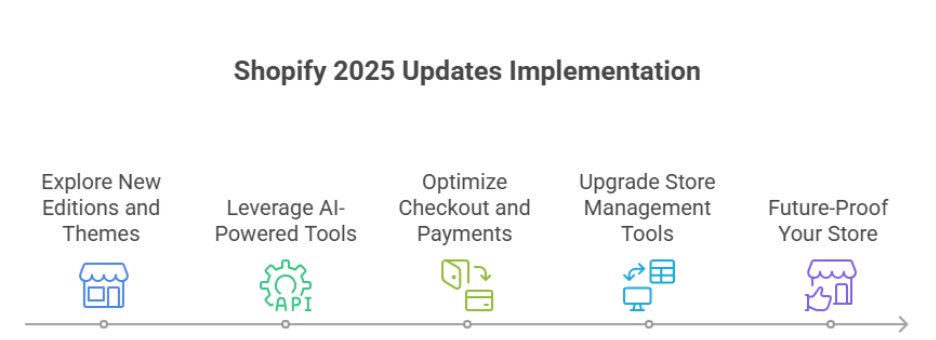
In 2025, Shopify quietly rolled out updates that improve efficiency, automation, and user experience. These changes help merchants scale and optimize their stores without complicated processes. Here’s a step-by-step breakdown.
Step 1: Explore Shopify’s New Editions and Themes
- What’s new: Shopify editions and new themes provide modern, flexible storefronts.
- Why it matters: Faster, visually appealing stores improve customer experience and reduce bounce rates.
- Pro tip: Choose themes that balance design with speed for higher conversions.
Step 2: Leverage AI-Powered Tools
- Shopify’s AI and the AI store builder help automate tasks like content creation, personalized recommendations, and product descriptions.
- Impact: Saves time, reduces errors, and allows merchants to use Shopify more efficiently.
- Pro tip: Test AI-generated suggestions but keep human oversight for brand voice.
Step 3: Optimize Checkout and Payments
- Shopify Payments and updated checkout flows streamline the process and reduce abandoned carts.
- Shop Pay improvements make transactions faster and smoother.
- Pro tip: Monitor average order value and conversion metrics after implementing checkout updates.
Step 4: Upgrade Store Management Tools
- POS upgrades and admin dashboard improvements simplify daily operations.
- Refund processes are faster, and analytics are easier to track.
- Certified Shopify Plus merchants can access scalable B2B commerce workflows.
Step 5: Future-Proof Your Store for 2026
- Shopify evolves continuously with AI-driven automation, better storefront builders, and industry-aligned tools.
- Merchants who use Shopify efficiently now will be ready for higher conversions and growth in the next year.
Are Shopify 2025 updates quietly holding back growth?
Even as Shopify continues to evolve in 2025, some updates may unintentionally limit growth for merchants who aren’t leveraging them effectively. Understanding these subtle limitations is key for ecommerce brands seeking to scale without unnecessary friction.
Checkout Flows – Efficiency vs. Complexity
Checkout upgrades introduced in Shopify have streamlined the purchasing process, but merchants must evaluate whether their current setup maximizes efficiency. Complex apps or workarounds can slow down checkout, increasing friction for customers. Implementing smart checkout flows ensures fewer abandoned carts while maintaining fast, secure transactions.
Onboarding and Store Setup – Time Matters
For new merchants or ecommerce companies expanding into new markets, Shopify’s onboarding and setup process is fast but sometimes requires workarounds to achieve full functionality. Missing these nuances may prevent merchants from leveraging the latest features like headless commerce or advanced personalization.
Performance and Core Web Vitals
Even with core web vitals improvements in Shopify, stores may underperform if themes or integrations aren’t optimized. Slow loading times or poorly coded apps can limit conversion potential without compromising the user experience.
Long-Term Growth Avoiding Hidden Barriers
While Shopify introduced helpful features in 2025, growth can still be unintentionally restricted if updates aren’t fully leveraged. Strategic planning, automation, and thoughtful use of personalization help merchants launch a store, improve UX, and scale without losing momentum.
Conclusion
The updates Shopify introduced in 2025 quietly reshaped ecommerce, offering tools and features that improve efficiency, automation, and scalability. However, these changes alone do not guarantee growth how you use Shopify, optimize checkout flows, leverage AI-powered tools, and maintain strong core web vitals directly impacts results.
Merchants who actively explore new Shopify editions and themes, streamline onboarding, and implement thoughtful workflows can reduce friction, improve customer experience, and achieve higher conversions. At the same time, overlooking these subtle updates or relying on workarounds may unintentionally hold growth back, even on a leading ecommerce platform.
Ultimately, success in Shopify 2025 depends on a strategic, proactive approach: combining smart use of technology, personalization, and professional development to launch a store, optimize performance, and scale without stress. By understanding and applying these quiet updates effectively, your business can stay competitive, future-proof operations, and position itself for long-term growth in 2026 and beyond.
Want expert guidance on leveraging Shopify 2025 updates for your business? Contact Integriti Studio today to get started.
Frequently Asked Questions (Shopify in 2025 the updates that quietly changed ecommerce)
Is Shopify still relevant in 2025?
Yes, Shopify remains highly relevant in 2025. Continuous updates, AI-powered tools, and enhanced e-commerce features help businesses streamline operations, optimize user experience, and scale efficiently. Brands that leverage Shopify’s integrations, analytics, and customizable workflows maintain a competitive edge in an evolving digital marketplace.
What is Shopify and how does it work in 2025?
Shopify in 2025 is a comprehensive e-commerce platform that enables businesses to create, manage, and scale online stores. It works by combining AI-driven tools, customizable themes, secure payment gateways, and seamless integrations, allowing merchants to optimize workflows, manage products, and enhance user experience efficiently.
What is the outlook for Shopify in 2025?
The outlook for Shopify in 2025 is strong, driven by AI-powered tools, enhanced integrations, and improved scalability for merchants. Businesses using Shopify can expect streamlined operations, better analytics, and more efficient workflows, positioning the platform as a leading solution for both new and established e-commerce ventures.
Why are businesses moving from Drupal to Shopify in 2025?
In 2025, businesses are moving from Drupal to Shopify for faster setup, user-friendly management, and superior e-commerce capabilities. Shopify’s AI tools, seamless integrations, and scalable workflows make online store management easier, while Drupal’s complexity and maintenance demands push site owners toward a more efficient, growth-focused platform.