
Shopify in 2026 which 2025 Trends Will Scale and Which Won’t
Why do some Shopify stores perform flawlessly while others struggle, even when using the same platform? Website performance is influenced by multiple factors from clean, optimized code and seamless integrations to thoughtful design and ongoing maintenance. Without professional development and strategic support, even a beautifully designed storefront can fail to convert visitors or scale effectively.
In 2026, Shopify will continue scaling trends like ecommerce personalization, Shopify Plus integrations, and mobile-first commerce, which enhance customer experience and conversion rates. However, some 2025 fads, such as short-lived social commerce experiments or niche AI tools without broad adoption, may lose relevance for long-term retailer growth.
For retailers, investing in expert Shopify setup and maintenance isn’t optional—it’s essential. Professional development ensures your Shopify store is not only functional but optimized for ecommerce trends, conversion rate, and long-term growth. Good design, proper integration, and reliable support can turn basic Shopify Plus features into real competitive advantages. Typical agency services range from $3,000–$10,000 for comprehensive setup, including customization, checkout optimization, and maintenance plans, reflecting the true value of quality.
This blog will explore which 2025 trends are likely to scale in 2026 and which may fade, helping you make smarter decisions for your Shopify store. We’ll examine factors shaping ecommerce, strategies for scaling commerce effectively, and how adopting the right Shopify tools can maximize customer experience, loyalty, and profitability in the year ahead.
2026 Shopify Trends Shaping The Future Of Ecommerce
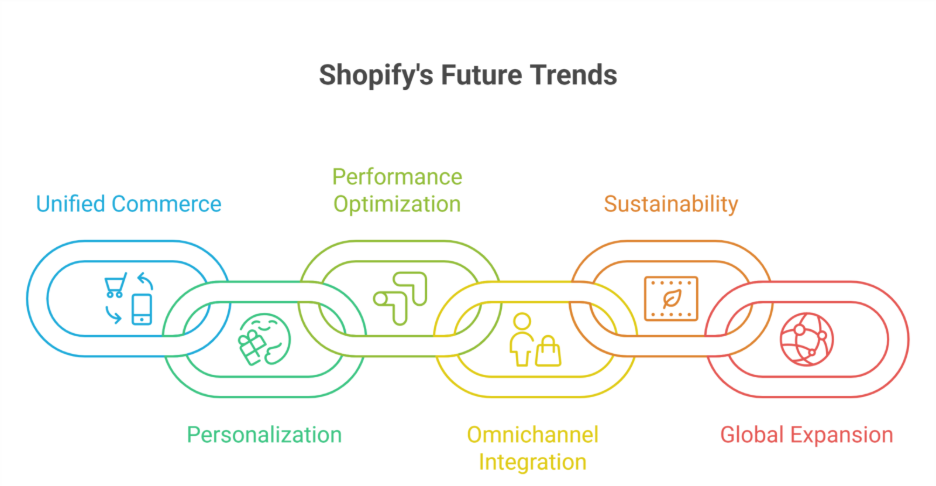
The future of Shopify is being shaped by key trends that determine how online stores and online businesses grow in 2026. Shopify merchants who focus on ecommerce growth, operational efficiency, and seamless omnichannel experiences can gain a competitive edge and achieve sustainable scaling.
Unified and Composable Commerce Solutions
Unified commerce centralizes inventory, payments, and customer data across multiple touchpoints, while composable commerce allows flexible integration of specialized tools. Together, they reduce total cost of ownership and help build future-proof Shopify stores capable of scaling with evolving market demands.
Personalized Direct-to-Consumer Experiences
By leveraging purchase history and tailored shopping experiences, Shopify merchants can drive higher conversion rates and higher average order values. Thoughtful personalization along the customer journey strengthens loyalty and builds customer trust, while limited-edition products can create urgency and engagement.
Optimized Performance and Core Web Vitals
Maintaining fast, reliable sites is crucial. Optimizing core web vitals improves usability and conversion, while Shopify’s app ecosystem supports compliance, analytics, and checkout improvements. Investing in performance ensures your Shopify store is future-proof and capable of sustaining long-term growth.
Seamless Omnichannel and Customer Engagement
A seamless omnichannel approach integrates online and offline experiences, connecting every touchpoint from mobile apps to social commerce. This unified strategy enhances engagement, strengthens brand presence, and drives measurable ecommerce growth.
In 2026, these trends will define the future of Shopify, enabling merchants to deliver efficient, personalized, and scalable commerce experiences while staying ahead in a competitive market.
Ecommerce Trends For 2026 Impact Shopify Plus Commerce
In 2026, Shopify Plus commerce will be shaped by trends that improve scalability, customer engagement, and sustainability. Here are the key trends and actionable steps for merchants:
1. Leverage Composable Commerce for Flexibility
- Integrate best-in-class solutions for inventory management, order management, and product catalog optimization.
- Use flexible front-ends to improve site speed and user experience.
- Reduce operational complexity while scaling across regions.
2. Drive Omnichannel Growth and Unified Customer Experiences
- Unify customer data to provide personalized experiences.
- Ensure seamless interactions across all channels (online, in-store, mobile).
- Optimize delivery options and improve product discovery to enhance engagement.
3. Prioritize Sustainability
- Offer sustainable products and embrace sustainable practices.
- Offset carbon emissions in shipping or operations.
- Maintain premium prices while appealing to conscious shoppers like Gen Z.
4. Support International Expansion and Security
- Manage inventory and order processing effectively for new markets.
- Implement advanced fraud detection tools to protect revenue.
- Scale globally without compromising trust or operational efficiency.
Conclusion
As Shopify evolves into 2026, understanding which 2025 trends will scale and which may fade is critical for retailers aiming to stay competitive. Trends like ecommerce personalization, Shopify Plus integrations, and mobile-first commerce will continue to drive higher conversion rates and operational efficiency, while short-lived experiments or niche tools without broad adoption may no longer deliver value.
Investing in professional development, thoughtful design, and strategic support ensures your Shopify store is future-proof, capable of delivering personalized experiences, seamless omnichannel interactions, and sustainable growth. By leveraging composable commerce, optimizing core web vitals, and integrating unified customer data, merchants can reduce complexity, enhance product discovery, and strengthen customer trust.
For Shopify Plus retailers, prioritizing sustainability, global expansion, and secure operations positions your business to capture long-term opportunities while maintaining efficiency and loyalty. In 2026, success will favor merchants who adopt proven trends strategically, balance innovation with practicality, and invest in tools and practices that scale their Shopify commerce effectively.
Want to scale your Shopify store effectively in 2026? Contact Integriti Studio today.
Frequently Asked Questions (Shopify in 2026 which 2025 Trends Will Scale and Which Won’t)
What will be the biggest trend in 2025?
The biggest trend in 2025 will be AI-driven personalization across industries. From marketing and e-commerce to healthcare and finance, businesses will leverage advanced AI tools and data analytics to offer hyper-personalized experiences, automate decision-making, and optimize efficiency, reshaping how consumers interact with products and services.
Is Shopify still profitable in 2025?
Yes Shopify is still profitable in 2025, consistently growing revenue and delivering double‑digit free cash flow margins across multiple quarters, showing solid financial performance and operational profitability.
Where will Shopify be in 5 years?
In five years, Shopify is likely to become a leading global commerce platform, expanding its AI-powered tools, international reach, and integrations with social commerce and metaverse marketplaces. It will focus on helping merchants scale efficiently while maintaining seamless, personalized shopping experiences worldwide.
What is the outlook for Shopify in 2025?
The outlook for Shopify in 2025 is generally positive: analysts expect continued strong revenue and merchant growth, driven by AI tools, international expansion, and payment services, with revenue rising in the mid‑to‑high twenties percentage range and solid free‑cash‑flow margins. Some caution remains around valuation and competition.