
How To Prepare Your Shopify Store For 2026 Growth
Why do some businesses see consistent growth on Shopify, while others struggle to scale despite having similar products and budgets? The difference often lies in how a Shopify store is built, optimized, and maintained over time especially as expectations rise heading into 2026.
Preparing your Shopify store for 2026 growth means optimizing performance, improving product pages, using professional design, and planning scalable marketing strategies. Focus on speed, mobile experience, automation, and data-driven decisions to build trust, retain customers, and support long-term ecommerce growth.
Website performance is influenced by multiple factors, including design structure, page speed, checkout flow, mobile optimization for mobile devices, and how well product pages guide a shopper toward confidence. A professionally developed Shopify store focuses on usability, clear meta structure, strong keyword targeting, and a smooth shopping experience that helps build trust and reduce abandoned cart issues. Strategic use of shopify apps, email marketing, smart bundle offers, and limited-time discount campaigns also play a role in growing a loyal customer base.
From a practical perspective, many businesses invest anywhere from a few hundred dollars for basic setup to several thousand for a fully optimized, professional Shopify store with ongoing support an investment that directly impacts long-term ecommerce performance.
This guide explains how to prepare your Shopify store in 2026, covering development decisions, performance improvements, marketing alignment, and scalability strategies to help your online store grow sustainably.
Build a Professional Shopify Store Foundation for 2026 Growth
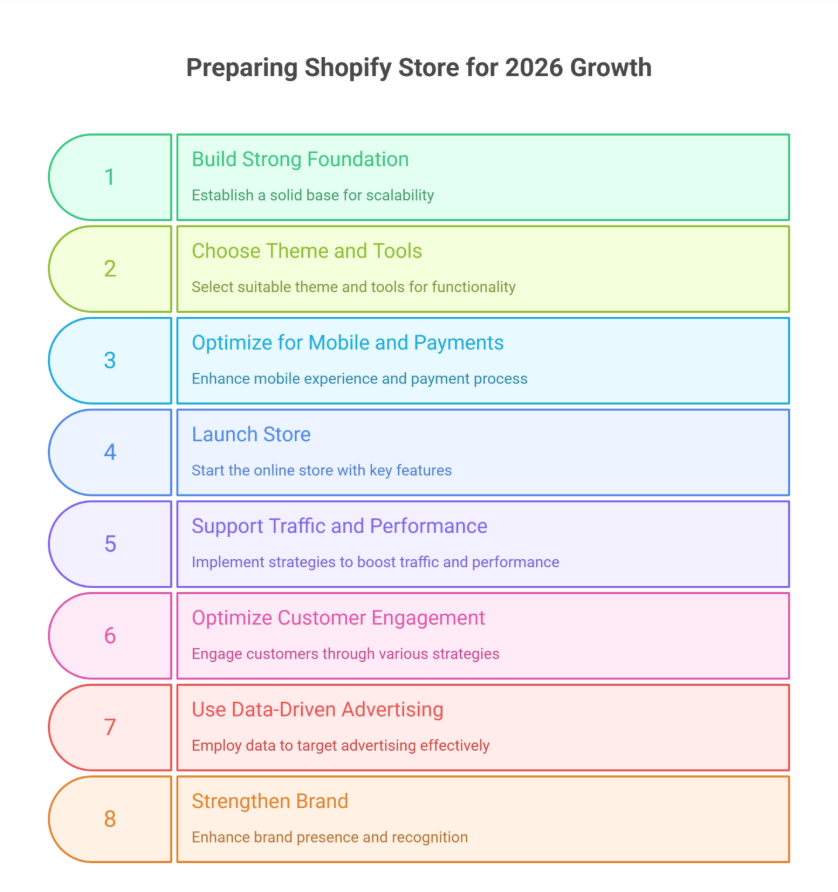
Before trying to grow your Shopify store, focus on building a strong foundation. Early decisions in store setup, store design, and platform configuration determine long-term scalability, performance, and shopify growth potential. A solid base prevents costly redesigns and technical issues later.
Choosing the Right Structure, Theme, and Tools
Selecting a suitable shopify theme and store builder is essential. Your theme should be fast, flexible, and optimized for conversions. Integrating the right tools ensures your professional Shopify store can handle traffic, sales, and evolving online business needs without compromising speed or user experience.
Optimizing for Mobile and Payments
Most shoppers now use mobile devices. Optimizing your store for mobile and streamlining Shopify payments enhances the shopping experience, reduces cart abandonment, and increases order value. Mobile-first design is crucial for higher conversion in 2026.
From Launch to First Sales
Whether you’re starting an online store or planning to launch your Shopify store, clear pricing, free shipping, and trust signals are key. Using Shopify’s free trial allows you to refine your store setup, create your store, and test early marketing strategies before going live.
Supporting Traffic and Long-Term Performance
A professional setup enables better traffic to your store and supports growth strategies. Features like loyalty programs, early access offers, and bundle promotions help create urgency, increase Shopify sales, and ensure sustainable growth over time.
Smart Marketing Strategies to Grow Your Shopify Store Long Term
Growing a Shopify store sustainably requires more than a great product or polished design. To achieve long-term growth, you need a strategic approach that drives online sales, encourages repeat visits, and strengthens customer loyalty. Implementing Shopify solutions and targeted marketing campaigns can transform your ecommerce store from a temporary setup into an essential store for your audience.
Optimize Customer Engagement to Keep Shoppers Coming Back
Engaged customers are more likely to return, increasing online sales and building lifetime value. Focus on:
- Email marketing campaigns: Send personalized recommendations, promotions, and back to your store reminders to keep your audience engaged.
- Abandoned cart recovery: Automate messages for making your store irresistible and recovering lost sales.
- Loyalty programs: Reward repeat buyers to strengthen retention and promote long-term Shopify growth.
Use Data-Driven Advertising for Targeted Reach
Smart Shopify solutions allow you to track user behavior and optimize ad spend. Key strategies include:
- Paid social campaigns: Platforms like Facebook, Instagram, or TikTok help you reach new audiences efficiently.
- Retargeting ads: Bring visitors back to your store who didn’t convert the first time.
- A/B testing campaigns: Experiment with messaging, creatives, and offers to maximize ROI.
Strengthen Your Brand and Online Presence
A strong brand creates trust, drives recognition, and increases online sales. Focus on:
- Consistent messaging and visuals across your ecommerce store.
- SEO optimization for product pages to capture organic traffic.
- Content marketing like blogs, guides, or videos to educate your audience.
Conclusion
Preparing your Shopify store for 2026 growth requires a combination of strategic planning, professional design, and data-driven marketing. By building a strong foundation, choosing the right shopify theme and tools, optimizing for mobile and payments, and implementing smart Shopify solutions, you can improve your Shopify performance, increase online sales, and achieve long-term growth. Engaging customers through email marketing, loyalty programs, and personalized campaigns ensures repeat visits, while data-driven advertising and strong branding make your store an essential store for your audience.
Investing in professional setup and scalable strategies from store setup to marketing turns your ecommerce store into a trusted, high-converting destination. Small choices like bundle offers, free shipping, or early access campaigns can have a significant impact on Shopify sales and shopify growth, making your store competitive in 2026 and beyond.
So, as you plan your next steps to grow your Shopify store, consider this: are you ready to start a successful Shopify journey, or will you leave your growth to chance?
why not contact Integriti Studio today and see how they can help your store scale smartly in 2026?
Frequently Asked Questions (How To Prepare Your Shopify Store For 2026 Growth)
How do I grow my Shopify store?
To grow your Shopify store, focus on optimizing product listings, improving site speed, and enhancing UX. Use email marketing, abandoned cart recovery, and social media campaigns to drive traffic. Leverage analytics to track performance, implement SEO strategies, and consider AI-powered personalization to boost conversions and customer loyalty.
Is Shopify really 1 dollar a month?
No, Shopify’s standard plans are not $1 per month. While Shopify occasionally offers limited-time promotions or trial periods for around $1, the regular pricing starts higher, depending on the plan. Businesses should review current plan details to understand actual costs, features, and transaction fees.
Where will Shopify be in 5 years?
In five years, Shopify is likely to evolve as a leading global ecommerce platform, emphasizing AI-driven personalization, automation, and seamless omnichannel experiences. It will focus on faster, high-performing stores, advanced analytics, and integrations with emerging technologies, helping businesses scale efficiently and stay competitive in digital commerce.
How much does Shopify take from a $100 sale?
Shopify’s fees on a $100 sale depend on your plan and payment method. Using Shopify Payments, the platform charges 2.9% + 30¢ on the Basic plan, meaning about $3.20. Third-party payment gateways add extra transaction fees, increasing the total deduction from each sale.