What Shopify Store Owners Should Stop Doing In 2026
Why do some Shopify stores generate high sales while others struggle, even when selling similar products? The answer often lies in factors influencing website performance: slow checkout, poorly optimized product pages, lack of SEO, and a disjointed shopping experience. For Shopify store owners preparing for 2026, identifying and eliminating these issues is crucial to improving conversion, retaining shoppers, and building a scalable online store.
Shopify store owners in 2026 should stop relying on slow checkout processes, neglecting SEO, overloading product pages, and using too many apps that complicate the shopping experience. Prioritizing optimization, mobile conversion, and seamless integration ensures a scalable Shopify store that drives sales, improves conversion rates, and builds long-term trust.
Investing in professional development allows you to stay ahead of platform updates, leverage integration tools effectively, and optimize your Shopify store for mobile and desktop users. A small investment in skilled support, ongoing maintenance, and design optimization ranging from a few hundred to a few thousand dollars annually can improve conversion rates, prevent costly rebuilds, and enhance customer trust.
This blog will explore the common Shopify store mistakes to avoid in 2026, from checkout friction and poorly designed product pages to missed SEO opportunities. You will also learn practical strategies to enhance your shopping experience, optimize analytics, and make smart decisions that support long-term Shopify success.
Shopify Store Mistakes Every Owner Should Avoid In 2026
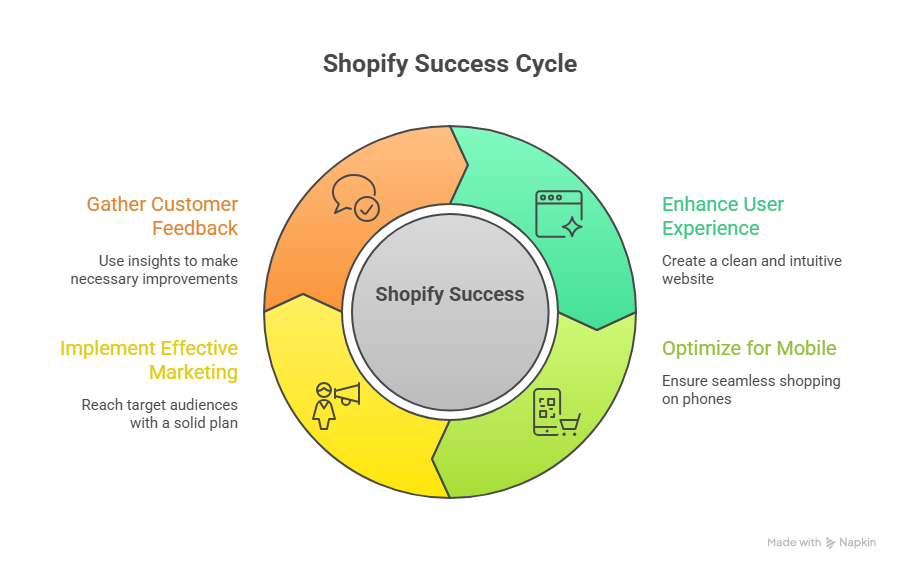
Many Shopify store owners fail to prioritize the mobile experience, even though a significant portion of shopify sales in 2026 will come from mobile devices. A store slow to load or a complicated checkout can drastically reduce conversion and frustrate customers. Optimizing your landing pages and Shopify store’s SEO ensures a seamless shopping experience that drives engagement, repeat purchases, and long-term growth.
Overloading Your Store With Many Apps
While the Shopify app store offers countless tools, using many apps at once can slow down the Shopify backend, cause conflicts, and create a confusing shopping experience. Carefully selecting apps that support business goals without overwhelming the store ensures smoother operations, better customer retention, and more efficient management for shopify businesses.
Poor Theme Selection and Custom Development
Choosing the wrong Shopify theme or poorly executing custom Shopify development can harm shopify growth and user engagement. A Shopify theme should be responsive, fast, and compatible with advanced solutions like headless commerce or Shopify Plus. This prevents costly redesigns and ensures a shopify store is built for scale and future-proof.
Neglecting Analytics, Paid Ads, and Marketing Integration
Many shopify merchants overlook analytics or fail to integrate marketing tools, leading to missed opportunities to improve conversion rate, lifetime value, and customer loyalty. Tracking Shopify traffic, analyzing product pages, and using tools like Klaviyo helps optimize campaigns, enhance customer experience, and boost shopify sales effectively.
Failing to Focus on Customer Retention and Loyalty
Even big brands know that retaining existing customers is more cost-effective than constantly acquiring new ones. Ignoring customer retention strategies such as loyalty programs, personalized messaging, and reward badges reduces repeat purchases and limits shopify store growth. Focusing on what customers want ensures stronger long-term growth.
Overlooking Performance and Scalability
A shopify store’s performance and ability to scale are critical for shopify success. Slow-loading sites, unoptimized backend, or poorly planned custom Shopify development can hinder traffic and sales. Leveraging solutions like Shopify Oxygen or headless commerce ensures your store remains scalable, fast, and capable of handling growth in 2026 and beyond.
Choosing The Right Shopify Theme And App Integration
Step 1: Select a High-Converting Shopify Theme
- Choose a Shopify theme that aligns with your brand and marketing goals.
- Prioritize mobile-first design since sales come from mobile devices.
- Ensure fast load times to boost shopify traffic and conversion.
- Check compatibility with advanced features like Shopify Oxygen or headless commerce.
Step 2: Plan Your App Integration Carefully
- Avoid adding too many apps, which can slow your Shopify backend.
- Select apps that enhance the shopping experience, customer loyalty, and help increase sales.
- Use shopping assistants or marketing automation tools to improve retention.
- Regularly review installed apps to prevent redundancy and optimize performance.
Step 3: Optimize for Performance and Usability
- Minimize unnecessary scripts and plugins to maintain speed.
- Implement caching, CDNs, and optimized media to improve site load times.
- Track shopify traffic and customer behavior to refine user experience.
- Focus on features that deliver measurable improvements in conversion and customer retention.
Step 4: Balance Functionality With Long-Term Growth
- Integrate apps and features that scale with your business and the headless commerce market.
- Ensure your Shopify website is built for scale and future expansion.
- Plan for integrations with platforms like physical retail to expand sales channels.
- Avoid costly mistakes by maintaining a clean Shopify backend and regular audits.
Step 5: Monitor, Adjust, and Improve
- Use analytics tools to monitor shopify traffic and sales performance.
- Adjust apps, theme settings, and Shopify store’s SEO for ongoing optimization.
- Continuously focus on improving customer experience to enhance customer loyalty.
- Invest in periodic support and maintenance to sustain Shopify success in 2026 and beyond.
Conclusion
Avoiding common Shopify store mistakes is essential for Shopify store owners aiming for success in 2026 and beyond. From slow checkout processes and poorly optimized product pages to overloading apps and neglecting Shopify store’s SEO, these missteps can reduce conversion, frustrate shoppers, and limit long-term growth.
By selecting a high-converting Shopify theme, planning app integration carefully, optimizing performance, and focusing on customer retention, you create a scalable Shopify website that drives sales, builds customer loyalty, and improves shopify traffic. Leveraging solutions like Shopify Oxygen and headless commerce, combined with ongoing support and maintenance, ensures your store stays competitive and prepared for evolving e-commerce trends for 2026.
Investing in professional development, analytics, and automation tools helps Shopify merchants make data-driven decisions, refine the shopping experience, and avoid costly mistakes that can derail growth. Small investments in skilled support, app management, and periodic audits often prevent major issues while boosting overall performance.
For store owners serious about growth: are you confident your Shopify store is fully optimized, or is it time to contact Integriti Studio to audit and elevate your store’s performance?
Frequently Asked Questions (What Shopify Store Owners Should Stop Doing In 2026)
What are the challenges of Shopify store owners?
Shopify store owners face challenges like intense competition, rising ad costs, low conversion rates, technical limitations, app dependency, inventory management issues, and maintaining consistent customer retention.
Is drop shipping dead in 2026?
No dropshipping isn’t dead in 2026. It’s still a growing part of ecommerce with billions in sales, but the old “just pick cheap products and run ads” method no longer works. Success now needs brand focus, reliable suppliers, fast shipping, and smart marketing.
Why do so many Shopify stores fail?
Many Shopify stores fail due to poor product research, weak branding, low traffic quality, and unrealistic expectations. Store owners often rely on ads without optimization, ignore customer experience, and underestimate costs. Success requires strategy, testing, patience, and consistent improvement, not quick wins.
Where will Shopify be in 10 years?
In 10 years, Shopify will be a global commerce platform powering billions in sales, with deeper AI tools, expanded global payments and logistics, and stronger small-business ecosystems.