
Web Development Strategies for Premium Digital Agency Success
Why do some websites convert better while others struggle? The secret lies in effective web development. Factors like clean front-end coding with HTML, CSS, and JavaScript, a robust back-end using PHP, Python, or Java, and a well-structured database all shape website performance. Even web applications rely on proper frameworks, server-side logic, and responsive design to deliver seamless experiences.
Effective web development combines skilled web developers, clean front-end and back-end coding, responsive web pages, optimized web applications, and ongoing maintenance for premium agency success.
A skilled web developer ensures your web pages are interactive, fast, and secure. From markup and cascading style sheets to programming languages and coding best practices, professional development creates real value. With ongoing support and maintenance, your website becomes more than a digital presence it becomes a business asset. Typical professional projects start from a few thousand dollars depending on complexity.
In this blog, you’ll learn key web development strategies, how to structure front-end and back-end workflows, and tips to make your site responsive, interactive, and future-ready.
Learn Web Development Tools For Long-Term Success
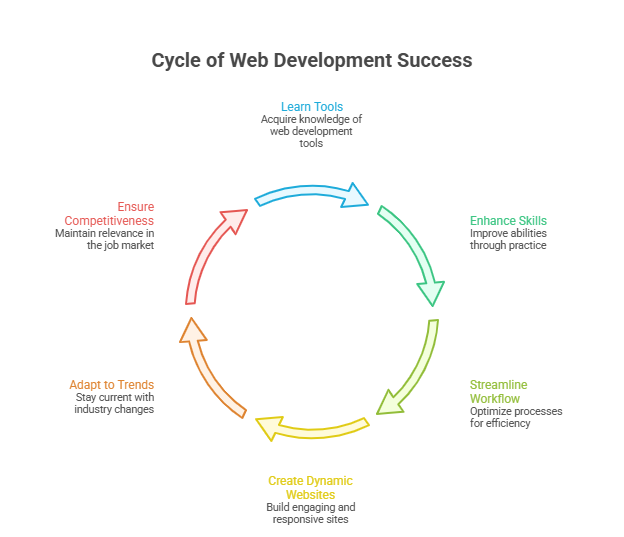
Mastering the right web development tools is essential for building scalable, interactive, and professional websites. Whether you aim to become a front-end developer, back-end developer, or a full-stack developer, understanding these tools will shape your long-term success.
Core Front-End Tools
- HTML, CSS, and Sass: The foundation of front-end web development, creating structured and visually appealing websites and web pages.
- JavaScript (JS) & jQuery: Enable dynamic, interactive web elements; essential to learn JavaScript for modern web programming.
- Bootstrap & Responsive Web Design: Ensures your web pages look great on all devices with mobile-first, responsive design layouts.
- Front-end Frameworks: Tools like React.js, Vue.js, Next.js, and Redux help manage interface states and build scalable applications.
Essential Back-End Tools
- Node.js & Django: Popular frameworks for back-end web development, enabling efficient building web server-side logic.
- SQL, MySQL, NoSQL Databases, and Relational Databases: Manage and structure data for robust back-end development.
- APIs & Server-side Integration: Connect front-end web interfaces with databases and third-party services.
- Python, PHP, and Java: Core web programming languages for server-side tasks.
Full-Stack & Version Control Tools
- Git & GitHub: Essential version control for tracking changes in your projects and collaborating with teams.
- Full-Stack Development: Combines front-end web and back-end web expertise for full-stack developers.
- AWS & Open-Source Tools: Host, deploy, and scale websites securely using cloud services and open-source libraries.
Additional Skills for Success
- Markup Language & XML: Organize and structure data efficiently for interactive web features.
- Data Structures & Syntax Mastery: Essential for solving programming challenges in web programming.
- Online Courses & Web Development Courses: Continuous learning ensures you stay updated with the latest website development trends.
- User Interface & Responsive Design: Focus on usability, accessibility, and seamless interface interactions across devices.
How Front-End And Back-End Choices Impact Performance
The performance, scalability, and user experience of your website are deeply influenced by the front-end and back-end technologies you choose. Making informed decisions ensures faster load times, interactive interfaces, and easier maintaining websites over time.
Choosing the Right Front-End Framework
Selecting a popular front-end framework like Vue is crucial for creating responsive and dynamic web interfaces. Frameworks like these allow developers to write code efficiently, reuse components, and maintain a clean structure. Following solid design principles ensures that pages are visually consistent, accessible, and optimized for performance. By focusing on best practices, you can deliver interactive features that engage users while reducing rendering time.
Optimizing Back-End Architecture
Your back-end choices define how quickly data is processed and delivered to users. Using a reliable database such as PostgreSQL enables smooth handling of complex queries. Applying object-oriented programming principles helps build fast, maintainable applications, making maintaining websites over time much simpler. Choosing popular programming languages tailored to your project ensures efficient integration with the front-end, enabling scalable and secure server-side operations.
Integrating Front-End and Back-End Systems
A seamless connection between front-end and back-end is key to delivering smooth user experiences. Optimized APIs and proper server-side logic allow you to create dynamic content without lag. Careful coordination ensures that interactive features work reliably, performance remains high, and maintaining websites is easier in the long term. By combining these strategies, your website can achieve faster load times, improved responsiveness, and a professional, modern design.
Conclusion
Successful digital agencies understand that premium website performance is not accidental it is the result of strategic web development. From mastering front-end frameworks like Vue and responsive web design to optimizing back-end architecture with PostgreSQL and object-oriented programming, every choice impacts speed, scalability, and user engagement. Skilled web developers who follow design principles, implement clean front-end and back-end coding, and leverage modern web programming tools create interactive, secure, and future-ready websites. Continuous learning through web development courses and proper use of version control, APIs, and cloud services like AWS ensures that websites remain maintainable and adaptable over time.
When these strategies are combined, your digital presence transforms into a high-performing business asset, not just a website.
So, if you’re ready to elevate your projects and achieve measurable results, why not see what Integriti Studio can do for your business today?
Frequently Asked Questions (Web Development Strategies for Premium Digital Agency Success )
What does a web development agency do?
A web development agency designs, develops, and maintains websites and web applications, handling front-end and back-end coding, responsive design, server-side integration, and ongoing technical support.
What makes an agency successful?
An agency succeeds by delivering high-quality services, effective project management, skilled professionals, innovative strategies, client-focused solutions, strong communication, consistent results, and ongoing support for long-term growth.
What are the web development strategies?
Web development strategies include optimizing front-end and back-end coding, using responsive design, selecting proper frameworks, ensuring database efficiency, integrating APIs, maintaining websites, and following best programming practices.
How to create a web development agency?
To create a web development agency, define your services, hire skilled developers, build a strong portfolio, use modern tools, attract clients, and deliver high-quality, scalable websites.