
Webflow Best Practices To Carry Into 2026
Why do some websites outperform others while seemingly similar competitors lag behind? The answer often lies in a combination of technical precision, strategic design, and ongoing optimization. Factors influencing website performance include page speed, intuitive UX, structured HTML, and properly indexed sitemaps that ensure search engines can efficiently crawl your content. For businesses using Webflow, leveraging these elements correctly can directly impact visibility, conversions, and overall ROI.
Webflow success in 2026 depends on combining strong UX, proper SEO, and structured sitemaps. Use templates wisely, optimize URLs, implement analytics, and follow a clear Webflow SEO checklist. Regular audits, post-launch maintenance, and user experience improvements ensure your Webflow website remains high-performing, visible, and conversion-ready.
Professional development is critical to maintain a high-performing Webflow website. Investing in skilled design, SEO setup, analytics integration, and post-launch audits ensures your site remains agile and aligned with evolving standards. Even small decisions like implementing proper URL redirects or refining templates can save significant resources over time. For context, quality professional support for design, development, and ongoing maintenance often ranges from modest monthly retainers to more comprehensive project packages, reflecting the tangible value added by expert guidance.
This blog will walk you through Webflow best practices to carry into 2026, covering practical strategies to optimize your site for SEO, create a structured Webflow sitemap, improve UX, and implement a thorough Webflow SEO checklist. You’ll also discover actionable tips for audits, analytics, and post-launch support to ensure your Webflow website performs at its peak.
Webflow Best Practices for SEO and UX Optimization
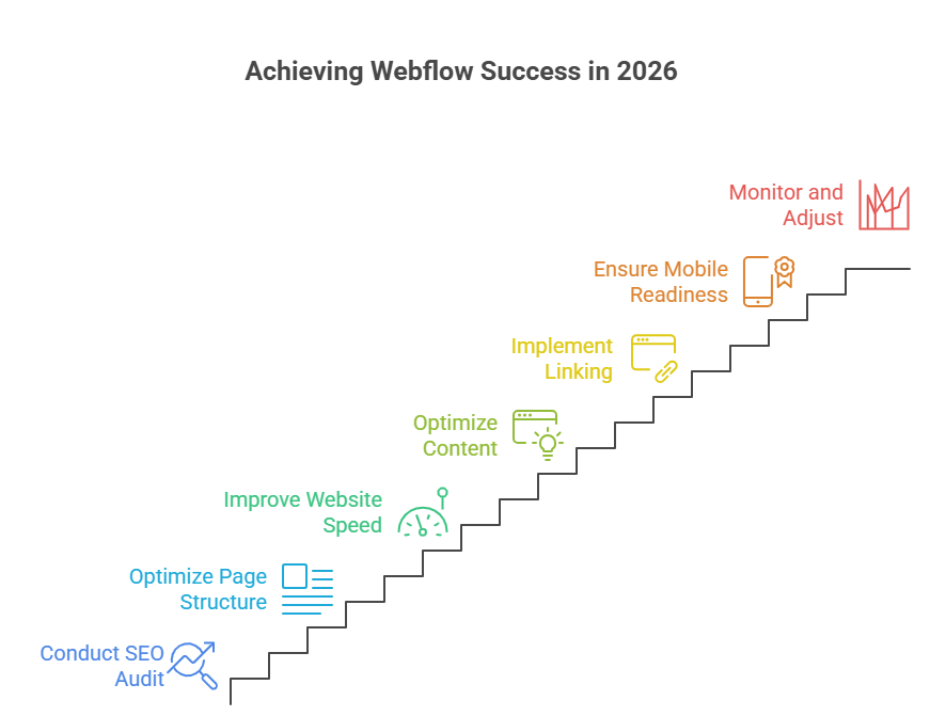
Optimizing your Webflow website for both SEO and UX is critical to ensuring high visibility, better engagement, and measurable business results. By combining technical precision with thoughtful UX design, you can turn visitors into loyal customers while improving seo performance across search engines.
Implement a Structured Webflow SEO Workflow
A structured Webflow SEO checklist ensures nothing is overlooked. Start with seo setup for each page, including meta titles, descriptions, and header structures. Use a Webflow sitemap to make it easier for search engines to crawl and index your content. Regularly audit your core web vitals and on-page SEO elements to identify opportunities for optimization.
Leverage Technical SEO
Technical SEO in Webflow includes ensuring fast page speed, semantic HTML, and proper 301 redirects to avoid broken links or duplicate content issues. Integrating tools like Google Search Console or HubSpot allows you to track organic traffic and monitor SEO health post-launch. Setting up redirects correctly is essential during a migration to Webflow or a website redesign.
Enhance UX for Engagement and Retention
Your Webflow site should prioritize ux design by creating intuitive navigation, mobile responsiveness, and accessible layouts. Clear calls-to-action and strategically placed content convert visitors into customers. Consider the latest design trends in website design to keep your Webflow project modern and professional, particularly for SaaS or B2B platforms.
Post-Launch Optimization and Maintenance
SEO and UX are ongoing processes. Post-launch, monitor your seo settings, seo performance, and analytics to refine content strategy. Regularly review important pages, update templates, and maintain accessibility standards. Engaging with the Webflow community can provide insights into top Webflow practices and tools, while generative content and content strategy improvements support organic growth.
Integration and Tools
Webflow’s website experience platform integrates with marketing and analytics tools to enhance tracking and conversion. From software as a service integrations to connecting your free starter plan, leveraging these features improves efficiency and helps search engines understand your content. A complete Webflow SEO checklist combined with ongoing post-launch updates ensures your new website performs at its peak.
Step-by-Step Webflow SEO Checklist to Get Started
Step 1: Conduct an SEO Audit of Your Page on Your Website
Before making any changes, assess the current performance of each page on your website. Identify issues such as duplicate content issues, slow load times, and missing meta tags. This audit helps pinpoint areas where optimization can improve your visibility and help search engines to crawl your site efficiently.
Step 2: Optimize Page Structure and Headings
Ensure each page is structured logically with clear H1, H2, and H3 headings. Properly structured headings not only improve readability for visitors but also allow search engines to crawl and understand your content hierarchy. Avoid duplicate content issues by ensuring each heading and section is unique.
Step 3: Improve Website Speed and Largest Contentful Paint
Page speed is a critical ranking factor and directly impacts user experience. Focus on improving the largest contentful paint (LCP) by optimizing images, minimizing scripts, and leveraging caching. Faster pages help convert visitors into customers and reduce bounce rates.
Step 4: Optimize Content for SEO and User Intent
Create and optimize content that aligns with your audience’s search intent. Use targeted keywords naturally within headings, paragraphs, and meta descriptions. For B2B SaaS companies, this means delivering informative, solution-driven content that guides potential clients through your service offerings.
Step 5: Implement Internal and External Linking
Internal links guide both users and search engines to discover related content across your site. Additionally, include authoritative external links where relevant. Proper linking strategies can reduce duplicate content issues and help search engines to crawl your site more efficiently.
Step 6: Ensure Mobile and Technical SEO Readiness
With the majority of users accessing websites via mobile devices, responsive design is essential. Check for broken links, XML sitemaps, robots.txt configuration, and structured data implementation. These technical elements improve the overall SEO performance of your page on your website.
Step 7: Monitor, Analyze, and Adjust
SEO is an ongoing process. Regularly monitor metrics like organic traffic, bounce rates, and conversions to see how your optimizations perform. Continuous adjustments ensure that your site not only attracts visitors but also converts visitors into customers effectively.
Conclusion
Optimizing your Webflow website for 2026 is not just about launching a visually appealing site it’s about creating a platform that performs, engages, and converts. By implementing a structured Webflow SEO workflow, enhancing UX, monitoring core web vitals like largest contentful paint, and addressing duplicate content issues, you ensure that search engines can crawl your content efficiently while delivering a seamless experience to your visitors. Regular audits, content optimization, and post-launch maintenance are essential steps to keep your site competitive, especially for B2B SaaS companies looking to convert visitors into customers consistently.
Taking a strategic, step-by-step approach from SEO audits to technical readiness and content optimization ensures your Webflow website remains high-performing, discoverable, and aligned with evolving web standards.
Now here’s a question to consider: If you want your Webflow site to perform at its peak and drive real business results, why not reach out to Integriti Studio today?
Frequently Asked Questions (Webflow Best Practices To Carry Into 2026)
What are the most important Webflow best practices for 2026?
In 2026, the most important Webflow best practices focus on performance, clean structure, accessibility, and SEO. Websites must load fast, follow proper layout hierarchy, and deliver a smooth user experience across all devices.
Is Webflow still good for SEO in 2026?
Yes. Webflow remains a strong platform for SEO in 2026 due to its clean code output, fast hosting, and built-in SEO tools. Proper use of headings, CMS structure, and metadata is essential for strong rankings.
Why is page speed critical for Webflow websites in 2026?
Search engines place greater emphasis on user experience. Slow-loading Webflow sites can lose traffic and rankings. Optimized images, minimal animations, and efficient layouts are key best practices.
How will AI impact Webflow workflows in 2026?
AI will support Webflow workflows through content planning, design suggestions, automation, and performance testing. However, strategic decisions and quality control will still rely on human expertise.