Why do some websites perform flawlessly while others struggle to load, scale, or convert despite using similar tools? The answer often lies in the choices you make around web development, not just the platform itself. In 2025, businesses are rethinking heavy coding, bloated plugins, and fragile setups that slow growth. This shift is placing webflow at the center of conversations about efficiency, performance, and long-term control.
Webflow’s growth in 2025 signals a clear shift toward no-code as a serious web development solution. Businesses want speed, scalability, and control without heavy coding. Webflow bridges design and development, proving no-code platforms are shaping the future of professional, performance-driven websites.
Website performance is influenced by many factors: clean structure, optimized design, reliable integrations, and ongoing maintenance. Without professional development, even well-designed websites can fail to deliver results. Investing in strong architecture, thoughtful design systems, and expert support ensures stability, scalability, and measurable ROI. While a basic build may start around a few hundred dollars, high-performing websites require strategic planning, customization, and long-term upkeep.
The growth of webflow in 2025 signals more than popularity—it reflects how businesses are adopting a mature no-code approach without sacrificing quality. As a leading no-code platform, webflow empowers teams to build faster while maintaining precision and flexibility in an evolving digital economy.
This blog explores what webflow’s momentum in 2025 reveals about modern no-code adoption, how it compares to traditional approaches, and how you can prepare for smarter, future-ready growth.
Webflow vs Competitors in 2025 Preparing Web Development Future
Understanding the Competitive Shift
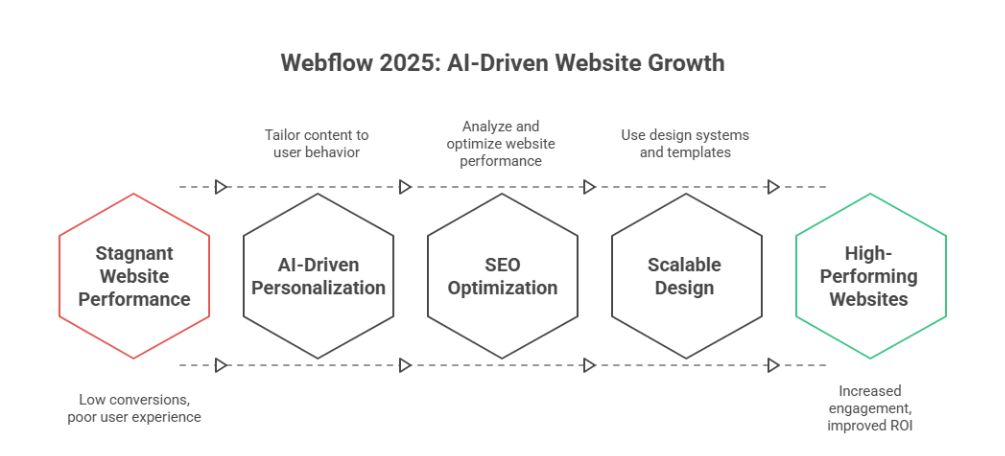
The web development landscape is changing rapidly, and webflow in 2025 clearly reflects this shift. Traditional tools and generic builders are no longer enough for modern businesses. The rise of no-code platforms shows how companies now prioritize speed, flexibility, and maintainability over complex setups. This marks a defining moment in the future of no-code, where platforms are evaluated on real performance not just ease.
Webflow Compared to Other No-Code Platforms
Many no-code platforms offer simplicity, but they often limit customization and scalability. As a website builder, Webflow stands apart by supporting structured website development without sacrificing control. Unlike platforms that rely on rigid templates, platforms like Webflow enable teams to scale confidently, aligning better with web development in 2025 expectations and broader development in 2025 trends.
Why Agencies and Businesses Choose Webflow
From an agency perspective, use Webflow means efficiency across the entire development process. Webflow supports advanced design systems, making collaboration smoother and future updates easier. Webflow provides the flexibility to build high-quality web applications and marketing sites alike, which is why Webflow leads much of the modern no-code web development movement.
Preparing for the Future
For a small business owner, choosing the right platform is critical. The rise of no-code is not about shortcuts—it’s about smarter delivery. As web development in 2025 evolves, Webflow positions itself as a long-term solution that prepares businesses for scalable growth, evolving demands, and the future of digital experiences.
Why Businesses Use Webflow Over Coding WordPress in 2025
- Webflow stands as a modern alternative to heavy traditional development, reducing dependency on manual coding workflows.
- Unlike wordpress in 2025, Webflow enables teams to build fully functional websites without code or a single line of code.
- Webflow empowers non-technical users and teams with little or no technical background to manage and scale sites confidently.
- Built-in responsive design tools ensure consistent performance across devices without extra plugins.
- Compared to many competitors in 2025, Webflow offers faster execution, cleaner structure, and fewer maintenance risks.
- The platform supports complex projects while still simplifying building a website from design to launch.
- As part of the broader no-code evolution, Webflow is actively shaping the future of how businesses approach digital growth.
- This makes Webflow a strong choice for companies preparing for the future of web platforms and long-term scalability.
Conclusion
Webflow’s growth in 2025 clearly reflects how businesses are redefining web development priorities. Performance, scalability, and long-term control now matter more than relying on heavy coding or fragile plugin-based systems. As a mature no-code platform, Webflow allows companies to move faster, maintain design consistency, and adapt to changing digital demands without compromising quality.
When compared with competitors and traditional platforms like WordPress, Webflow stands out for its structured approach, cleaner development process, and ability to support complex, future-ready projects. This shift is not about avoiding expertise—it’s about investing in smarter tools, professional execution, and sustainable growth. Businesses that choose platforms aligned with these values are better positioned to scale, optimize, and compete in an evolving digital landscape.
If your website is critical to growth, the real question is not whether to adopt modern platforms—but how well they are implemented.
Is your current website strategy strong enough, or is it time to talk to Integriti Studio and rethink it?
Frequently Asked Questions (What webflow’s 2025 Growth Signals About The Future of No-Code)
What is the future of webflow?
Webflow’s future in 2025 is strong, evolving as a no‑code, AI-enhanced platform that enables fast, scalable, and high-performance websites. With AI tools, enterprise capabilities, and flexible integrations, Webflow helps businesses and creators build, optimize, and maintain websites efficiently while bridging no-code and traditional development workflows.
What is the future of no-code platforms?
The future of no-code platforms is rapidly expanding, driven by AI integration and increased demand for fast, scalable, and customizable digital solutions. These platforms enable businesses and creators to build websites, apps, and workflows efficiently, reducing reliance on traditional coding while supporting innovation, automation, and faster time-to-market.
Should I learn Webflow in 2025?
Yes, learning Webflow in 2025 is valuable. As a no-code, AI-enhanced platform, it enables you to build responsive, high-performance websites without extensive coding. Mastering Webflow enhances your career opportunities, supports efficient web development, and prepares you for the growing demand for scalable, modern web solutions.
Is web development still relevant in 2025?
Yes, web development remains highly relevant in 2025. Despite the rise of no-code and AI-powered platforms, skilled developers are essential for creating custom, scalable, and secure websites, optimizing performance, integrating advanced features, and ensuring a superior user experience that meets evolving business and technological demands.