
What WordPress Website Mistakes Will Hurt Rankings In 2026
Why do some businesses invest in a wordpress build yet still see declining ranking as competition tightens toward 2026? The gap is rarely about effort. It is usually caused by unseen technical and strategic choices that weaken seo, slow loading, and reduce trust signals across a wordpress website.
WordPress website rankings in 2026 suffer due to slow loading, poor SEO structure, excessive plugins, weak cache setup, bad internal linking, outdated themes, and ignored updates. These common WordPress mistakes hurt user experience, reduce search engine visibility, and prevent proper optimization for long-term ranking growth.
Website performance is influenced by multiple factors working together code quality, user experience, infrastructure, content structure, and long-term maintenance. When wordpress development is handled without professional oversight, even small missteps can turn into a costly wordpress mistake that impacts visibility and ranking. Poor cache handling, rushed updates, or design decisions that ignore user experience often send negative signals to search platforms, directly affecting seo performance.
Professional development goes beyond visuals. Thoughtful design, reliable support, and consistent maintenance protect your investment. For example a properly planned wordpress project may range from $2,500 to $6,000, while ongoing care can cost far less than fixing lost traffic later. That difference often determines whether your site grows or stalls in 2026.
This blog breaks down the most critical mistakes to avoid explains how they impact seo and shows how smarter development decisions help your site meet modern standards and stay competitive.
Critical WordPress SEO Mistakes That Hurt Rankings In 2026
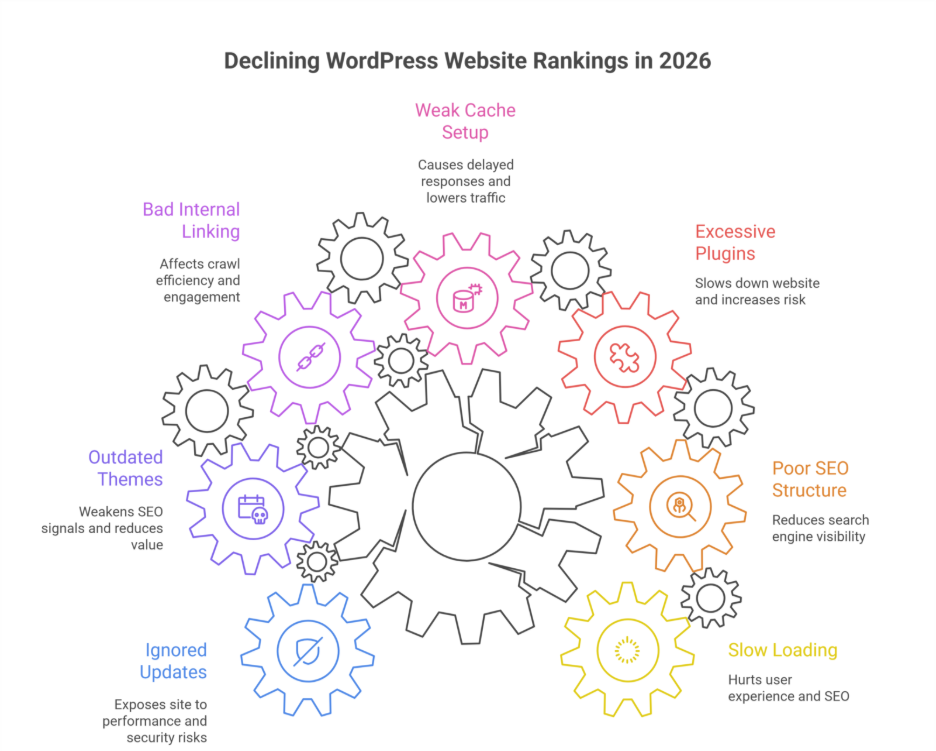
As competition intensifies, many brands unknowingly repeat mistakes in 2026 that directly limit growth. These issues are rarely obvious at first glance, yet they compound over time and damage search engine rankings. Below are the most critical areas where a seo mistake can quietly undo your efforts.
Ignoring Core Updates and Technical Foundations
One common wordpress mistake is delaying maintenance. Failing at updating your wordpress core or managing wordpress core files correctly exposes your wordpress site to performance and security risks. Outdated systems weaken wordpress seo signals and reduce long-term seo value, especially for a new website competing in crowded markets.
Overlooking Structure Design and Content Logic
Poor website design choices remain among the top web design mistakes to avoid. Weak navigation, cluttered layouts, and misuse of wordpress categories create seo errors that affect crawl efficiency. These are classic wordpress seo mistakes that hurt relevance and engagement.
Mismanaging Plugins Hosting and Data
Heavy or unvetted wordpress plugins, weak wordpress hosting, and an unoptimized wordpress database slow performance. These are mistakes that hurt both trust and usability. Combined with gaps in wordpress security and website security, they increase risk and frustrate website visitors.
Strategic Oversights That Limit Growth
From ignoring local seo to poor execution in custom wordpress builds, agencies consistently find wordpress mistakes we see across industries. Many are mistakes you can make inside the wordpress dashboard without realizing the impact.
How to Move Forward
To fix these mistakes, brands must reassess their version of your website, review common seo, and align wordpress development with modern standards. These are the real mistakes to avoid in 2026 if you want to help optimize your website, optimize your website for search, and truly avoid these mistakes moving forward.
Common WordPress Plugin And Cache Mistakes To Avoid SEO
Search performance issues often originate from plugin misuse and poor cache configuration.
Step 1: Installing Too Many Or Poor-Quality Plugins
One common wordpress mistake is relying on excessive or free or cheap wordpress tools without reviewing impact. Bloated wordpress plugins create a clear seo mistake by adding scripts that slows down your website and increases risk of website crashes. These are classic wordpress seo mistakes that reduce trust and engagement.
Step 2: Cache Misconfiguration And Hosting Gaps
Improper cache rules, combined with weak wordpress hosting or an unreliable wordpress hosting provider, cause delayed responses. This directly affects user experience and search rankings and lowers website traffic. Many wordpress mistakes we see originate from a mismatch between cache layers and the website hosting provider setup.
Step 3: Ignoring Core Compatibility And Updates
Failing at updating your wordpress core or maintaining wordpress core files can break cache logic and plugins. This creates seo errors, exposes wordpress security gaps, and impacts website security all mistakes that hurt long-term growth on any wordpress site, including a new website or custom wordpress build.
Step 4: No Testing Or Ongoing Review
Many mistakes you can make happen inside the wordpress admin dashboard or wordpress dashboard when changes go untested. Agencies recommend to test your website, review the version of your website, and audit the wordpress database regularly to protect search engine rankings and seo value.
Step 5: Fixing The Right Way
To fix these mistakes, align wordpress development with smart website development, clean website design, proper cache rules, and structured wordpress categories. These are seo mistakes to avoid if you want to optimize your website, optimize your website for search, help optimize your website, and ultimately avoid these mistakes that can hurt your site and limit website visitors.
Conclusion
WordPress performance in 2026 is no longer about isolated fixes—it is about consistency structure, and accountability. As outlined above, slow loading unmanaged plugins, poor cache handling delayed updates, and weak development decisions are not minor oversights they are strategic gaps that directly impact SEO trust and long-term rankings. These mistakes often accumulate quietly until traffic drops visibility declines and recovery becomes expensive.
A well-maintained WordPress website requires proactive audits, disciplined plugin usage secure hosting, and development choices aligned with modern search standards. Businesses that treat SEO, performance, and maintenance as ongoing priorities—not one-time tasks are the ones that stay competitive as algorithms and user expectations evolve.
If your site is already live, the real question is simple but important:
Are these issues already affecting your rankings and is it time to speak with Integriti Studio before they cost you more?
Frequently Asked Questions (What WordPress Website Mistakes Will Hurt Rankings In 2026)
Is WordPress still in demand in 2025?
Yes, WordPress remains in demand in 2025 due to its flexibility, large plugin ecosystem, and ease of use for both businesses and developers. It continues to power blogs, ecommerce sites, and enterprise platforms, especially when combined with modern themes, SEO optimization, and security enhancements.
Is WordPress being phased out?
No, WordPress is not being phased out. While new platforms like Webflow and headless CMS options are growing, WordPress remains widely used due to its flexibility, extensive plugin ecosystem, and strong community support. Businesses continue relying on it for blogs, ecommerce, and enterprise websites in 2025.
What are common WordPress issues?
Common WordPress issues include slow site speed, outdated plugins or themes, security vulnerabilities, broken links, and poor mobile optimization. Duplicate content, inefficient SEO practices, and plugin conflicts can also affect performance. Regular updates, proper maintenance, and optimization are essential to keep a WordPress site secure and high-performing.
What are the disadvantages of WordPress?
The main disadvantages of WordPress include security risks from outdated plugins or themes, slower performance on complex sites, frequent maintenance requirements, and potential plugin conflicts. Customization beyond standard themes often requires coding skills, and poorly optimized sites can suffer from SEO and usability issues.