
What Will Separate Average Webflow Sites From Great Ones In 2026
Why do some Webflow sites feel seamless and intuitive, while others leave visitors frustrated and disengaged? The difference often isn’t in the platform itself it’s in the choices behind design, development, and ongoing maintenance. By 2026, the standards for high-performing Webflow websites will rise dramatically, driven by factors like page speed, SEO optimization, accessible layouts, UX-focused interfaces, and the intelligent use of AI in workflows.
By 2026, great Webflow sites will stand out through faster performance, SEO-friendly structure, intuitive UX, accessible layouts, and polished animations. Strategic AI use, professional development, and ongoing optimization will boost conversion and brand credibility, while average sites lag due to poor design, slow workflows, and lack of maintenance.
Professional development and expert support are no longer optional. Investing in well-structured semantic code, smooth animations, and thoughtful interaction design ensures your brand communicates credibility while boosting conversion rates. Even small improvements like optimizing layouts for accessibility or refining micro-interactions can impact performance and user satisfaction. Typical professional development packages start from a few thousand dollars but deliver measurable ROI through higher engagement, faster loading times, and stronger brand presence.
This blog will explore what separates average Webflow sites from truly great ones in 2026. You’ll learn which web design decisions matter most, how to leverage AI and modern workflows, and why ongoing optimization, support, and UX enhancements are critical to keeping your website competitive in the evolving digital landscape.
AI and UX Trends Shaping Webflow Sites in 2026
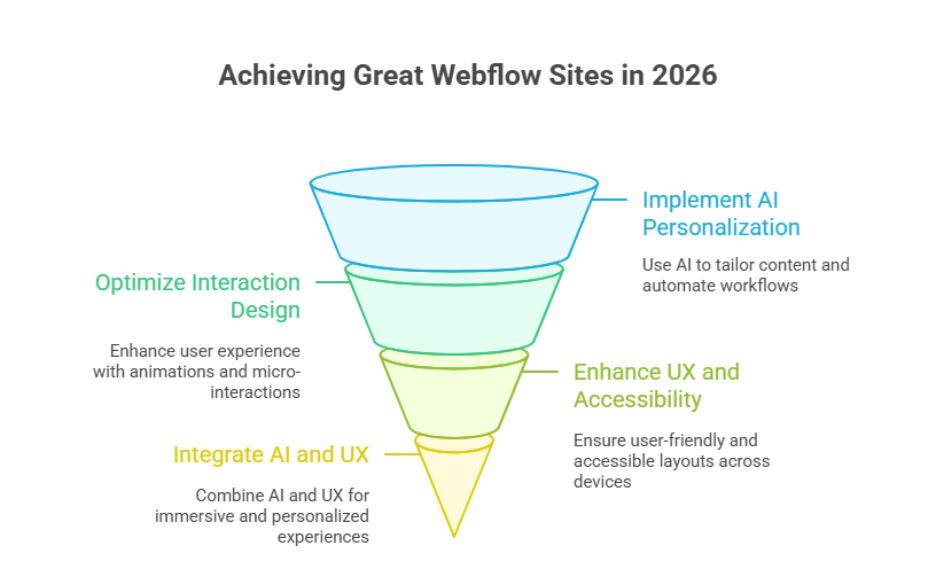
By 2026, high-performing Webflow websites will rely on the seamless integration of AI and UX. These trends will shape how users interact with modern websites, improve conversion rates, and create immersive digital experiences that build trust. Whether your website is built for SaaS, ecommerce, or a portfolio, following structured steps ensures measurable results.
Step 1: Implement AI-Driven Personalization and Automation
- Use AI tools to tailor content dynamically based on user behavior.
- Automate workflows in Webflow CMS items, like updating content or managing SEO for search engines.
- Track analytics to measure engagement, scroll behavior, and conversion rates.
Step 2: Optimize Interaction and Motion Design
- Add scroll-triggered animations, micro-interactions, and motion design to guide users seamlessly.
- Align UI elements with your brand and design systems for a cohesive experience.
- Ensure minimalism and typography choices enhance readability and accessibility.
Step 3: Enhance UX and Accessibility
- Test navigation and layouts for accessibility compliance.
- Focus on user experience that keeps visitors engaged across all devices.
- Combine immersive visuals with Webflow SEO best practices for discoverability.
Step 4: Integrate AI and UX for Next-Generation Websites
- Build AI-ready frameworks to deliver personalized digital experiences.
- Collaborate with Webflow agencies or internal teams to align design and development.
- Use automation and analytics to continuously improve performance, creating high-performing websites that convert and scale.
Key Webflow Features That Drive Great Web Design
CMS Items and Dynamic Content
Webflow’s CMS allows digital teams to manage content efficiently through CMS items. Dynamic templates ensure consistency across pages, while supporting good design and technical SEO best practices, including answer engine optimization (AEO). This enables scalable websites that deliver measurable business impact.
Drag-and-Drop Design and Aesthetics
The drag and drop interface empowers teams to create visually compelling layouts without coding. By combining flexibility with design aesthetics, designers can implement grids, motion, and typography that enhance user engagement, all without sacrificing performance.
Technical Capabilities for SEO and Performance
Webflow’s platform offers robust technical SEO tools, semantic code, and fast hosting. Features like optimized headings, images, and integrations with large language models support enterprise-level speed and search visibility, helping sites achieve measurable business impact.
Integrating Design and Business Goals
By leveraging CMS, drag-and-drop design, and technical capabilities together, Webflow enables web solutions that balance creativity with performance. This approach turns websites from novelty to necessity, ensuring brands stay ahead of the curve heading into 2026.
Conclusion
As we’ve explored, the gap between average and great Webflow sites in 2026 will be defined by deliberate choices in design, development, and ongoing optimization. High-performing websites seamlessly combine AI-driven personalization, thoughtful UX, accessible layouts, and technical SEO practices all supported by professional development and well-structured workflows. Features like CMS items, drag-and-drop design, and advanced motion and interaction elements allow digital teams to create web solutions that are visually compelling, scalable, and measurable.
Investing in these capabilities ensures that your website not only engages users but also drives conversion, strengthens brand credibility, and remains competitive in a rapidly evolving digital landscape. Small improvements optimizing accessibility, refining micro-interactions, or integrating AI frameworks can deliver a measurable business impact that far outweighs the initial investment.
if you want a website built to these standards, why not contact Integriti Studio and see how they can transform your Webflow site into a high-performing, future-ready platform?
Frequently Asked Questions (What Will Separate Average Webflow Sites From Great Ones In 2026)
What is the future of Webflow?
The future of Webflow looks strong, focusing on AI-driven design, seamless UX, and scalable CMS capabilities. By 2026, it will empower businesses to build high-performing, visually compelling websites without heavy coding, integrating advanced SEO, automation, and interactive features that keep brands competitive in the evolving digital landscape.
What are the web design trends in 2026?
Web design trends in 2026 will emphasize AI-driven personalization, immersive UX, and seamless interaction design. Minimalism, accessible layouts, dynamic motion, and bold typography will dominate, while integration with analytics and automation ensures high-performing, conversion-focused websites that deliver measurable business impact across devices and platforms.
Is Webflow still relevant in 2025?
Yes, Webflow remains highly relevant in 2025. Its no-code platform enables designers and digital teams to create high-performing, visually compelling websites with CMS flexibility, advanced interaction design, and SEO optimization. Webflow continues to attract businesses seeking scalable, modern website solutions without heavy coding.
What are the statistics for Webflow in 2025?
Yes Webflow has significant usage and continued growth in 2025. It powers around 493,000+ active websites and holds about 1.2% of the CMS market share (0.8% of all sites globally). Its adoption has increased year‑over‑year, showing steady expansion as designers, enterprises, and companies leverage the platform for modern web design.
Leave a Reply