
Shopify Platform Shifts Store Owners Should Be Aware of
Why do some Shopify businesses grow smoothly while others struggle to keep up? The answer often lies in how well you understand the platform changes shaping performance behind the scenes. As a store owner, you are not just managing products you are managing technology, expectations, and long-term scalability across your ecommerce operation.
Shopify is constantly evolving, and store owners must adapt to platform shifts like AI integration, app updates, checkout optimization, and mobile improvements. Staying updated prevents common mistakes, enhances customer experience, boosts conversion, and ensures your ecommerce store remains scalable, secure, and competitive in 2025 and beyond.
Platform updates, evolving development standards, and smarter use of ai are directly influencing speed, stability, and revenue potential on shopify. Factors such as theme structure, app usage, code quality, and ongoing maintenance all play a role in how efficiently every store performs. Professional development is no longer optional; it directly impacts reliability, security, and future growth.
Well-planned design, proactive support, and continuous maintenance create real business value. For example, a professionally maintained shopify store may involve a modest monthly investment often comparable to routine operational costs but it prevents costly issues and performance loss over time.
This blog explores the key shopify platform shifts store owners should be aware of, explains how these changes affect decision-making, and outlines smarter development choices that help your business stay competitive as shopify continues to evolve.
Shopify ecommerce shifts every store owner must understand today
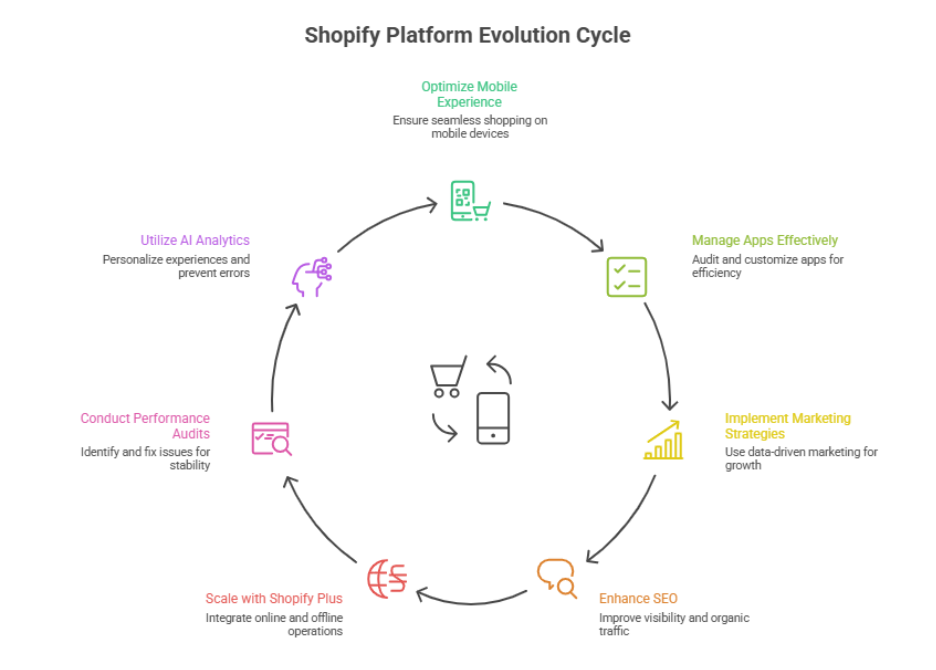
Mobile Optimization and Seamless Shopping
Mobile optimization is critical for Shopify store owners. Many store owners make the mistake of focusing only on desktop, leading to slow load times and a poor shopping experience. Optimizing your site with tools like Google PageSpeed Insights and Shopify’s mobile features ensures a seamless experience, improving customer trust and conversions.
App Management and Customization
Using Shopify apps enhances functionality, but many apps or non-essential integrations can cause issues such as performance issues or technical issues. New store owners should regularly audit app usage and focus on customizable solutions that align with business needs while minimizing the total cost of ownership.
Upsells, Paid Ads, and Shopify Marketing
Effective Shopify marketing includes upsells and paid ads, but store owners make mistakes when these tools are implemented without analyzing key Shopify metrics. Using data-driven strategies helps you make informed decisions, drive shopify orders, and improve customer experience.
SEO and Search Engine Optimization
Proper search engine optimization is essential for a shopify store’s visibility. Avoid common Shopify mistakes like cluttered pages, poor store look, or missing meta data, which causes issues with rankings. Optimizing product pages, descriptions, and site structure enhances organic traffic and supports improving sales.
Shopify Plus and Unified Commerce Platforms
Leading Shopify merchants often move to Shopify Plus or unified commerce platforms to integrate in-store and online operations on a single platform. This setup helps Shopify merchants scale efficiently, reduce technical issues, and provide a seamless customer experience across all channels.
Performance Audits and Analytics Tools
Regular audit of your tech stack and site performance is crucial. Using tools like analytics dashboards enables many store owners to identify common Shopify mistakes and optimize your online store’s performance, ensuring your store’s functionality and revenue potential remain strong.
AI optimization analytics improving Shopify store customer experience today
Improving your Shopify store with AI optimization analytics can be approached in clear, sequential steps that ensure every visitor has a seamless and engaging experience.
Step 1: Centralize Your Analytics in One Platform
The first step for any Shopify store owner is to integrate all performance analytics and AI-driven insights into one platform. This centralization provides a comprehensive view of your store’s health, including core web vitals, page load times, and user behavior. Having a single, unified dashboard allows you to monitor traffic patterns and detect potential issues early, helping you avoid mistakes that could create a negative impact on customer experience.
Step 2: Understand How Customers Navigate Your Store
Next, analyze how visitors move through your store. AI tools can reveal which pages receive the most attention, where customers hesitate, and which paths lead to checkout. This insight allows you to structure your site so customers to find products quickly, making it easier for them to explore your offerings. By understanding these patterns, you can design intuitive navigation that naturally guides visitors toward the products they are most interested in.
Step 3: Personalize the Shopping Experience
Once navigation insights are in place, the next step is to leverage AI to deliver personalization. By analyzing browsing history, purchase trends, and product preferences, AI can recommend items across the entire product category and highlight products most likely to move into products to cart. Personalization ensures that each visitor encounters content tailored to their needs, while also helping you showcase your products in a way that maximizes engagement and conversions.
Step 4: Prevent Errors and Maintain Performance
Monitoring site performance continuously is critical. AI analytics can alert you to slow-loading pages, broken links, or checkout issues before they affect customers. By staying proactive, you can avoid breaking essential processes, ensuring that every transaction and interaction runs smoothly. Maintaining optimal core web vitals prevents frustration and helps maintain a positive perception of your store, allowing you to help customers make decisions confidently.
Step 5: Optimize Product Visibility and Conversions
With a stable and well-performing site, the next step is to optimize product placement and recommendations. AI insights allow you to feature top-selling items across the entire product category while suggesting complementary products that encourage additional purchases. By doing this strategically, customers to find what they need becomes effortless, increasing the likelihood that items move into products to cart. This step ensures that your store is both engaging and conversion-focused.
Step 6: Continuously Improve the Customer Experience
Finally, AI optimization is not a one-time task. Continuous monitoring of performance analytics allows you to refine your strategy over time. By regularly assessing customer behavior, updating recommendations, and testing new layouts, you can ensure your store consistently delivers a seamless experience. This ongoing process helps you avoid mistakes, prevent create a negative user experience, and consistently help customers make confident purchase decisions, all from one platform.
Conclusion
Navigating Shopify’s evolving landscape requires more than just managing products it demands understanding platform shifts, optimizing performance, and leveraging AI-driven insights to enhance the customer experience. From mobile optimization and app management to personalized AI recommendations, each element contributes to smoother navigation, higher conversions, and a scalable, secure store. By continuously auditing performance, analyzing customer behavior, and making data-driven decisions, store owners can avoid mistakes, maintain core web vitals, and ensure visitors are guided effortlessly from discovery to products to cart.
Investing in professional support and proactive maintenance may seem like an added cost, but it delivers long-term value by preventing downtime, technical issues, and creating a negative user experience. Ultimately, stores that embrace AI optimization analytics and integrate performance analytics into one platform are best positioned to help customers make confident purchasing decisions and showcase their offerings across the entire product category efficiently.
if you want your Shopify store to stay competitive and truly maximize its potential, why not reach out to Integriti Studio and see how they can transform your customer experience today?
Frequently Asked Questions (Shopify Platform Shifts Store Owners Should Be Aware of)
What are the issues with Shopify?
Common issues with Shopify include high transaction fees without Shopify Payments, limited customization compared to open-source platforms, reliance on paid apps for advanced features, slower loading for large stores, and SEO limitations. Additionally, migrating away from Shopify can be complex due to platform-specific data and design structures.
How to maintain a Shopify store?
To maintain a Shopify store, regularly update products, prices, and inventory, monitor site performance and loading speed, update apps and themes, back up store data, optimize SEO, ensure smooth payment and checkout processes, and monitor security. Regularly reviewing analytics helps improve user experience and sales.
What are the challenges of Shopify store owners?
Shopify store owners face intense competition, rising advertising costs, conversion optimization struggles, technical customization limits, app overdependence, inventory management complexities, cashflow pressure, and retention challenges.
How do Shopify stores get traffic?
Shopify stores get traffic through SEO-optimized content, social media marketing, paid ads like Google Ads or Facebook Ads, email marketing, influencer collaborations, and referral programs. Additionally, leveraging Shopify apps for analytics, retargeting, and promotions helps attract, engage, and convert visitors into customers effectively.
Leave a Reply