Category: Studioblogs

  • The Role of AI in Shopify Theme Development. Smarter, Faster & Better

    The Role of AI in Shopify Theme Development. Smarter, Faster & Better

    The Role of AI in Shopify Theme Development. Smarter, Faster & Better

    Introduction

    Shopify has highly revolutionized eCommerce by providing a very user friendly platform. This allows businesses to totally create and manage online stores very effortlessly. However, with the highly increasing competition. Having just an online store is not quite enough. The design, complete functionality, and user experience of a Shopify store play a highly crucial role in attracting and retaining a lot of customers. This is where AI powered Shopify theme development will totally step in. It makes the process highly smarter, faster, and better. AI integration and AI technology now empower Shopify merchants to work faster and smarter, leveraging AI systems to optimize workflows and automate repetitive tasks.

    In this article, we will explore completely how AI is transforming Shopify theme development services. Highly enhancing user experience, improving design automation, and enabling businesses to highly optimize their stores like never before. Discover how AI brings advanced AI analytics and AI models to help Shopify store owners create personalized shopping experiences, tailored product recommendations, and smarter shopping journeys.

    How AI is Revolutionizing Shopify Theme Development
    How AI is Revolutionizing Shopify Theme Development

    1. Automating Shopify Theme Customization

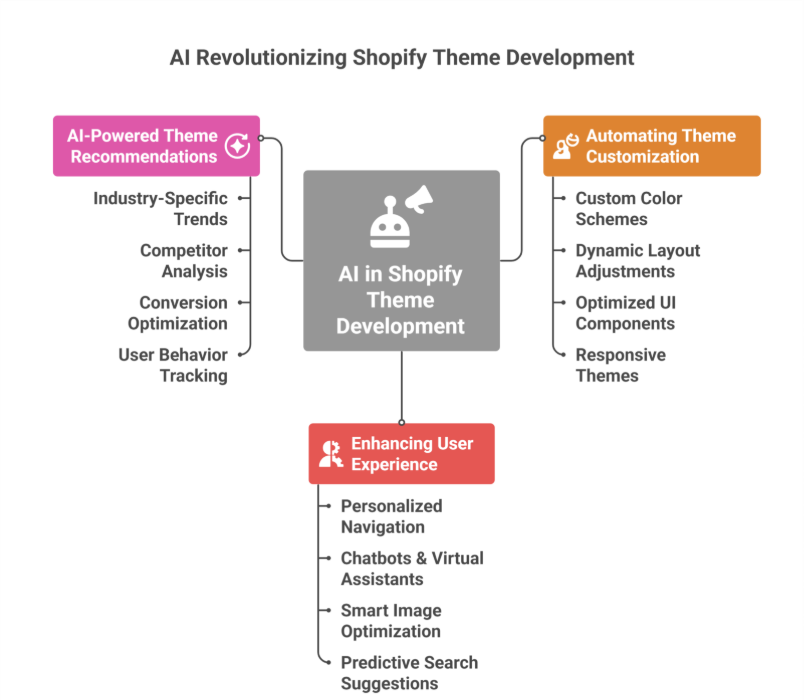
    One of the biggest advantages of AI in theme development Shopify is its ability to completely automate design tasks. Traditionally, developers had to manually code customizations, which was very time consuming. Now, AI driven tools can:

    • Generate custom color schemes and layouts based on brand identity.
    • Adjust fonts, spacing, and element placement dynamically.
    • Analyze user preferences to suggest optimized UI components.
    • Auto-generate responsive themes that adapt seamlessly to mobile and desktop views.

    With these AI capabilities, Shopify store owners no longer have to rely totally on best Shopify theme developers for very basic customizations. AI and automation also help merchants streamline inventory management, track purchase history, and enhance the average order experience.

    2. Enhancing User Experience (UX) with AI Driven Insights

    A store’s user experience can make or totally break conversions. AI helps Shopify developers improve UX by analyzing customer behavior and optimizing design accordingly. AI excels in providing actionable AI analytics to understand the customer journey and create personalized product recommendations.

    How AI improves UX:

    • Personalized Navigation: AI studies how users interact with different parts of a store. Then it dynamically adjusts menus, filters, and product recommendations.
    • Chatbots & Virtual Assistants: AI powered chatbots provide very real time customer support,highly reducing bounce rates.
    • Smart Image Optimization: AI compresses images without reducing quality. Ensuring faster loading times.
    • Predictive Search Suggestions: AI driven search features enhance product discovery. Making it much easier for users to find exactly what they need.

    By integrating AI into Shopify theme development services, developers can create stores that feel fully intuitive and engaging, and help Shopify stores optimize the overall customer experience.

    3. AI Powered Theme Design Recommendations

    Choosing exactly the right Shopify theme can be quite overwhelming for business owners. AI powered tools can now totally analyze store data, industry trends, and customer demographics to recommend most of the highly suitable themes. AI and artificial intelligence help businesses adopt AI to transform their Shopify store design, leveraging AI algorithms to tailor every aspect of the online store experience.

    AI-driven theme selection considers:
    • Industry-specific trends: Suggesting themes tailored for fashion, electronics, beauty, etc.
    • Competitor analysis: Learning from top-performing competitors’ store designs.
    • Conversion optimization: Prioritizing layouts proven to drive higher sales.
    • User behavior tracking: Recommending UI/UX changes based on real customer interactions.

    These AI-powered insights take the guesswork out of selecting a theme, helping businesses build visually appealing and functional stores effortlessly. AI continues to transform Shopify development services by embedding AI capabilities directly into the Shopify website development process.

    AI in Shopify Theme Development: Practical Applications

    1. Code Generation & AI-Assisted Development

    Developing custom Shopify themes used to require extensive coding knowledge. With AI-assisted tools, best Shopify theme developers can now generate clean, optimized code faster. AI integration in code generation allows developers to leverage AI to create highly efficient Shopify website themes.

    AI’s role in coding Shopify themes:
    • Automated CSS & HTML generation for faster front-end design.
    • Code completion & error detection for smooth performance.
    • AI-generated theme templates to reduce development time.
    • Real-time debugging to minimize theme-related issues.

    This totally speeds up the process, allowing developers to focus on fine tuning and creating very unique stores.

    2. AI Powered A/B Testing for Theme Optimization

    AI helps businesses totally determine which theme designs will work best through automated A/B testing. This involves testing multiple theme variations to see which performs better. AI helps Shopify stores optimize conversion and personalize the shopping experience using real-time insights.

    AI-driven A/B testing benefits:
    • Identifies high-converting layouts.
    • Optimizes call-to-action (CTA) placements.
    • Adjusts color schemes based on user interactions.
    • Tracks real-time user behavior for data-driven improvements.

    With AI, Shopify store owners can ensure their themes are continuously optimized for better engagement and sales.

    3. AI-Generated Content for Shopify Themes

    AI is also making content creation for Shopify themes easier. From product descriptions to homepage banners, AI-generated content ensures a consistent and engaging user experience. AI and AI-powered tools help merchants personalize content to enhance inventory and product management.

    How AI enhances content creation:

    • Generates compelling product descriptions based on SEO best practices.
    • Creates personalized landing pages tailored to different customer segments.
    • Auto-translates store content for global audiences.
    • Suggests SEO-friendly headlines & meta tags to highly improve search rankings.

    AI powered content solutions ensure that Shopify themes are not only very aesthetically pleasing but also highly optimized for engagement.

    Future of AI in Shopify Theme Development

    As AI continues to evolve. The possibilities for Shopify theme development are highly expanding. Soon, we can expect:

    • AI-powered real-time theme updates that adapt based on customer preferences.
    • Augmented Reality (AR) integrations within Shopify themes.
    • Voice-search optimized themes for a more interactive experience.
    • AI-powered dynamic pricing based totally on demand and user behavior.

    With these advancements, Shopify store owners will be able to create totally personalized, intelligent, and very efficient online shopping experiences.

    Conclusion

    AI is transforming Shopify theme development services by highly automating design, improving user experience, and providing data-driven insights. Whether it’s theme selection, UX optimization, code generation, or content automation, AI is making Shopify themes much smarter, faster, and better.

    By highly embracing AI-driven development, businesses can create very well performing Shopify stores that are not only visually appealing but also highly optimized for conversions. The future of theme development Shopify is here, and AI is leading the way. AI integration and AI-powered automation now allow Shopify merchants to streamline workflows, analyze customer behavior, and create personalized shopping experiences.

    Want your business to be seen and heard online? Explore our Services
     

    Frequently Asked Questions (The Role of AI in Shopify Theme Development. Smarter, Faster & Better)

    Can AI help with Shopify?

    Yes, AI can greatly help with Shopify by automating tasks like product recommendations, inventory management, and customer support. It enhances personalization, improves marketing strategies, and optimizes store performance. AI tools streamline operations, save time, and boost sales, making Shopify stores smarter and more efficient.

    How does AI help in product development?

    AI helps in product development by analyzing market trends, customer preferences, and competitor data to guide design decisions. It accelerates prototyping, predicts product performance, and identifies potential improvements. By automating research and testing, AI reduces development time, lowers costs, and enhances the likelihood of creating successful products.

    How can AI improve eCommerce?

    AI improves eCommerce by personalizing customer experiences, optimizing product recommendations, and enhancing inventory management. It automates customer support, predicts trends, and analyzes buying behavior to boost sales. By streamlining operations and improving decision-making, AI increases efficiency, customer satisfaction, and overall profitability for online businesses.

    What is the main advantage of using Shopify?

    The main advantage of using Shopify is its user-friendly platform that enables businesses to easily create, manage, and scale online stores. With built-in tools for payments, inventory, and marketing, it streamlines operations, reduces technical complexity, and supports growth, making eCommerce efficient and accessible for all.

  • Unlocking Efficiency: How Outsourcing Marketing Boosts Solopreneur Productivity

    Unlocking Efficiency: How Outsourcing Marketing Boosts Solopreneur Productivity

    UNLOCKING EFFICIENCY: HOW OUTSOURCING MARKETING BOOSTS SOLOPRENEUR PRODUCTIVITY

    ‍Are you a solopreneur juggling multiple tasks and feeling overwhelmed by the demands of running your business? Imagine a world where you could reclaim precious time, focus on core activities, and accelerate growth without sacrificing your sanity. The key to unlocking this efficiency lies in outsourcing your marketing efforts. Let’s explore how delegating marketing tasks and leveraging the power of outsourcing can supercharge your productivity and propel your solo venture to new heights!

    The Solopreneur Struggle: Jack of All Trades, Master of None

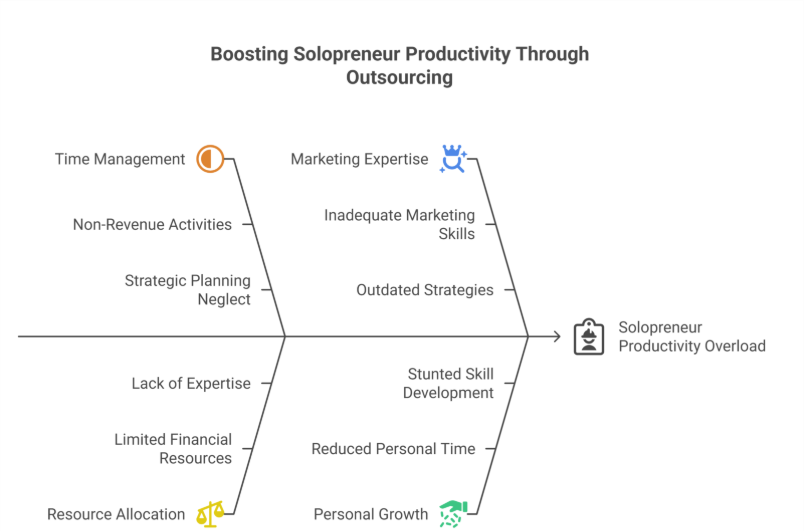
    As a solopreneur, you wear many hats CEO, marketer, accountant, customer service rep, and more. While multitasking is a valuable skill, spreading yourself too thin can hinder productivity and stunt business growth. According to recent studies, solopreneurs spend an average of 60% of their time on non-core, time-consuming activities, such as marketing, bookkeeping, and administrative tasks.

    Imagine what you could achieve with that time if it were dedicated to strategic planning, client acquisition, product development, or personal growth. Outsourcing your marketing operations and automating repetitive tasks offers a lifeline, allowing you to focus on high-impact activities while experts handle the rest. Using project management tools and platforms like Upwork and Fiverr can further streamline workflow and help solopreneurs stay organized, track their time, and make informed decisions.

    Efficiency Unlocked: Numbers Don’t Lie

    Efficiency Unlocked: Numbers Don't Lie

    Let’s break down the efficiency equation with real-world numbers:

    Time Savings: By outsourcing marketing tasks and automating repetitive tasks, solopreneurs can reclaim up to 20 hours per week, equivalent to 1,040 hours per year. That’s over 43 days of productivity redirected towards revenue-generating activities!

    Revenue Growth: Studies show that businesses that invest in strategic marketing outsourcing and leverage advanced AI for social media posting or content creation experience a 30% increase in revenue within the first year. Imagine the impact of that growth on your bottom line and business sustainability.

    Cost-Effectiveness: Contrary to popular belief, outsourcing marketing operations can be cost-effective. Solopreneurs can save up to 40% on marketing expenses by paying for specific services as needed, rather than maintaining a full-time marketing team. Tools to streamline collaboration and project management allow solopreneurs to focus on what truly matters and enhance productivity.

    Real-World Success Stories: Let’s introduce you to Jane, a solopreneur and founder of a boutique e-commerce store. Like many entrepreneurs, Jane struggled to balance marketing demands with other business priorities. Feeling overwhelmed, she decided to outsource her social media management and content creation to a digital marketing agency.

    The results were transformative. Jane regained 15 hours per week, which she reinvested in product sourcing, customer engagement, and business strategy. Within six months, her online sales increased by 40%, and she gained a loyal customer following. By using platforms like QuickBooks and Xero for bookkeeping and automating repetitive tasks, Jane could keep track of essential tasks and focus on scaling her business. Today, Jane attributes much of her success to the efficiency gained through outsourcing marketing tasks.

    Embracing a Productivity Mindset: It’s More Than Delegation

    Outsourcing marketing isn’t just about delegating tasks it’s about embracing a productivity mindset. By leveraging external expertise, solopreneurs can access specialized skills, industry insights, and innovative strategies that elevate their brand presence and market positioning. This approach helps small business owners optimize workflow, stay organized, and ultimately achieve greater success.

    Imagine waking up each day with a clear focus on business growth, work-life balance, and client satisfaction, knowing that your marketing initiatives are in capable hands. Outsourcing empowers solopreneurs to work smarter, not harder, and achieve their entrepreneurial dreams with confidence.

    Let’s Make it Fun: Visualize Your Path to Efficiency

    Take a moment to visualize your journey to efficiency with outsourcing marketing. Picture yourself collaborating with skilled professionals, executing creative campaigns, and celebrating business milestones. How would reclaiming time and boosting overall productivity transform your solopreneur experience? Tools like project management software, automation, and platforms like Upwork or Fiverr make it easier for solopreneurs to connect, collaborate, and experiment with different strategies while keeping track of essential tasks.

    Conclusion: Unleash Your Solopreneur Potential with Outsourcing

    In conclusion, outsourcing marketing is a productivity game-changer for solopreneurs seeking to unlock efficiency and accelerate growth. By reallocating time, driving revenue growth, optimizing costs, automating repetitive tasks, and embracing a productivity mindset, solopreneurs can thrive in competitive markets and achieve sustained growth.

    Ready to reclaim your time and elevate your business? Explore outsourcing options, leverage the power of automation, connect with reputable marketing partners, and embark on a journey of efficiency and productivity. The future of your solopreneur venture awaits—unlock it today!

    Frequently Asked Questions (Unlocking Efficiency: How Outsourcing Marketing Boosts Solopreneur Productivity)

    How does outsourcing influence efficiency?

    Outsourcing significantly boosts efficiency by allowing businesses to delegate specialized tasks to external experts. This frees internal resources, reduces workload, and accelerates project timelines. Companies can focus on core activities, improve productivity, and access skilled talent without investing heavily in training or infrastructure, ensuring smoother operations.

    How does outsourcing help a business?

    Outsourcing helps a business by reducing operational costs, accessing specialized expertise, and improving focus on core activities. It enables faster project completion, enhances flexibility, and allows scalability without heavy investment. Overall, it streamlines operations, increases productivity, and supports business growth efficiently and effectively.

    How does outsourcing increase profitability?

    Outsourcing increases profitability by lowering operational costs, reducing overhead, and improving efficiency. It allows businesses to focus on revenue-generating activities while external experts handle specialized tasks. This leads to faster project delivery, higher quality output, and optimized resource allocation, ultimately boosting overall profit margins.

    Can outsourcing boost efficiency by up to 25?

    Yes, outsourcing can boost efficiency by up to 25% by delegating specialized tasks to experts, streamlining workflows, and reducing time spent on non-core activities. This allows businesses to focus on strategic goals, optimize resources, and accelerate project completion, resulting in measurable productivity and performance gains.

  • Unveiling the True Value: Measuring ROI in Social Media Marketing

    Unveiling the True Value: Measuring ROI in Social Media Marketing

    UNVEILING THE TRUE VALUE: MEASURING ROI IN SOCIAL MEDIA MARKETING

    Welcome to the world beyond likes and shares! In the realm of social media marketing and broader digital marketing, understanding the true return on investment (ROI) goes far beyond surface-level metrics and vanity metrics. Let’s embark on a journey to uncover the real value of social media efforts, social media activities, and measurable outcomes that impact the heart of your business.

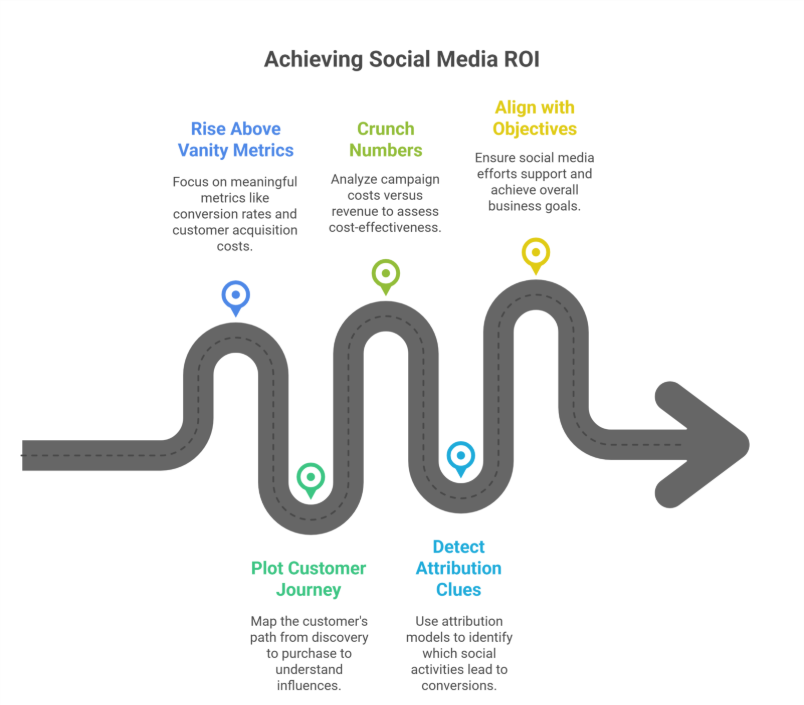
    Rise Above Vanity Metrics

    Forget the heart-eyed emojis—let’s talk business! Brands are diving deep into metrics that matter, like conversion rates, customer lifetime value, and marketing ROI. Imagine tracking how a single post translates into actual sales through analytics and ROI metrics. That’s the kind of ROI magic we’re talking about!

    Plotting the Customer Adventure

    Plotting the Customer Adventure

    Social media is the hero in your customer’s epic journey. Picture this: a customer discovers your brand on Instagram, explores more on Facebook, and makes a purchase on your website. By mapping this customer journey with social media analytics and AI-powered insights, brands gain insights into what truly influences buying decisions and connects social media to business impact.

    Crunching Numbers, Saving the Day

    ROI is the superhero of marketing efficiency. Brands are crunching numbers to uncover the cost-effectiveness of their social media strategies using ROI calculation, ROI data, and marketing investments. It’s like solving a puzzle—comparing campaign costs, ad spend, and social media campaigns to the revenue they bring in.

    What if a ninja software company mastering LinkedIn ads. They calculate the cost per lead, measure ROI using analytics dashboards, and unleash their budget where it packs the biggest punch!

    Detecting Attribution Clues

    Attribution models are the Sherlock Holmes of social media ROI. Brands use them to solve mysteries—like which social activities lead to conversions. It’s all about assigning credit to each touchpoint along the customer journey and understanding the impact of social platforms.

    Picture a travel agency using a multi-touch attribution model to solve the case of social media impact. By uncovering clues, they optimize their social mix for maximum ROI and measurable business growth!

    Aligning with Epic Objectives

    In the world of ROI adventures, goals are the guiding stars. Brands set clear objectives—whether it’s boosting sales, driving traffic, increasing brand awareness, or shouting their brand from the rooftops. They measure social media success against these epic quests that align with business goals and marketing strategy.

    Think of a startup aiming for app domination. They launch Instagram campaigns and track the download tsunami through Google Analytics and other dashboards. It’s ROI gold when social efforts align with business goals and contribute to revenue growth in 2025!

    Conclusion: Embrace the ROI Adventure

    As you venture through the social media wilderness, remember: ROI is your compass, guiding you to real business treasure. Leave likes and impressions behind and focus on metrics that move mountains. By uncovering the true value of social media efforts, understanding ROI frameworks, and using ROI formulas, you’ll conquer ROI like a fearless explorer!

    So, grab your ROI map and embark on the quest for marketing greatness. Measure, optimize, and let social media ROI be the hero of your business saga—because ROI matters, social media contributes to business growth, and tracking ROI helps marketers make smarter decisions across social media in 2025!


    Frequently Asked Questions (Unveiling the True Value Measuring ROI in Social Media Marketing)

    How do you measure ROI on social media?

    Social media ROI is measured by comparing the revenue or measurable results generated from campaigns to the total costs invested. Track metrics like conversions, leads, sales, website traffic, and engagement. Use analytics tools to link actions to outcomes and determine whether your efforts delivered profitable returns.

    When measuring your social media ROI True or false?

    False. Measuring social media ROI isn’t just about counting likes or followers. It requires tracking meaningful metrics like conversions, leads, and revenue against the cost of campaigns. True ROI comes from analysing how social media activities directly contribute to business goals and profitability.

    Why is measuring social media ROI important?

    Measuring social media ROI is important because it shows whether your efforts are delivering real business results. It helps you understand what’s working, justify your marketing spend, improve strategy, and allocate resources effectively. ROI measurement ensures every action supports growth, revenue, and long-term success.

    What are two components for calculating social media ROI?

    The two main components for calculating social media ROI are the value gained (such as revenue, leads, conversions, or saved costs) and the total investment (including ad spend, tools, content creation, and manpower). ROI compares these factors to show whether your social media efforts are profitable.

  • Website Building Made Easy    Top 3 Website Builders of 2025

    Website Building Made Easy Top 3 Website Builders of 2025

    Website Building Made Easy Top 3 Website Builders of 2025

    Even the most tech-savvy people cannot take on the difficult process of building a website from scratch. Finding the perfect balance of form and function requires effort. However, you can streamline the process and spare yourself a ton of labor by using AI website builders driven by AI. These easy-to-use website builder tools help you create a website quickly while also providing options to customize your website.

    With tools like ChatGPT, creating a professional website that truly represents your identity and vision is now a reality. These website maker innovations have made website building accessible to individuals with any level of technical skill. For small business owners or individuals working on their own, these tools offer a simple and efficient way to establish online presence, grow your business, and build a business website.

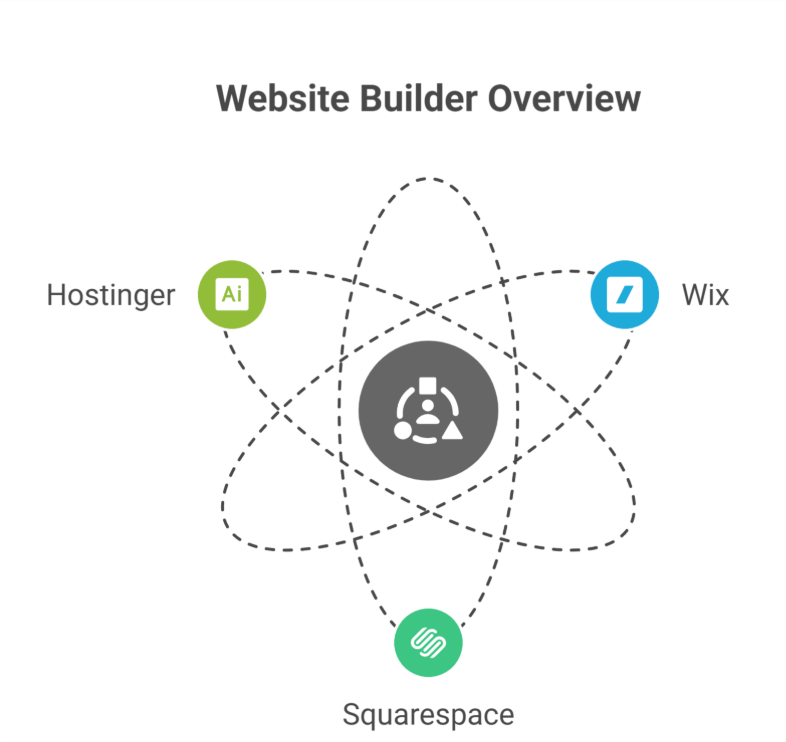
    Our Top 3 Picks

    1. Wix– A comprehensive solution for your website
    1. Squarespace – Most suitable for creative businesses
    1. Hostinger– Ideal for logo and copy generation

    Wix

    Wix is quite a popular website builder and it’s also well known for its intuitive and easy-to-navigate interface. It has a pretty wide variety of website templates, which is great. You don’t actually need to have a background in coding to create your own website.

    Wix offers nearly all the tools to help you create a website if you’re in search of the best website builder. With its intuitive editor X interface, you can choose from hundreds of customizable templates to establish professional-looking sites. Your site can be made more versatile and user-friendly with the help of a variety of drag-and-drop builder tools, widgets, and mobile solutions. The robust ecommerce features make it simple for businesses to create an online store, offer subscriptions, and sell digital downloads. On top of that, your site will always be accessible with exceptional uptime.

    Pros

    • Intuitive and easy-to-use website builder interface

    • A variety of widgets to improve efficiency

    • Customizable templates for various sectors and use cases

    • Powerful mobile website creation resources

    • Extensive online stores customization possibilities and robust ecommerce capabilities

    • Reliable uptime combined with exceptional customer support

    • Extensive business options include selling digital downloads.
    • AI-powered site design tools to help you create professional websites

    • Free plan offered

    Cons

    • Third-party applications can help boost analytics

    • Once atemplate is selected, it cannot be used again

    Who should use this?

    The free tier is just one more perk of Wix’s robust, business website-friendly features. Despite having to put up with some annoying on-site adverts and missing out on some paid features, Wix is still the greatest choice for users who want to build a website without paying a dime every month.

    Hostinger

    Hostinger’s site builder is always evolving with new features and updates that distinguish it in a competitive industry. Its drag-and-drop capability makes it simple to create visually appealing websites and fully functional online stores. Notable additions include a built-in logo generator, a free SSL certificate, and a photo repository for uploaded photographs. However, it is important to mention that the free website plan is not available.

    Pros

    • An intuitive website creator featuring a drag-and-drop interface

    • Smart AI website builder tools that optimize the design workflow

    • Consistent availability to ensure the seamless operation of your website

    • Effortlessly build your brand with the built-in logo maker

    • Free SSL certificate included

    • Efficient picture archive for organizing images

    • Unlimited storage and bandwidth with all subscriptions

    • Enhanced value through integration with Hostinger web hosting

    Cons

    • You can’t change the templates once chosen

    • Limited photo editing options

    • No free website plan available

    Who should use this?

    Hostinger has a great array of AI-powered website builder solutions. For example, you can select “entertainment” or “small business” as your category, and the builder will do the rest. SEO tools, website copywriting, heatmap analytics, and custom site designs are all included. Hostinger is ideal for those looking to create a professional website with ample support and marketing tools.

    Squarespace

    Squarespace is the go-to website builder for creating professional websites. It streamlines website building for visually attractive results. Their vast collection of website templates is optimized for mobile devices, making them perfect for any audience.

    Squarespace offers advanced coding possibilities, robust blogging, and ecommerce solutions, delivering everything a small business needs to create an online store.

    Pros

    • Elegant, mobile-friendly layouts for professional-looking sites

    • Fluid Engine makes website building simple

    • Comprehensive e-commerce solutions for selling products and digital downloads.
    • Freedom to incorporate one’s own code for extensive personalization
    • Content management tools for blogs that allow users to schedule posts
    • Detailed statistics to monitor your development and helpful assistance to accompany it
    • Obtain an SSL certificate for your website at no cost.
    • With every plan, you get unlimited storage and data transfers.

    Cons

    • Once selected, templates cannot be altered

    • Free plan is not available.  
    • Does not provide customer service over phone.

    Who should use this?

    Squarespace is ideal for those who want a custom website. With customizable templates, advanced SEO tools, and drag-and-drop builder tools, you can build a website that reflects your business goals and online presence. 

    How to choose a website builder that best fits your needs

    How to choose a website builder that best fits your needs

    Here are key factors to consider:

    • Simplify the process by selecting an intuitive website builder.

    • Seek customizable templates that match your brand’s aesthetic. 

    • Ensure mobile-responsive templates for users on mobile devices.

    • Use built-in SEO tools to improve your search results.

    • Read reviews to check support responsiveness.

    • Compare prices including domain name, web hosting, and other fees.

    • Use free trials or money-back guarantees to test your site builder before committing. 

    Frequently Asked Questions (Website Building Made Easy Top 3 Website Builders of 2025)

    What is the easiest way to build a website in 2025?

    The easiest way to build a website in 2025 is by using AI-powered website builders like Wix ADI, Shopify Magic, or WordPress AI tools. These platforms offer quick setup, ready-made templates, drag-and-drop design, and automated content creation, making website building simple even for complete beginners.

    Which is the easiest website builder?

    The easiest website builder is Wix ADI because it uses AI to create a complete site within minutes. You just answer a few questions, and the tool designs layouts, pages, and content automatically. Its drag-and-drop editor makes customization simple, even for users with zero technical or design skills.

    What is the #1 website builder?

    The #1 website builder is Wix because it offers powerful design freedom, an easy drag-and-drop editor, hundreds of templates, and strong AI tools for quick site creation. It suits beginners and professionals, supports eCommerce, and provides reliable performance, making it the top all-round website builder.

    Is website design still a good business in 2025?

    Yes, website design is still a good business in 2025 because every company needs a strong online presence, and demand for modern, mobile-friendly, and high-converting sites keeps growing. Even with AI tools, businesses still rely on designers for strategy, branding, customization, and professional-quality user experiences.

  • Why SMEs Should Consider Outsourcing Marketing Operations

    Why SMEs Should Consider Outsourcing Marketing Operations

    WHY SMES SHOULD CONSIDER OUTSOURCING MARKETING OPERATIONS

    ‍In the dynamic world of business, small businesses and small and medium-sized enterprises (SMEs) face unique challenges and opportunities. While SMEs often possess the agility and innovation to compete in their industries, they may lack the resources and expertise to execute comprehensive marketing strategies effectively. This is where outsourcing marketing for small businesses can be a game-changer, enabling SMEs to optimize resources, access specialized marketing professionals, and amplify their market presence. Let’s delve into why delegating marketing operations and outsourcing marketing tasks can empower SMEs to thrive and grow.

    The Landscape of SMEs: Challenges and Opportunities

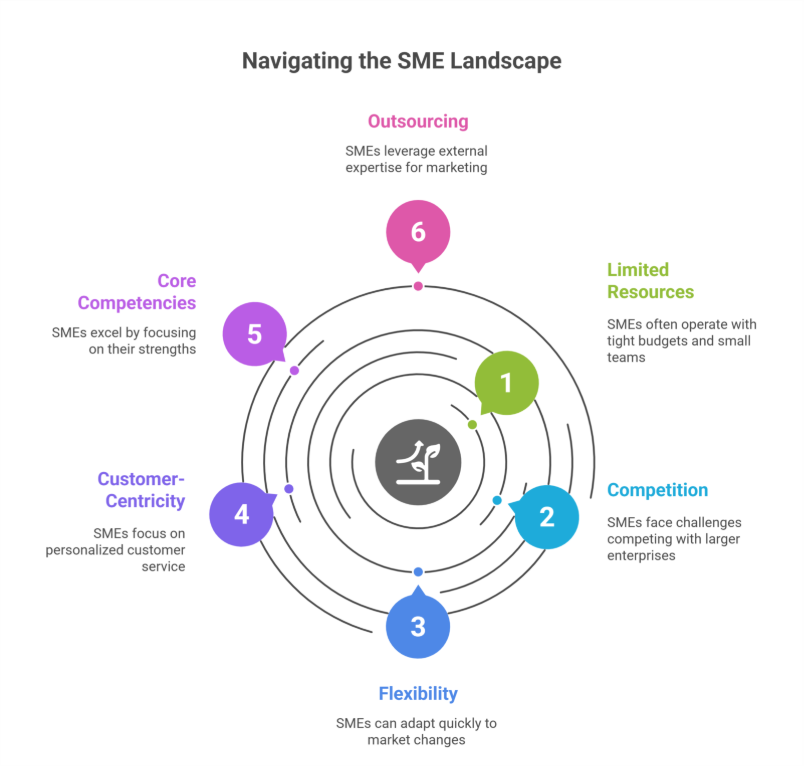
    SMEs play a vital role in the economy, driving innovation and job creation. However, they often operate with limited budgets and lean teams, making it challenging to allocate internal resources for robust marketing activities. Competing against larger enterprises with established brand recognition and extensive marketing budgets can further exacerbate the challenges faced by SMEs.

    On the flip side, SMEs possess inherent strengths such as flexibility, adaptability, and customer-centric approaches. Leveraging these strengths through strategic marketing strategies can unlock growth opportunities and establish a strong foothold in competitive markets.

    Focus on Core Competencies: Excel in Your Expertise

    Focus on Core Competencies: Excel in Your Expertise

    For SMEs, focusing on core business activities is essential for sustainable growth. By outsourcing marketing operations to experienced professionals or digital marketing agencies, SME owners and teams can dedicate their time and energy to driving business development, innovation, and customer satisfaction. This streamlined approach allows SMEs to excel in what they do best while leaving complex marketing tasks in capable hands.

    Outsourcing marketing encompasses a range of marketing services, including digital marketing, content marketing, email marketing, social media management, search engine optimization (SEO), marketing campaigns, advertising, and more. By partnering with specialized marketing agencies or freelancers, SMEs gain access to a diverse skill set without the overhead costs of building an in-house marketing team or outsourced marketing department.

    Resource Optimization: Maximize Efficiency and Cost-Effectiveness

    One of the primary reasons SMEs choose to outsource your marketing is resource optimization. Rather than investing in infrastructure, training, and overhead costs associated with hiring and training an in-house team, outsourcing offers a cost-effective solution. SMEs pay for specific services or campaigns based on their immediate marketing needs and budget constraints.

    Moreover, outsourcing allows scalability, letting SMEs ramp up or down marketing efforts based on market dynamics and business goals. Whether launching a new product, expanding into new markets, or running seasonal marketing campaigns, outsourcing offers flexibility without long-term commitments.

    Enhanced Agility: Adapt and Thrive in Competitive Markets

    Agility is a cornerstone of SME success. In rapidly changing markets, the ability to pivot marketing strategies quickly can make all the difference. Outsourced marketing efforts empower SMEs to adapt to market trends, consumer behaviors, and competitor actions efficiently.

    By leveraging external expertise and industry insights, SMEs can stay ahead of the curve and capitalize on emerging opportunities. Whether implementing new technologies, experimenting with innovative marketing techniques or marketing tactics, or optimizing conversion funnels, outsourced marketing services enable SMEs to thrive in dynamic environments.

    Building Strategic Partnerships: Access to Specialized Skills and Networks

    Collaborating with outsourced marketing partners goes beyond transactional services—it fosters strategic partnerships. Trusted agencies or freelancers become extensions of the SME’s team, sharing insights, refining strategies, and driving collective growth objectives.

    These partnerships offer access to specialized skills, cutting-edge technologies, and expansive networks that may otherwise be inaccessible to SMEs operating independently. From data analytics and market research to creative design and campaign execution, partnering with an outsourced marketing team opens doors to new possibilities and helps small businesses achieve their marketing goals.

    Let’s Make it Interactive: Visualize Your SME’s Growth Trajectory

    Take a moment to visualize your SME’s growth trajectory with outsourcing marketing activities. Envision reallocating time and resources towards innovation, customer engagement, and business expansion. How would partnering with marketing partners or a digital marketing agency transform your overall marketing strategy and overall business performance?

    Take Action: Embrace Outsourcing for Sustainable Growth

    Now that you understand the benefits, it’s time to take action. Research reputable marketing agencies, freelancers, or outsourced marketing services specializing in marketing for your small business solutions. Schedule consultations to discuss your business objectives, challenges, and growth aspirations.

    Empower your SME with the strategic advantage of outsourcing marketing operations. Embrace agility, optimize resources, and position your small business for sustainable growth and success in competitive markets.

    Frequently Asked Questions (Why SMEs Should Consider Outsourcing Marketing Operations)

    What are the benefits of outsourcing marketing?

    Outsourcing marketing provides access to specialized skills, advanced tools, and industry expertise without the cost of an in-house team. It allows businesses to focus on core operations, optimize resources, scale campaigns flexibly, stay agile in changing markets, and achieve more effective, results-driven marketing outcomes.

    Why is marketing important for small businesses?

    Marketing is crucial for small businesses to build brand awareness, attract and retain customers, and compete effectively in their market. It helps showcase products or services, drive sales, establish credibility, and foster customer loyalty, ultimately supporting growth, profitability, and long-term business success.

    Why do companies prefer to use outsourcing?

    Companies prefer outsourcing to access specialized expertise, reduce operational costs, and improve efficiency. It allows businesses to focus on core activities, scale services as needed, leverage advanced tools and technologies, and maintain flexibility in dynamic markets, ultimately enhancing productivity and achieving better business outcomes.

    What is outsourcing in marketing?

    Outsourcing in marketing is the practice of hiring external experts, agencies, or freelancers to handle marketing tasks and strategies. It provides businesses with specialized skills, advanced tools, and industry knowledge, enabling cost-effective, scalable, and efficient marketing while allowing the company to focus on its core operations.

  • Why Your E-Commerce Business Needs WooCommerce Development Services Today

    Why Your E-Commerce Business Needs WooCommerce Development Services Today

    Why Your E-Commerce Business Needs WooCommerce Development Services Today

    E-commerce businesses must offer customers a very seamless shopping experience in the rapidly growing digital marketplace while also standing out in a totally crowded market. One product that has entirely transformed how businesses function is WooCommerce, a very dynamic and highly customizable platform built on top of WordPress (ecommerce platform). But why would your business wish to invest highly in WooCommerce website development services (woocommerce development services, ecommerce development)? Let’s explore the specifics.

    What is WooCommerce?

    WooCommerce is particularly an open-source e-commerce extension for WordPress that allows businesses to completely transform their websites into highly functional e-commerce sites (ecommerce website). Since its launch in 2011, WooCommerce, has become quite a popular e-commerce platform, that has ran millions of online stores worldwide (online store, ecommerce site). Because of its high scalability, flexibility, and an extensive range of customizable options, it has become quite a solution for companies of all sizes (businesses of all sizes, scalable, scalability).

    Whether you’re an enterprise looking for a very specialized solutions or a small business owner trying to expand your company online (online business), WooCommerce offers quite a range of WooCommerce development services (custom woocommerce development services, woocommerce solutions) to meet your needs.

    The Benefits of WooCommerce for E-Commerce Businesses

    The Benefits of WooCommerce for E-Commerce Businesses

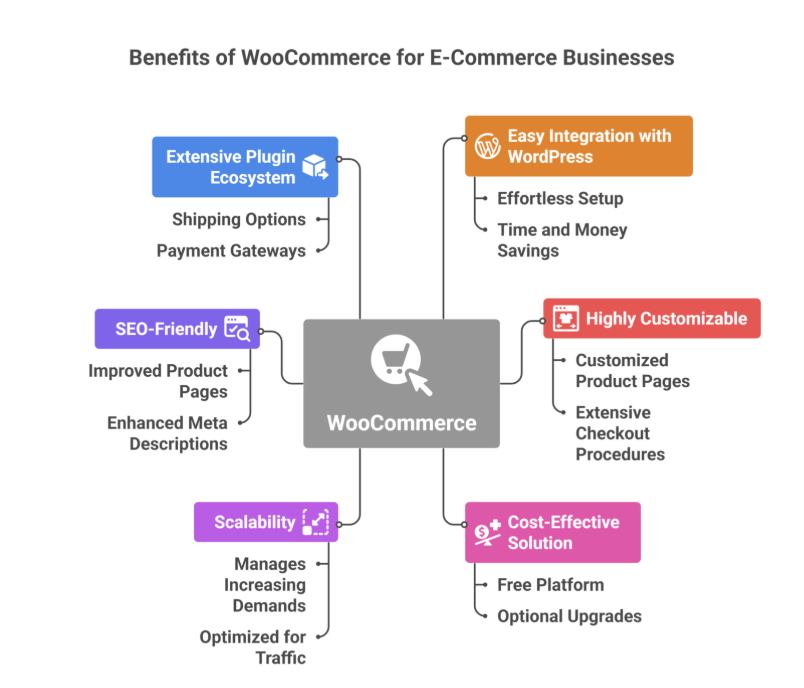
    1. Easy Integration with WordPress

    WordPress, quite a widely used content management system (CMS) worldwide, connects easily with WooCommerce (plugin for wordpress, wordpress plugin). Unlike building an e-commerce website from scratch, particularly adding WooCommerce to an already-existing WordPress website is effortless and saves a lot of time and money (wordpress site, built on wordpress).

    2. Highly Customizable

    Custom WooCommerce development services allow companies to customize their online stores to reflect their personal brand identity (customization, customized solutions, brand identity). With features like customized product pages and extensive checkout procedures, the platform provides you the freedom to design a shopping experience that caters to your target market (shopping experience, customer experience).

    3. Cost-Effective Solution

    WooCommerce is a free e-commerce platform (woocommerce is free), compared to some that require hefty subscription fees. It is still a cost-effective choice for enterprises, particularly those who are just getting started, even though quality upgrades or development services may incur additional fees (development needs).

    4. Scalability

    WooCommerce can grow alongside your business (business grows). The platform effectively manages increasing demands, regardless of how many products you have—ten or a thousand. You can make sure your store stays optimized regardless of traffic and merchandise grow with professional WooCommerce development (expert woocommerce development, optimize).

    5. SEO-Friendly

    For your online store to draw in organic traffic, search engine optimization, or SEO, is essential. You may improve product pages, meta descriptions, and URLs to rank higher in search results via WooCommerce’s integration with WordPress, which ensures access to a variety of SEO tools (website design, long-term success).

    6. Extensive Plugin and Extension Ecosystem

    With the help of WooCommerce’s comprehensive plugin and extension library (woocommerce plugins, plugin development), you can include features like shipping options, payment gateways (payment gateway), and advanced analytics. WooCommerce website development services can be used to further improve these plugins, guaranteeing smooth operation catered to your company’s requirements (functionality, best practices).

    Why Invest in WooCommerce Development Services?

    1. Enhanced User Experience

    A well-designed e-commerce store (e-commerce store) is essential for retaining clients. Expert WooCommerce development service providers (expert woocommerce developers, woocommerce experts) know how to maximize your store’s performance, guaranteeing smooth checkout, quick load times, and easy navigation (support and maintenance).

    2. Custom Features for Unique Needs

    Every company has different objectives. You can incorporate certain features like foreign support, complex search filters, or audience-specific recommendations with custom WooCommerce development services (custom solutions, tailor specific needs).

    3. Mobile Optimization

    Since a growing number of consumers are constantly shopping on mobile devices, it is essential to have a store that is properly optimized for mobile (mobile responsiveness). By ensuring that your store functions highly and looks attractive on all screen sizes, WooCommerce developers can highly enhance the user experience (woocommerce developers, skilled woocommerce).

    4. Integration with Third-Party Tools

    Third-party technologies are crucial for digital e-commerce for marketing, analytics, and customer service. Because WooCommerce is open-source, it integrates easily with programs like CRM systems, MailChimp, and Google Analytics (seamless integration with third-party). These integrations can be further tailored by skilled developers to fit your company operations (creating a plugin).

    Choosing the Right WooCommerce Development Partner

    The performance and success of your store can be greatly impacted by investing in professional development services. What to look for in a development partner for WooCommerce:

    1. Expertise and Experience

    Inspect the developers’ history of successfully finishing WooCommerce tasks (experienced woocommerce developers). Analyze portfolios, case studies, and customer recommendations to evaluate their experience level (development company).

    2. Understanding of Business Needs

    An ideal partner will take the time to understand the goals of your business (business needs) and tailor their solutions accordingly. Look for developers who respect communication and teamwork throughout the entire project (customer satisfaction).

    3. Post-Launch Support

    E-commerce websites need constant maintenance and updates. To handle technical problems and maintain the functionality of your business after launch, pick a development partner that provides post-launch support (support and maintenance).

    Real-World Applications of WooCommerce

    Businesses across industries have leveraged WooCommerce to create unique online stores:

    • Retail: WooCommerce enables small businesses to provide an extensive range of products at low setup costs (woocommerce store, ecommerce business).
    • Subscription Services: Companies can provide subscription-based business models for recurring income with the appropriate extensions.
    • Digital Products: Software and eBooks are among the digital products that WooCommerce makes easy to market.
    • Service-Based Enterprises: Companies may partially incorporate customer service tools and reservation systems straight into their WooCommerce websites (woocommerce plugin development).

    Is WooCommerce Right for Your Business?

    Despite its many advantages, WooCommerce might not be the very best option for every company. Here are a few considerations:

    • Budget: Although WooCommerce is totally free, you should factor in some extra costs for development services, plugins, and hosting (vps hosting).
    • Technical Expertise: Setting up and constantly maintaining a WooCommerce store requires a certain level of expertise in technology. This process can be made very simple with expert WooCommerce development (experienced woocommerce). 
    • Business Scale: WooCommerce is highly suited for small to medium-sized businesses, however it can also service large corporations with the right customization (choose woocommerce, reasons to choose).

    Businesses looking to establish a strong online presence in the competitive marketplace of e-commerce today would be wise to invest sufficiently in WooCommerce website development services (wordpress, ecommerce solutions). WooCommerce’s highly unmatched adaptability satisfies a variety of business goals, including scalability, customization, and mobile and SEO optimization (customize, tailor). You may fully utilize the platform and create an online store that attracts and engages a lot of clients by collaborating with highly knowledgeable developers (development company, woocommerce development company).

    Want your business to be seen and heard online? Explore our Services
     

    Frequently Asked Questions (Why Your E-Commerce Business Needs WooCommerce Development Services Today)

    What is the purpose of WooCommerce?

    WooCommerce is a powerful WordPress plugin designed to turn a website into a fully functional online store. It allows businesses to sell products and services, manage inventory, handle payments, and customize the shopping experience. Its flexibility makes it ideal for small to large e-commerce businesses.

    Do you need a developer for WooCommerce?

    You don’t always need a developer for WooCommerce, as it’s user-friendly and offers many ready-made themes and plugins. However, a developer is helpful for advanced customizations, integrating complex features, optimizing performance, or ensuring security, especially for larger stores or unique business requirements.

    Why is web development important for business?

    Web development is crucial for businesses because it establishes an online presence, builds credibility, and attracts customers. A well-designed website improves user experience, boosts sales, supports marketing efforts, and enables businesses to compete effectively. It also allows easy communication, engagement, and growth in the digital marketplace.

    What are the needs for successful eCommerce?

    Successful eCommerce requires a user-friendly website, secure payment systems, and reliable inventory management. Effective marketing, fast shipping, and excellent customer service are essential. Additionally, mobile optimization, analytics, and personalized experiences help attract and retain customers, driving growth and long-term business success.


  • WordPress Development: Custom vs. Off-the-Shelf Solutions

    WordPress Development: Custom vs. Off-the-Shelf Solutions

    WordPress Development: Custom vs. Off-the-Shelf Solutions

    When it comes to building your business related WordPress website using WordPress themes, one of the very major challenges you’ll face is to choose either between the custom development or the off-the-shelf solutions. Each option particularly has its own advantages and drawbacks, and the better choice will depend on your business needs, budget, and the long-term goals. This blog totally explores the major differences between the two approaches to help you make a very informed decision while using WordPress for website development and improving your online presence.

    Understanding Off-the-Shelf Solutions

    What Are Off-the-Shelf Solutions?

    Off-the-shelf solutions are specifically pre-built themes, templates and plugins, and third-party tools that are quite easily available or can be purchased. These options are designed to meet totally different variety of customer needs and are quite easy to install and setup, making them ideal for people building a website with minimal initial investment.

    Benefits of Off-the-Shelf Solutions

    Benefits of Off-the-Shelf Solutions

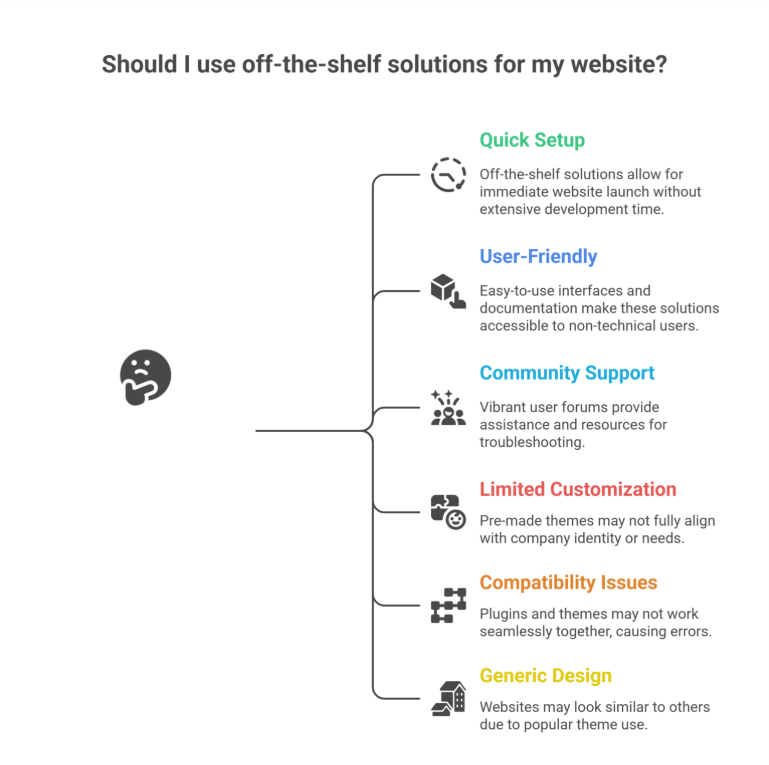
    • Quick Setup: Since all these pre-built WordPress solutions are quite easy to use instantly, you may launch your very own website right away without having to spend quite a lot of time and effort in developing it using custom code.
    • User-Friendly: Even a non-technical user can utilize a template or pre-built platforms because they frequently include easy drag-and-drop builders and comprehensive documentation, offering a user-friendly experience.
    • Large Community Support: The Well-known themes and plugins frequently have quite vibrant user forums and communities that offer helpful assistance and resources for troubleshooting, especially when dealing with performance issues, vulnerability, or integration problems.

    Drawbacks of Off-the-Shelf Solutions

    While off-the-shelf WordPress solutions are quite convenient, they come with some limitations:

    • Limited Customization: It’s quite possible that pre-made themes don’t always highly suit the identity or needs of your company or brand, especially when you need tailored solutions.
    • Compatibility Issues: Some plugins and themes might not always function highly together, causing errors in functionality.
    • Generic Design: Your website is more likely to seem like others if you use a very popular template or premium themes.

    Exploring Custom WordPress Development

    What Is Custom WordPress Development?

    Custom WordPress development basically means creating a website that is especially suited to your company’s personal requirements. Professionals providing Custom WordPress Development, custom web development, or working at a development company or WordPress web design agency, handle this particular procedure using unique code and custom solutions.

    Benefits of Custom Development

    • Unique Design: Since a customized website is created from the very scratch, it will accurately represent your brand identity and set you quite apart from the competition.
    • Tailored Functionality: You can incorporate particular unique features and functions that are quite essential to your company’s operations through the custom-built development that is fully tailored to your business.
    • Scalability: Because the custom-built websites are made to always grow with your business, adding new features or expanding your website as your business grows will be very simpler, ensuring long-term scalability and long-term growth.
    • Enhanced Performance: Custom websites frequently load quite faster and offer a much better user experience by removing the unnecessary code and focusing on your specific needs and requirements.
    • SEO Optimization: By including specific SEO guidelines directly into the website’s design, developers can highly increase the site’s exposure in the search engine results and help you optimize your content management system.

    Drawbacks of Custom Development

    Despite its advantages, custom development has some challenges:

    • Higher Initial Cost: Because the custom development takes much more time and experience than off-the-shelf options, it may require a higher initial investment.
    • Longer Development Time: If you need a new website launched very quickly, it might not be the very best option to build it from scratch.
    • Dependence on Developers: For immediate updates and frequent ongoing maintenance, you might require continuous assistance from a WordPress design or Shopify Services agency or developers.

    Key Factors to Consider While Choosing Between the Custom and Off-the-Shelf Solutions

    1. Budget

    It can be highly convenient to use off-the-shelf alternatives if you have limited budgets. Custom development, on the other hand, provides long-term advantages and greater alignment with your business objectives.

    2. Business Goals

    Custom development is best for companies who need special features, custom themes, or have certain branding needs. Simpler websites with conventional features are more suitable for off-the-shelf themes.

    3. Timeline

    Off-the-shelf options are more practical if you need to start your website rapidly. Although custom development takes longer, the end product is a website that is precisely customized to meet your unique requirements.

    4. Scalability

    Consider your future growth and success plans. Custom websites are more scalable, while off-the-shelf systems might require extensive modification or rebuilding.

    How Professional Services Can Help

    Working with experienced professionals helps guarantee an effortless process, regardless of whether you decide to use off-the-shelf solutions or custom creation. Experts in both strategies are available through WordPress Development, Shopify Development, Shopify Design, Webflow Services, and other web solutions, enabling you to maximize the benefits of your selected solution. A WordPress web design agency can also offer assistance, support, and improvements.

    Conclusion

    Your specific business needs, financial limitations, and goals will determine whether you choose custom vs off-the-shelf WordPress solutions. Custom development provides more flexibility, scalability, and a customized user experience, even while off-the-shelf alternatives are quicker to adopt and less expensive. You can make a highly informed choice that supports your business goals by being aware of the benefits and drawbacks of each strategy. To achieve an optimal outcome, think about collaborating with a Custom WordPress Development Services Company to ensure your website meets your expectations and delivers long-term value in a competitive digital landscape.

    Frequently Asked Questions (WordPress Development: Custom vs. Off-the-Shelf Solutions) 

    What is the difference between custom software and off-the-shelf solutions?

    Custom software is built specifically for your business needs, offering unique features, full control, and scalability. Off-the-shelf solutions are pre-made, affordable, and quick to deploy but come with limited customization and may not fit every requirement perfectly. The choice depends on budget, goals, and flexibility needs.

    What is the difference between custom and WordPress?

    Custom development creates a fully tailored website built from scratch to match unique business needs, design, and functionality. WordPress uses pre-built themes, plugins, and templates, making it faster and more affordable but less specialized. Custom sites offer flexibility, while WordPress offers convenience and ease of use.

    What is the advantage of developing your own software over using custom of the shelf software cots?

    Developing your own software offers complete control, tailored features, stronger scalability, and better integration with your workflows. Unlike off-the-shelf COTS software, it avoids unnecessary features, reduces long-term limitations, and supports unique business processes. Though costlier upfront, it delivers higher efficiency and competitive advantage over time.

    Do nearly 75% of all websites use WordPress?

    No, nearly 75% of all websites do not use WordPress. Currently, WordPress powers around 43–45% of all websites. It remains the most popular content management system, but other platforms like Shopify, Wix, and custom-built sites also hold significant market share.


  • WordPress Users Beware – These Popular Theme Plugins Have Some Major Security Issues

    WordPress Users Beware – These Popular Theme Plugins Have Some Major Security Issues

    WordPress Users Beware – These Popular Theme Plugins Have Some Major Security Issues

    Introduction

    WordPress powers more than 40% of websites worldwide, making it one of the very most widely used content management systems. While it offers high flexibility and ease of use, WordPress security remains a very major concern, especially when it comes to WordPress plugins and themes. Many popular WordPress plugins contain high security vulnerabilities that hackers or cybercriminals exploit to gain unauthorized access, inject malicious code, or totally compromise website security.

    If you highly rely on WordPress custom development to enhance your WordPress website, understanding these security risks is crucial. In this blog, we’ll discuss the major security issues highly associated with some very popular WordPress themes and plugins, and how you can protect your site effectively.

    Why WordPress Theme Plugins Are Vulnerable

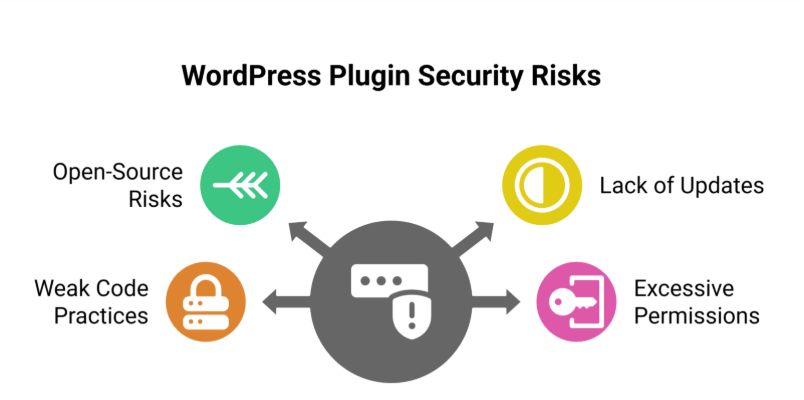
    1. Open-Source Nature

    WordPress is a totally open-source platform. This means anyone can develop and distribute WordPress plugins. While this encourages high innovation, it also highly increases the risk of very poorly coded or unmaintained plugins introducing security vulnerabilities that can be exploited by threat actors.

    2. Lack of Regular Updates

    Some WordPress plugins and themes are quite abandoned by their developers, leaving them highly vulnerable to common security threats. If a plugin is not updated regularly, security researchers warn that hackers can exploit outdated plugins to gain full control of the site.

    3. Weak Code Practices

    Not all plugin developers follow critical security practices. Very poorly written code can create many backdoors for malicious scripts, exposing sensitive data or allowing unauthorized access.

    4. Excessive Permissions

    Some popular plugin or WordPress themes request unnecessary permissions, giving them more access to your WordPress dashboard or admin accounts than required. This can be exploited by attackers to manipulate your site’s security or escalate login credentials privileges.

    Popular WordPress Theme Plugins with Security Issues

    Popular WordPress Theme Plugins with Security Issues

    1. Elementor

    Risk: Cross-Site Scripting (XSS) or SQL Injection

    Elementor is one of the very highly used WordPress plugins. However, it has faced multiple security vulnerabilities in the past. Hackers have used XSS and SQL injection tactics to exploit weaknesses in outdated versions of the plugin, leading to highly compromised WordPress websites.

    2. WPBakery Page Builder

    Risk: Remote Code Execution

    WPBakery is another popular WordPress plugin that has had plugin vulnerabilities, particularly involving remote code execution. Attackers have used this flaw to upload malicious code and take full control of the site.

    3. Revolution Slider

    Risk: File Upload Exploits

    Revolution Slider has been associated with major security breaches due to improper file upload validation. Unauthorized access via malicious scripts has been reported on many WordPress sites.

    4. Essential Addons for Elementor

    Risk: Arbitrary File Upload

    This plugin extends Elementor’s functionality but has vulnerabilities allowing unauthorized file uploads, posing a high risk to WordPress site security.

    5. Ultimate Addons for WPBakery

    Risk: SQL Injection Privilege Escalation

    This plugin enhances WPBakery but has been targeted by SQL injection attacks, compromising database integrity and allowing attackers to escalate privileges on WordPress websites.

    How to Protect Your WordPress Website

    1. Keep Plugins Updated

    Always update your WordPress plugins and themes to their latest versions. Developers often release security patches to fix exploited vulnerabilities. Ignoring updates leaves your WordPress site exposed to site takeover risks.

    2. Use Only Trusted Plugins

    Download plugins and themes from reputable sources like the official WordPress repository. Avoid third-party plugins or nulled versions, which often contain malware or other critical security flaws.

    3. Monitor Plugin Permissions

    Review the permissions requested by each plugin before installing it. If a plugin requests access to sensitive data or critical files, reconsider its use to keep your site secure.

    4. Implement Web Application Firewalls (WAFs)

    A WAF helps detect and block malicious code and attacks before they reach your WordPress website. Services like Cloudflare or Sucuri provide protection against common security threats.

    5. Regularly Back Up Your Website

    In case of a security breach, recent backups ensure you can restore your WordPress site without losing sensitive data. Use plugins like UpdraftPlus or BackupBuddy for automated backups.

    6. Remove Unused or Inactive Plugins

    Inactive WordPress plugins can increase your attack surface. Delete plugins that are not actively used to reduce potential security risks.

    7. Use Security Plugins

    Install security plugins like Wordfence or Sucuri to monitor malicious scripts, block attacks, and enforce critical security measures.

    8. Enable Two-Factor Authentication (2FA)

    Adding 2FA to your WordPress admin login provides an extra layer of protection, making it harder for hackers to gain unauthorized access.

    Conclusion

    While WordPress plugins and themes offer high functionality and design flexibility, they can introduce major security issues if not managed properly. By keeping plugins updated, using trusted sources, and implementing proactive security measures, you can protect your site from potential threats.

    If you rely on WordPress custom development, working with experienced security experts who follow best practices is essential. Prioritizing website security safeguards sensitive data and ensures a seamless experience for your visitors.

    Want your business to be seen and heard online? Explore our WordPress services and protect your WordPress website effectively.

    Want your business to be seen and heard online? Explore our Services
     

    Frequently Asked Questions (WordPress Users Beware These Popular Theme Plugins Have Some Major Security Issues)

    What are the security issues with WordPress?

    WordPress faces security risks due to outdated plugins, themes, and core files, weak passwords, and improper user permissions. Vulnerabilities like SQL injection, cross-site scripting (XSS), and malware attacks are common. Regular updates, strong passwords, secure hosting, and reliable security plugins are essential to protect WordPress sites effectively.

    Are WordPress plugins safe?

    WordPress plugins can be safe if sourced from trusted developers and regularly updated. However, poorly coded or outdated plugins may contain vulnerabilities, malware, or backdoors that hackers exploit. Always use reputable plugins, keep them updated, and limit unnecessary additions to ensure your WordPress site remains secure.

    Why are people moving away from WordPress?

    People are moving away from WordPress due to security vulnerabilities, frequent updates, and performance issues on large or complex sites. Many prefer simpler, faster, or more secure platforms with better scalability, built-in hosting, and easier maintenance, reducing the need for constant plugin management and technical troubleshooting.

    Which is the best security plugin for WordPress?

    The best WordPress security plugin is Wordfence Security, offering a firewall, malware scanning, login protection, and real-time traffic monitoring. Other strong options include Sucuri Security for cloud-based protection and iThemes/Solid Security for comprehensive site hardening, 2FA, and file-change detection. Choose based on site size and risk.


  • WordPress vs. Shopify: Which Platform is Right for You?

    WordPress vs. Shopify: Which Platform is Right for You?

    WordPress vs. Shopify: Which Platform is Right for You?

    Choosing the right e-commerce platform is crucial for online success. WordPress with WooCommerce and Shopify are two of the most popular website builders globally. Understanding their features, SEO capabilities, customization options, and custom vs off-the-shelf solutions will help you select the best platform to maximize online store growth and efficiency.

    What is WordPress?

    Over 40% of websites worldwide are powered by WordPress, an open source content management system. When paired with WooCommerce, it enables businesses to build fully customizable WordPress sites.

    Through custom WordPress development, companies can create a custom-built online store using custom themes, plugins and themes, third-party integration, and unique code. WordPress website development services help businesses tailor functionality, design, and branding to meet business objectives while improving online presence.

    What is Shopify?

    Shopify is a comprehensive e-commerce platform designed for small businesses. Its user-friendly drag-and-drop interface and pre-built templates simplify building a website, management, and scaling as your business grows.

    With Shopify app development, stores can expand features without dealing with custom code or complex maintenance, making it ideal for limited budgets.

    Key Differences Between WordPress and Shopify
    1. Ease of Use

    WordPress

    Offers unmatched customization but requires technical knowledge of hosting, design, and WooCommerce. Using WordPress also requires maintenance to avoid vulnerability and performance issues, especially when using templates and plugins.

    Shopify

    Extremely user-friendly and handles hosting, security, and updates automatically. An ideal off-the-shelf solution for beginners.

    2. Customization Options

    WordPress

    Provides almost unlimited customization through plugins, third-party tools, WordPress themes, and custom WordPress development. A fully custom WordPress website allows tailored solutions, advanced SEO, improved user experience, and designs tailored to your business.

    Shopify

    Uses pre-built platforms, themes, and apps. Experienced developers can add custom solutions, but customization is still limited compared to WordPress.

    3. Cost

    WordPress

    The CMS is free. Costs depend on hosting, pre-built WordPress themes, plugins, or custom web development. It’s flexible for different budgets but may require a higher initial investment if opting for fully custom development.

    Shopify

    Subscription-based (starting at $29/month). Costs increase with premium apps and transaction fees. Works best for those who prefer off-the-shelf solutions without complexity.

    4. SEO and Marketing Tools

    WordPress

    Excellent SEO through tools like Yoast and Rank Math. Ideal for content marketing, optimize performance, and long-term growth and success.

    Shopify

    Offers built-in SEO features and marketing tools. Good for beginners but less powerful than WordPress in terms of content management and deep customization.

    5. Scalability

    WordPress

    Highly scalable with proper hosting and professional support. Fully custom development can help you create websites that grow with your business.

    Shopify

    Built for scalability without worrying about servers or security. A great pre-built platform that ensures faster load times and smooth performance.

    When to Choose WordPress

    WordPress is ideal for businesses that:

    • Require extensive customization through WordPress website development services.
    • Want a store tailored to your business needs

    • Require strong blogging and content management

    • Prefer deep integration options and custom WordPress themes

    When to Choose Shopify

    Shopify is best for businesses that:

    • Prefer off-the-shelf themes and ready-made tools

    • Want a simple, user-friendly setup

    • Need built-in payments, shipping, and marketing

    • Plan to rely on Shopify app development for enhanced functionality.

    Real-World Examples

    WordPress Use Case

    A niche retailer wanting unique branding may choose WordPress with WooCommerce. Using custom WordPress development and custom code, they can build a store fully aligned with their brand identity and unique requirements.

    Shopify Use Case

    A beginner launching their first store may prefer Shopify. With pre-built themes, apps, and simple setup, they can focus on customers rather than technical tasks.

    Conclusion

    Both platforms are powerful. WordPress offers deep customization, custom-built solutions, and long-term scalability, while Shopify excels as a pre-built, off-the-shelf, easy-to-manage solution.

    To make an informed decision , carefully analyze your needs and think about engaging with expert Shopify developers or WordPress.

    Your choice depends on your business needs, budget, and technical skill level.Ready to launch a high-performing online store? Explore our custom WordPress development, Shopify services, and web solutions to build the best website for your business!

    Want your business to be seen and heard online? Explore our Services
     

    Frequently Asked Questions (WordPress vs. Shopify: Which Platform is Right for You?)

    WordPress vs. Shopify: Which Platform is Right for You?

    WordPress offers unmatched customization and flexibility, ideal for businesses wanting full control over design and functionality. Shopify excels in simplicity and eCommerce-focused features, perfect for those seeking a quick, secure, and scalable online store. Your choice depends on technical comfort, business needs, and growth plans.

    Which platform is better than Shopify?

    WooCommerce (with WordPress) is often better than Shopify if you want full control, lower long‑term costs, and customisation. It’s free to use, supports almost unlimited plugins and payment gateways, and gives you complete ownership of your data ideal for flexible, scalable and SEO‑focused stores.

    Can I switch from WordPress to Shopify?

    Yes, you can switch from WordPress to Shopify. The process involves migrating your products, content, and customer data, often using migration tools or expert services. Shopify simplifies store management, offers built-in hosting, and provides secure eCommerce features, making the transition smooth for growing online businesses.

    Is Shopify still a thing in 2025?

    Yes, Shopify is absolutely still a thing in 2025. Millions of businesses continue using it, its revenue and merchant base keep growing, and it’s still one of the most reliable, scalable eCommerce platforms. Brands choose it for ease of use, strong apps, and powerful sales features.

  • 10 Must-Have Features for a Successful WordPress Website

    10 Must-Have Features for a Successful WordPress Website

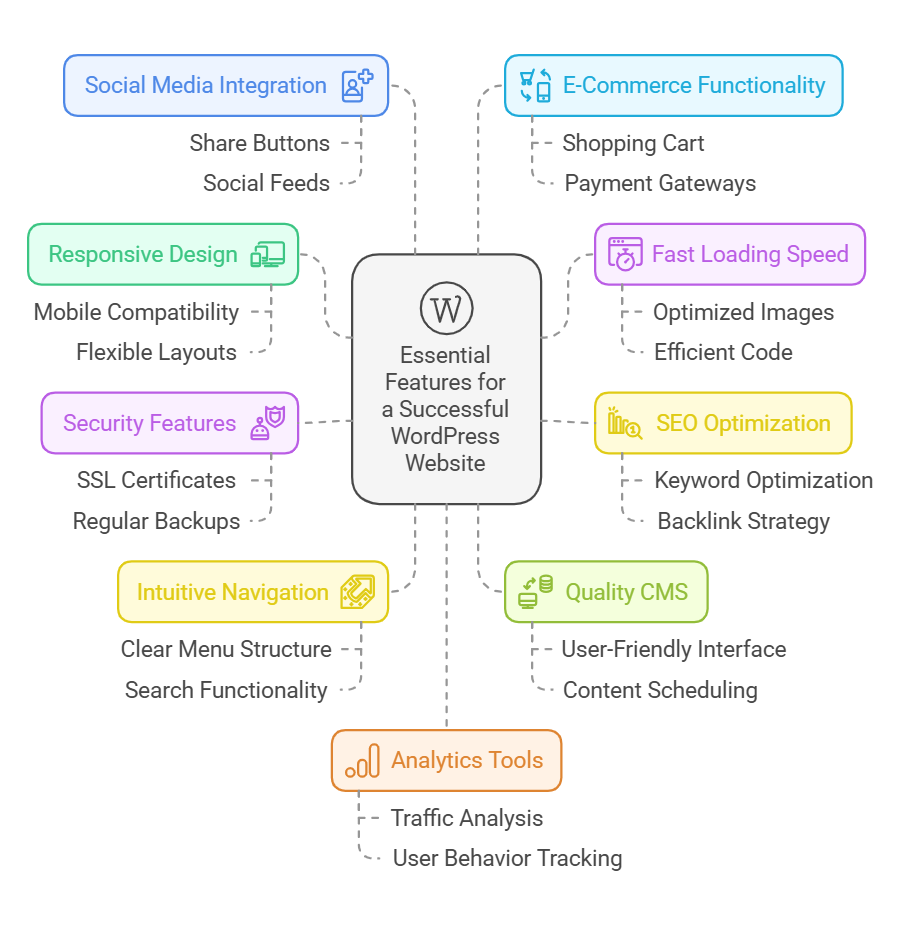
    10 Must-Have Features for a Successful WordPress Website

    More than just a very visually appealing layout is needed to create a successful WordPress website. Certain features are very necessary to make sure that your WordPress site is quite unique, operates effectively, and offers a great user experience. Some of these essential characteristics will set up your business website for high success whether you’re working with a WordPress web design agency or doing it all by yourself.

    1. Responsive Design

    It is essential to have a very responsive website in the mobile-first world today. A highly responsive design guarantees that your WordPress website works very well and looks great across all platforms, including most importantly smartphones, mobile apps, tablets, and PCs. By ensuring that your WordPress site adjusts very smoothly to various screen sizes, professional WordPress design services can enhance user experience highly and raise search engine rankings. Mobile-friendly websites are also given preference by search engines, so this feature is very crucial for both visibility and usability.

    2. Fast Loading Speed

    Website speed is quite critical for user satisfaction, core web vitals, and SEO optimization. Slow websites might lower your site speed results and drive away visitors. Reducing unnecessary plugins, cache optimization, optimizing pictures, and utilizing lightweight WordPress themes like Astra are all ways to improve the speed of your website. A Custom WordPress Development Services Company can help you make sure your WordPress website functions very properly without sacrificing any usability. Because WordPress users are highly inclined to stay on a website that loads within a matter of seconds, quicker loading times highly increase user retention.

    3. SEO Optimization

    In order to highly increase the organic traffic to your website, SEO is very essential. For the purpose of optimizing meta titles, meta descriptions, and keywords, WordPress provides unique plugins such as Yoast SEO, Rank Math, and other popular plugins. Better search engine visibility is also a result of features like XML sitemaps, permalinks, and clear URL structures. Working with WordPress development services guarantees that SEO best practices are taken into consideration when designing your website. Your SEO efforts will be further enhanced by producing high-quality content that is in line with user intent, in addition to plugins.

    4. Security Features

    Any website must prioritize cybersecurity. Strong security measures like SSL certificates, two-factor authentication, frequent software upgrades, and secure login credentials are necessary to defend your WordPress site against attacks. A WordPress web design company that uses advanced security methods can protect your data and increase user confidence. Additional safeguards like firewalls provide an extra degree of security, guaranteeing that your WordPress website is safe from constantly changing threats.

    5. Intuitive Navigation

    Maintaining viewers on your website requires an easy-to-navigate system. Clear calls to action, a well-organized menu, and a WordPress dashboard make it easier for consumers to locate information. In addition to improving user experience, intuitive navigation boosts engagement. Services for WordPress development and design can improve the readability of your website by streamlining its navigation. A logical structure and simple features like breadcrumb trails can have a big impact on how consumers engage with your WordPress site.

    6. Quality Content Management System (CMS)

    One of WordPress’ very best features is its open-source content management system, which provides tools for creating and managing content effectively. While custom post types allow for specific material, categories and tags can help organize your pages and posts. Adding new content to your blog on a regular basis guarantees that your website stays updated. The CMS can be customized according to your company’s requirements by a custom WordPress development services company. Furthermore, even people with no technical expertise may update content thanks to user-friendly editing tools, allowing teams to maintain original content.

    7. Social Media Integration

    Increasing the reach and engagement of your website requires social media connection. Visibility and traffic can be increased by including social sharing buttons, showing live social media feeds, and including links to your profiles. Professional development services can easily be integrated using these interfaces, which facilitate cross-platform connections between you and your visitors. In addition to expanding your audience, encouraging users to share your information on social media promotes community involvement.

    8. E-Commerce Functionality

    Having e-commerce capabilities is essential for companies that offer goods or services. The top e-commerce plugin for WordPress, WooCommerce, offers functions like inventory control, safe payment methods, and product pages that may be customized. Your online store will be successful if you work with a WordPress web design agency. Beyond functionality, product filtering options and an easy-to-use checkout process improve the shopping experience and raise conversion rates. WordPress also allows you to easily integrate an online store and other built-in features.

    9. Analytics and Reporting Tools

    Making informed choices requires knowing how well your WordPress website functions. Analytics tools like Google Analytics and Site Kit can be used to monitor traffic sources, conversion rates, and visitor behavior.

    Incorporating these tools generates insightful information about your audience, which may be further improved with WordPress development services to maximize the functionality of your website. You can test fresh approaches to increase user engagement and pinpoint areas for improvement with the use of real-time analytics data.

    10. Regular Updates and Maintenance

    Regular updates are very necessary to keep a WordPress website up to date and quite compatible with the newest plugins, themes, and built-in features. Updates also enhance overall performance and guard against vulnerabilities on your website. WordPress development services can help you very much in keeping your website safe and up to date so you can concentrate more on running your company. Monitoring uptime, repairing broken links, and quickly resolving any technical issues that arise are further examples of preventive maintenance.

    Conclusion

    Selecting a WordPress theme and adding content are only two steps in creating a successful WordPress website. Every element is essential to building a useful and interesting website, from SEO and security features to adaptable design and quick loading times. Implementing these essential features and building a website that satisfies your business objectives can be facilitated by working with a WordPress web design agency or a custom WordPress development services company. By giving these components top priority, you can make sure that your WordPress website draws in and keeps visitors, which will help it succeed in the long run.

    Want your business to be seen and heard online? Explore our Services

    Frequently Asked Questions (10 Must-Have Features for a Successful WordPress Website)

    What are the essential features of WordPress?

    Essential WordPress features include easy customization, a wide range of themes and plugins, an SEO-friendly structure, mobile responsiveness, strong security options, and a user-friendly dashboard. These features make it simple to manage content, scale your site, and build any type of website efficiently.

    What are the 7 C’s of a website?

    The 7 C’s of a website include Content, Context, Convenience, Customization, Communication, Connection, and Commerce. These elements ensure a site is clear, user-friendly, engaging, and optimized for conversions. Focusing on these areas helps improve user experience, trust, and overall website performance.

    Do nearly 75% of all websites use WordPress?

    No nearly 75% of all websites do not use WordPress. As of 2025, about 43–44% of all websites worldwide are built with WordPress, making it the most popular platform but far below 75%.

    What are the key features of a good website?

    A good website includes clear navigation, fast loading speed, mobile responsiveness, quality content, strong security, and an attractive, user-friendly design. It should also offer easy accessibility, SEO optimization, and consistent branding to ensure a seamless user experience and better engagement for visitors.