After 2025 How Website Expectations Changed for Growing Businesses
Why do some websites outperform others while looking similar on the surface? The answer often lies in the nuanced factors influencing website performance speed, seamless navigation, user experience, and the ability to resonate with your audience. By 2025, growing businesses can no longer rely on generic templates or minimal maintenance. Professional development, thoughtful design, and ongoing support have become essential to not only enhance functionality but also to ensure your online presence truly reflects your brand.
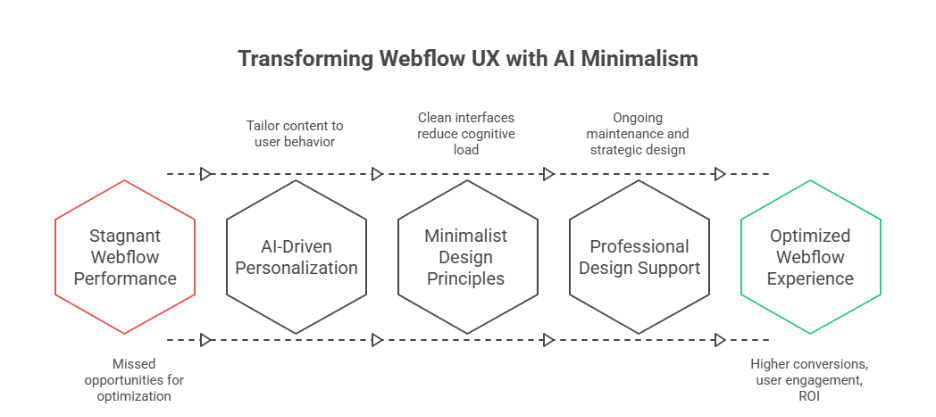
After 2025, website expectations for growing businesses shifted dramatically. Companies now prioritize seamless user experience, AI-driven personalization, accessibility, and performance optimization. A strong online presence requires professional development, ongoing maintenance, and design that resonates with users, enhancing engagement, conversions, and long-term business growth in an increasingly competitive digital landscape.
Investing in quality website design and maintenance delivers tangible value. Even a small upgrade like AI-driven personalization or subtle animation can significantly improve engagement and conversion. Professional agencies often offer tiered pricing starting from modest monthly retainers to comprehensive packages covering design, optimization, and SEO enhancements, making growth-focused websites accessible at every stage.
This blog will explore how website expectations evolved after 2025, highlighting the importance of accessibility, AI-driven tools, user behavior analysis, and personalization. You’ll discover practical strategies to build websites that prioritize performance, enhance user experience, and deliver measurable results, ensuring your business stays ahead in an increasingly competitive digital landscape.
The Secret to User Experience Everyone Misses
Step 1: Prioritize Usability in Website Design
Modern websites must meet high usability standards. Focus on intuitive navigation, clear call-to-actions, and organized content structure. Websites are no longer just visual they must create digital experiences that resonate with potential customers and enhance business growth.
Step 2: Optimize Website Performance
Websites load speed is critical. In 2025, modern websites need to load in under 2 seconds across devices. Use website optimization techniques, compressed images, and streamlined code to deliver seamlessly fast experiences that retain visitors.
Step 3: Integrate AI-Powered Tools
Businesses are adopting ai-powered solutions like ai chatbots for instant engagement and personalized interactions. These digital experiences improve user expectations and create a more impactful journey for small businesses, startups, and B2B companies.
Step 4: Leverage Analytics for Personalization
Track user behavior through analytics to make informed design decisions. Tailor short-form content, recommendations, and messaging to audience preferences. Personalization helps build websites that resonate and provide a competitive edge.
Step 5: Focus on Scalability and Future-Proofing
Web development should be scalable. Plan for growth, include modern websites need features like animation, accessibility, and seamless workflow. This ensures your website in 2025 evolves with your digital business and supports long-term business growth.
Step 6: Keep UX a Top Priority
For business owners, user experience is top priority. Combining website optimization, performance, personalization, and inclusive design creates websites that adapt, enhance engagement, and strengthen your online presence.
Why Websites in 2025 Are Nothing Like Before
Websites in 2025 have evolved far beyond static pages or simple landing designs. Many businesses are now leveraging ai-driven tools and ai-driven personalization to create highly personalized, interactive, and app-like digital experiences. Understanding these shifts is critical if you want to enhance user engagement and maximize ROI in the modern digital landscape.
Key Shifts in Website Design and Functionality
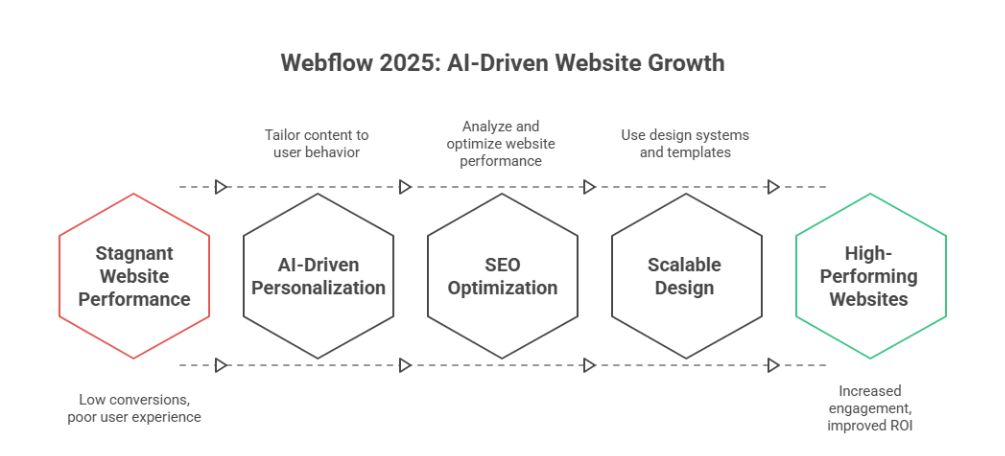
- AI-Driven Personalization: Modern websites use ai-driven personalization to tailor content and recommendations based on younger audiences or user behavior, improving click-through rates and customer engagement.
- Faster Load Times: With faster load times now a baseline expectation, new websites are optimized to quickly and easily deliver content across devices, including mobile experiences.
- App-Like Experiences: Websites now feel app-like, offering smooth interactions, motion design, and well-structured layouts that drive action.
Accessibility and Inclusivity Evolved
- Accessibility is no longer optional sites are designed to work with screen readers and meet global standards.
- Platforms that support accessibility ensure your digital landscape reaches wider audiences, creating customer engagement opportunities that traditional design missed.
- Inclusive design also improves SEO and aligns with modern marketing campaigns.
Integration of AI and Generative Tools
- AI tools now integrate seamlessly with websites to automate content updates, search optimization, and ai-driven personalization.
- Generative AI allows for rapid content creation, reducing the time required for design updates while maintaining consistency.
- Businesses using AI gain a competitive edge, enabling strategic vision and marketing expert insights to drive action.
Challenges and Opportunities
- Challenges and opportunities coexist: while AI and personalization increase engagement, well-structured implementation is crucial to avoid complexity.
- Maintaining relevance means sites must stay fresh and anticipate younger audiences’ expectations.
- Traditional search is being augmented by AI-driven recommendations, reshaping digital marketing campaigns and click-through rates.
Conclusion
After 2025, website expectations for growing businesses have shifted from purely visual design to highly interactive, personalized, and performance-driven digital experiences. Success now depends on combining seamless usability, faster load times, and AI-driven tools with thoughtful website design and ongoing professional development.
Websites are no longer static pages they must enhance user engagement, adapt across devices, and integrate analytics to inform personalization and strategic decisions. Accessibility and inclusivity have become essential, ensuring your digital landscape reaches all audiences while improving SEO and customer trust.
For business owners, investing in scalable, app-like, and AI-enabled websites is no longer optional. Prioritizing user experience, performance optimization, and AI-driven personalization provides a competitive edge, drives action, and supports long-term business growth. By understanding these shifts and implementing best practices, you can ensure your website resonates with your audience, stands out in the market, and delivers measurable results in the ever-evolving digital world.
So, if your current website isn’t enhancing user experience or leveraging AI-driven personalization, the real question is—are you ready to contact Integriti Studio and transform it today?
Frequently Asked Questions (After 2025 How Website Expectations Changed for Growing Businesses)
What are the new website design trends 2025?
In 2025, website design trends focus on AI-powered personalization, minimalist layouts, and immersive features like 3D elements and micro-interactions. Emphasis on accessible, responsive design, faster performance, and ethical, sustainable practices ensures users can find information quickly while enjoying engaging, modern, and personalized digital experiences.
Which business model is expected to gain more popularity by 2025?
By 2025, subscription-based business models are expected to gain more popularity. They provide predictable revenue, foster long-term customer relationships, and integrate seamlessly with digital platforms and AI-driven personalization. This model benefits both businesses and users by offering continuous value, convenience, and scalable growth opportunities.
What is the best way to build a website in 2025?
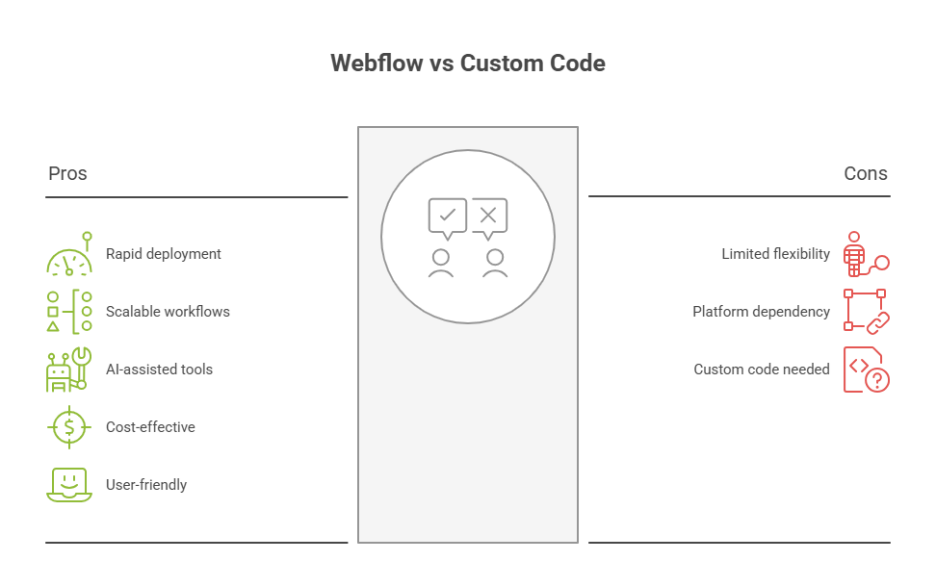
The best way to build a website in 2025 is by combining no-code platforms like Webflow with AI-powered tools for design, personalization, and optimization. Prioritize fast load times, responsive layouts, user experience improvements, and ongoing website audits to ensure scalability, performance, and long-term business growth.
What are the key business trends in 2025?
Key business trends in 2025 include AI-driven automation, no-code and low-code solutions, and personalized digital experiences. Companies are focusing on sustainability, subscription-based models, and data-driven decision-making to enhance customer engagement, optimize operations, and maintain a competitive edge in an increasingly fast-paced, technology-driven digital landscape.