Category: Studioblogs

  • Why High-Revenue Shopify Stores Look Very Different After 2025

    Why High-Revenue Shopify Stores Look Very Different After 2025

    Why High-Revenue Shopify Stores Look Very Different After 2025

    Why do some Shopify stores generate exceptional revenue while others stall despite using the same platform? The answer lies in multiple factors, including site performance, professional development, strategic integrations, and ongoing maintenance. As a shopify store owner, you may already rely on the Shopify platform, but without expert execution, even high-potential stores can underperform.

    High-revenue Shopify stores look very different after 2025 due to strategic adoption of advanced integrations, performance-focused updates, and professional development practices. Store owners leveraging optimized shopify store design, AI-assisted workflows, and scalable infrastructure achieve higher profitability, better ecommerce performance, and long-term growth heading into 2026.

    Performance is influenced by site architecture, loading speed, checkout optimization, and scalability. Professional development ensures your store is built for long-term growth, while good design, UX-focused layouts, and reliable support increase ecommerce conversions and customer trust. Maintenance and updates protect your investment, keeping your store competitive as Shopify evolves. For instance, while a basic setup may cost a few hundred dollars, a fully optimized, scalable store often requires higher upfront investment but delivers measurable returns over time.

    This blog explores why high-revenue Shopify stores look very different after 2025, highlighting key changes that affect profitability, the impact of 2026 trends, and how strategic choices in design, integration, and development help store owners achieve sustainable growth in the evolving global ecommerce landscape.

    How Shopify stores evolve for profitability in 2026
    How Shopify stores evolve for profitability in 2026

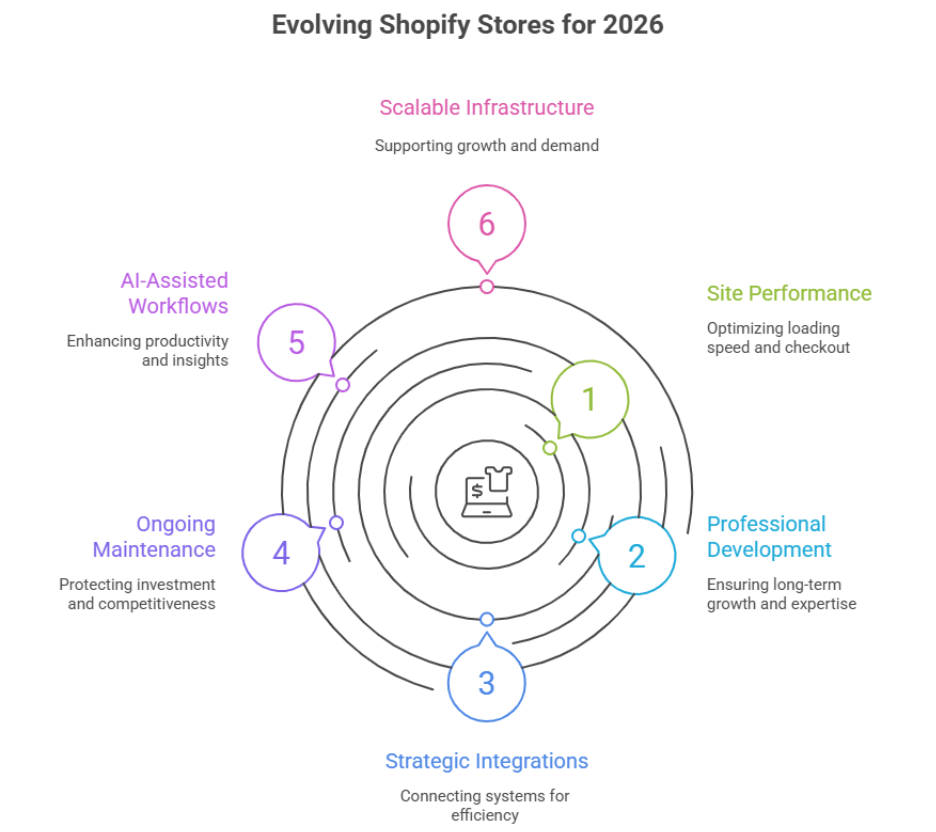
    High-performing Shopify store owners know that profitability in 2026 depends on strategic evolution, not just platform adoption. The Shopify platform continues to expand, offering advanced integration options, scalable infrastructure, and tools that support global ecommerce growth. Businesses that adapt their workflows, design, and technology stack now are better positioned to achieve sustained revenue growth.

    Leveraging Integrations for Enhanced Performance

    Modern online stores thrive by connecting multiple systems through integration. From payment gateways and inventory management to loyalty programs and marketing automation, Shopify store owners can streamline operations and reduce manual effort. Efficient backend management improves order processing, while integrations with third-party apps from the app store enable faster implementation of features that directly impact profitability.

    Optimizing Product Pages and Checkout

    A focus on optimized product pages and streamlined checkout experiences drives higher conversions. Clear product descriptions, intuitive navigation, and responsive design ensure shoppers complete purchases efficiently. Shopify merchants who continually refine these elements see measurable revenue growth, particularly when leveraging analytics and Shopify in 2025 insights to anticipate trends in 2026.

    Expanding Through Global Ecommerce

    Expanding into global ecommerce markets allows Shopify store owners to increase gross merchandise volume (GMV) and overall sales. Multi-currency support, localized content, and region-specific payment processing help businesses tap into international audiences while maintaining profitability. Strategic integrations with shipping and tax tools further simplify cross-border operations.

    Strategic Use of Shopify Plus and Advanced Features

    For larger businesses, Shopify Plus provides advanced features such as custom APIs, automation, and high-volume processing capabilities. By leveraging these tools alongside a well-planned Shopify setup, store owners can scale efficiently while controlling costs. Integrating AI-powered analytics and marketing workflows ensures stores remain competitive and continue delivering profitability in 2026.

    Continuous Monitoring and Adaptation

    Sustaining profitability requires ongoing attention. Regular audits, performance checks, and updates to integrations or Shopify ecosystem tools keep the store optimized. Shopify store owners who invest in continual improvement are better prepared for shifting market demands, evolving consumer behavior, and the expanding opportunities within global ecommerce.

    Key Shopify 2025 changes shaping global ecommerce growth

    The landscape of global ecommerce shifted significantly in 2025, with changes that continue to influence how Shopify stores perform today. Understanding these updates is critical for store owners who want to remain competitive, optimize traffic and sales, and ensure their margins are tighter don’t compromise long-term growth.

    Platform Enhancements Driving Efficiency

    Several core updates to Shopify in 2025 improved operational efficiency and store management:

    • Enterprise-grade tools: Larger Shopify websites gained better scalability and headless commerce options, allowing seamless integration with third-party systems.
    • Seamless backend improvements: The Shopify dashboard was updated for streamlined workflows, reducing administrative burden for stores using Shopify.
    • Transaction fees and shipping costs: Adjustments in transaction fees and optimized shipping costs encouraged more efficient operations and improved profit margins.

    Marketing and Customer Engagement Updates

    Shopify expanded its marketing capabilities, helping e-commerce store owners increase visibility and engagement:

    • Social media integration: Tools for linking social media accounts including TikTok Shop boosted discoverability and sales volume.
    • AI-driven insights: Integration of chatGPT and other AI-powered tools allowed store owners to refine product recommendations, improve brand presence, and optimize traffic and sales.
    • Email and automation: Enhanced Klaviyo integrations provided better targeting for email campaigns and customer segmentation.

    Design, Customization, and Store Appearance

    Store aesthetics and flexibility became a major differentiator in 2025:

    • Go custom and headless commerce: High-growth Shopify stores could implement unique designs, improving user experience and brand presence.
    • Template and theme updates: Both standard Shopify stores and enterprise-grade solutions benefited from modern templates that make the store look professional and optimized for conversions.
    • Top categories optimization: Adjustments in layout and navigation helped increase sales by emphasizing top categories for better shopper engagement.

    Long-Term Impact on Profitability

    • Tighter margins: Many Shopify store owners recognized that while profitability was achievable, margins are tighter, necessitating strategic updates and investment in professional shopify website management.
    • Sustaining growth: Stores that adopted AI-driven analytics, streamlined shipping costs, and leveraged enterprise-grade tools continue to run a still a profitable business heading into Shopify in 2026.

    Conclusion

    High-revenue Shopify stores look very different after 2025 because success is no longer just about choosing a platform—it’s about strategic execution, professional development, and smart integration. Store owners who optimize design, streamline checkout processes, and leverage AI-driven insights achieve higher profitability, improved traffic and sales, and sustainable growth heading into Shopify in 2026.

    The updates introduced in 2025 from enhanced backend efficiency and enterprise-grade tools to social media integration and headless commerce capabilities have reshaped the way shopify store owners operate. By adopting these changes, monitoring performance, and continuously refining workflows, high-growth stores maintain competitive advantage and maximize gross merchandise volume (GMV) while keeping margins tighter under control.

    Ultimately, the stores that thrive are those that combine professional shopify website management with forward-thinking strategies, ensuring their e-commerce store remains scalable, adaptable, and still a profitable business well beyond 2025. Embracing these practices today positions your store to capture new opportunities, enhance brand presence, and sustain long-term success in the evolving global ecommerce landscape.

    Frequently Asked Questions (Why High-Revenue Shopify Stores Look Very Different After 2025)

    Are Shopify stores still profitable in 2025?

    Yes Shopify stores are still profitable in 2025 if you execute well with strong products, marketing, and customer retention. Many merchants report average net profits around 15–30%, and some niche or branded stores earn much more, though results vary by strategy and effort.

    Where will Shopify be in 5 years?

    In 5 years (2030) Shopify is likely to evolve from a basic online store builder into a broader global commerce platform, powering payments, logistics, checkout APIs, and enterprise solutions, expanding internationally and across channels with strong AI integration and deeper ecosystem services.

    What is the outlook for Shopify in 2025?

    In 2025, Shopify’s outlook remains strong with robust revenue and growth, expecting mid-to-high-20% revenue increases and continued profitability through the year. It’s expanding AI tools, global reach, and merchant adoption, though growth may face competition and marketing cost challenges.

    What is the highest earning Shopify store?

    The highest-earning Shopify-powered store today is Herman Miller, with an estimated $821.7 million in revenue, followed by big brands like Peloton and waterdrop® also earning hundreds of millions annually. These are among the top-grossing Shopify stores in 2025.
  • WordPress in 2026 which 2025 Changes Will Matter long-term

    WordPress in 2026 which 2025 Changes Will Matter long-term

    WordPress in 2026 which 2025 Changes Will Matter long-term

    Why do some WordPress websites scale smoothly while others struggle to keep up with business goals? The difference rarely lies in the platform itself. Website performance is shaped by multiple factors, including development quality, architectural decisions, long-term maintenance, and how well evolving technologies are adopted. As a site owner, you may already rely on WordPress for flexibility, but without professional execution, even powerful tools can underperform.

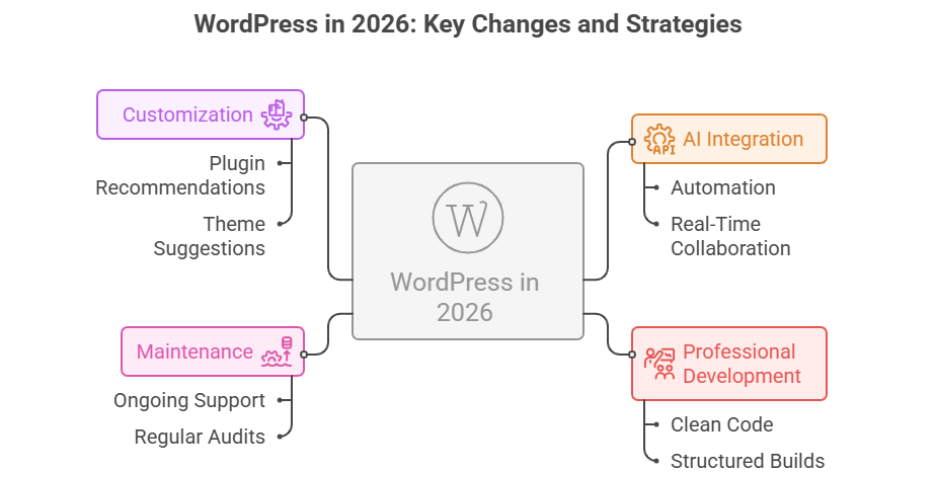
    WordPress in 2026 will be shaped by key 2025 changes, including enhanced AI integration, improved plugin ecosystems, and performance-focused updates from WordPress 6.9. Site owners who adopt professional development, maintain their builds, and leverage these tools will gain long-term business benefits, future-proofing their websites for real-time collaboration and growth.

    Professional development plays a critical role in turning a website into a business asset. Clean code, structured builds, and informed updates ensure stability as platforms evolve. Good design is not only visual it improves usability, conversion flow, and trust. Ongoing support and maintenance protect your investment, especially when updates introduce new capabilities. For example, while a basic setup may cost a few hundred dollars, long-term-ready builds often require thoughtful planning and higher upfront investment to deliver measurable returns.

    Looking ahead to WordPress in 2026, the shifts introduced during 2025 and the growing role of ai will define which websites stay competitive. This blog explores which changes matter long-term, how WordPress adapts, and how smart decisions today support sustainable growth beyond 2026.

    How site owners rely on WordPress AI in 2026

    How site owners rely on WordPress AI in 2026

    As WordPress evolves, site owners are increasingly relying on WordPress AI to streamline workflows, enhance performance, and deliver better user experiences. The future of WordPress in 2026 will emphasize automation, real-time collaboration, and smart integrations, allowing businesses to achieve measurable business benefits while maintaining flexibility.

    AI Integration and Real-Time Collaboration

    One of the most significant 2025 changes is the integration of AI directly into the WordPress dashboard. With the abilities API and other AI tools, site owners can automate repetitive tasks, optimize content, and gain insights for performance optimization. Real-time collaboration features allow teams to work on WordPress websites simultaneously, improving efficiency and minimizing errors. This is especially critical for businesses relying on WooCommerce or multi-user blogging platforms, where content speed and accuracy directly impact revenue.

    Customization and Automation for Business Needs

    Modern WordPress development now supports custom development and AI-driven automation. For instance, a WordPress AI client can suggest plugins and themes, recommend performance optimization features, and help maintain core security and bug fixes. This reduces the dependency on expensive plugins and allows site owners to focus on content strategy and business needs rather than manual site management.

    Staying Updated with the WordPress Roadmap

    The WordPress AI team continues to evolve the platform based on feedback from the State of the Word 2025 report. By understanding the roadmap and future development, site owners can prioritize updates, adopt new features, and ensure their WordPress sites remain competitive. Leveraging AI for real-time collaboration, workflow management, and customization ensures that every site aligns with modern best practices while offering business benefits that extend well into 2026.

    Preparing for the Future of WordPress

    To maximize the advantages of WordPress AI, site owners should invest in training, regular audits, and customization aligned with their business needs. The combination of professional development, core platform enhancements, and AI-driven automation positions WordPress in 2026 as a platform where efficiency, innovation, and scalability converge. Companies that embrace these tools now will gain a competitive edge, ensuring that their WordPress websites deliver long-term value and measurable ROI.

    Conclusion

    The journey of WordPress in 2026 is built on the critical shifts introduced during 2025, from AI integration to improved plugin ecosystems and performance-focused updates. For site owners, success is no longer just about choosing a platform—it’s about leveraging professional development, smart customization, and AI-driven automation to maximize efficiency and deliver measurable business benefits.

    By staying updated with the WordPress roadmap, adopting real-time collaboration, and prioritizing structured maintenance, you can future-proof your WordPress website while enhancing user experience, security, and scalability. Thoughtful investment in design, development, and ongoing support ensures your site not only performs well today but continues to grow and adapt to emerging technologies.

    Ultimately, WordPress in 2026 rewards those who make informed, strategic decisions. By embracing AI, automation, and professional best practices, site owners can transform their WordPress websites into resilient, high-performing business assets that drive long-term value, efficiency, and competitive advantage.

    Frequently Asked Questions (WordPress in 2026 which 2025 Changes Will Matter long-term)

    Is WordPress still in demand in 2025?

    Yes WordPress is still in demand in 2025 because it powers around 43% of all websites worldwide and dominates the CMS market with over 60% share, keeping strong need for developers, designers, and site maintenance work.

    What is the future of WordPress?

    In 2025 and beyond, WordPress’s future is strong with AI-driven tools, full-site editing, and no-code design making site building easier, plus headless architecture and enhanced performance/security improvements keeping it modern and competitive for businesses, creators, and developers.

    Will AI replace WordPress?

    No AI won’t replace WordPress itself, but it will transform how sites are built and managed. AI can automate content, design suggestions, and basic tasks, but WordPress’s core platform, plugins, developers, and complex custom work remain essential into the future.

    How much does WordPress pay for 1000 views?

    On WordPress you don’t get a fixed pay per 1,000 views it depends on how you monetize your site. With ads (like AdSense), typical earnings are roughly $1–$8 per 1,000 views, and in top niches it can reach $10+ per 1,000 views. Premium ad networks or affiliate income can boost this further.

  • Lessons from wordpress in 2025 that will shape 2026

    Lessons from wordpress in 2025 that will shape 2026

    Lessons from wordpress in 2025 that will shape 2026

    Why do some WordPress websites thrive effortlessly while others struggle to convert visitors into customers? The difference often goes beyond the platform itself and lies in how a site is designed, built, and maintained. Factors influencing website performance such as optimization, user experience, and plugin integration play a critical role in determining whether your WordPress site can scale effectively.

    WordPress in 2025 highlighted the importance of professional development, AI integration, and optimized workflows. Developers and site owners who focused on user experience, plugin management, and intuitive design gained a competitive edge. These lessons will shape 2026, guiding smarter site redesigns, efficient maintenance, and future-ready WordPress roadmaps.

    Professional development for developers and site owners is more important than ever. In 2025, we saw how investing in AI-powered tools, careful workflow planning, and advanced builder techniques not only speeds up development but ensures sites remain flexible for future updates. Good design, ongoing support, and maintenance deliver real value, helping avoid costly errors and downtime. For example, a professional WordPress redesign or plugin integration can vary in pricing, reflecting the complexity and level of expertise required.

    This blog will explore key lessons from WordPress in 2025, including practical insights for developers and site owners, the evolving role of AI, and strategies to optimize workflow, plugins, and overall functionality. By following these lessons, you can shape your roadmap for 2026 and ensure your WordPress projects are smarter, faster, and more future-ready.

    WordPress AI Tools Helping Developers with Real-Time Collaboration

    WordPress AI Tools Helping Developers with Real-Time Collaboration

    As WordPress continues to evolve, AI tools have become essential for developers aiming to streamline workflows, optimize performance, and enhance real-time collaboration. These tools allow developers and site owners to reduce errors, accelerate site redesigns, and ensure WordPress websites remain future-ready.

    How AI Tools Enhance Real-Time Collaboration

    AI tools enable multiple developers and site owners to work simultaneously on a WordPress website without conflicts. Tasks such as content creation, plugin customization, and code updates can now happen in a synchronized environment. This reduces bottlenecks during redesign phases and ensures new features are integrated efficiently.

    Optimizing WordPress Core and Plugins

    With AI-powered insights, developers can natively optimize WordPress core, themes, and plugins for performance and scalability. AI can suggest caching improvements, highlight redundant PHP code, and recommend strategies for performance optimization, creating smoother experiences for users.

    Streamlined Content and Feature Management

    AI tools assist with content creation and management systems, allowing site owners to maintain original content, blog posts, and product updates efficiently. This ensures that sites stay current with web design trends and align content with business objectives.

    Benefits for Site Owners and Developers

    For site owners, AI-enabled collaboration means faster redesign cycles, better portability of WordPress websites, and enhanced analytics. Developers gain seamless repository management, phase updates without disruption, and plan future development efficiently.

    A Strategic Investment for Long-Term Success

    Investing in AI tools is a powerful move for WordPress site owners and developers who want to optimize workflow, reduce reliance on freelance resources, and maintain a competitive edge. Every redesign, plugin integration, and core update is executed efficiently, saving time and costs.

    WordPress 2025 Insights Every Developer Needs for 2026

    WordPress in 2025 offered developers crucial lessons that will directly impact strategies and site performance in 2026. Understanding these insights ensures developers can deliver responsive, secure, and future-ready WordPress websites while optimizing workflows and enhancing real-time collaboration.

    Key Performance and Security Takeaways

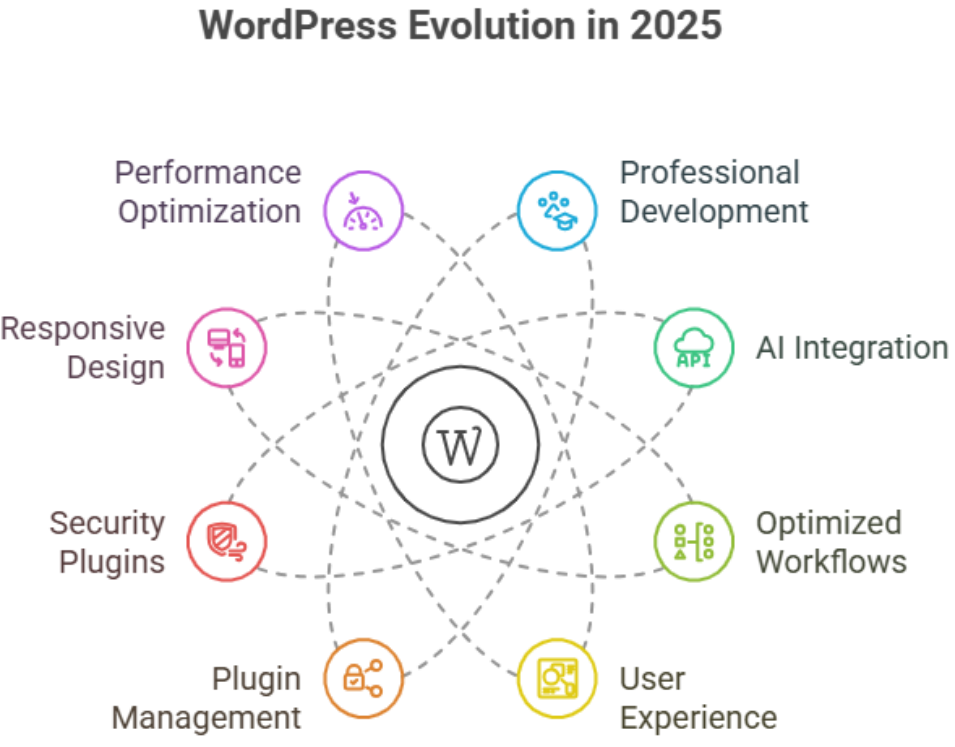
    • Invest in Security Plugins: Implementing reliable security plugins in 2025 proved essential for safeguarding WordPress websites against emerging threats. Developers should continue prioritizing these tools in 2026.
    • Optimize for Responsiveness: Responsive design ensures websites perform well across devices, a non-negotiable expectation from users and site owners.
    • Performance Optimization: Efficient caching, code management, and AI-driven tools enhance speed and reliability.

    Enhancing Collaboration and Workflow

    • Real-Time Collaboration: 2025 highlighted how AI-driven real-time collaboration tools streamline teamwork between developers and site owners.
    • Project Management Integration: Embedding project management systems within WordPress workflows improves task tracking, deadlines, and transparency.
    • API Utilization: Leveraging APIs facilitates smoother integrations, especially for SaaS solutions and e-commerce platforms.

    Content and Design Strategies

    • Structured Content: Maintaining a clear content structure improves SEO, user experience, and manageability.
    • Preview Functionality: Allowing site owners to preview content in real-time reduces errors and speeds up the redesign process.
    • Portfolio and E-Commerce Sites: Specific design strategies from 2025 emphasize creating intuitive layouts for both portfolio sites and e-commerce platforms, enhancing engagement and conversions.

    Preparing for 2026

    By integrating lessons from WordPress 2025, developers can deliver smarter, more secure, and user-focused websites. Focusing on security plugins, responsive design, real-time collaboration, and AI-driven tools ensures that workflows are optimized and sites are future-ready, setting a strong roadmap for 2026.

    Conclusion

    The lessons from WordPress in 2025 provide a clear roadmap for success in 2026. Developers and site owners who embrace AI tools, prioritize real-time collaboration, and focus on performance optimization, responsive design, and security plugins are better positioned to deliver WordPress websites that are efficient, scalable, and user-focused. Investing in professional development, strategic workflow planning, and thoughtful site redesigns ensures that your WordPress projects remain future-ready, flexible, and aligned with business objectives. By applying these insights, you can not only streamline development and maintenance but also create websites that engage users, support growth, and maintain a competitive edge in the rapidly evolving digital landscape.

    Frequently Asked Questions (Lessons from wordpress in 2025 that will shape 2026)

    Why do some WordPress websites perform better than others?

    Performance depends on factors like optimization, user experience, plugin integration, and professional development. Sites with efficient workflows, responsive design, and strategic plugin management tend to convert better and scale more effectively.

    How is AI shaping WordPress development in 2025?

    AI tools enhance real-time collaboration, streamline content creation, optimize workflows, and provide insights for plugin and core management. Developers and site owners using AI can reduce errors and accelerate redesigns.

    What should developers focus on for WordPress in 2026?

    Developers should prioritize security plugins, responsive design, real-time collaboration, performance optimization, and future-ready workflows. Understanding lessons from 2025 ensures smoother site updates and better scalability.

    How important is professional development for WordPress site owners?

    Extremely important. Investing in learning AI tools, builder techniques, and best practices ensures site owners can maintain and optimize their websites efficiently while reducing reliance on external resources.

  • What webflow  2025 growth signals for the future

    What webflow  2025 growth signals for the future

    What webflow  2025 growth signals for the future

    Why do some websites built on popular platforms struggle to convert, while others thrive effortlessly? The difference often comes down to more than just the choice between Webflow or WordPress it lies in factors influencing website performance, from professional development quality to thoughtful design and ongoing maintenance. In 2025, businesses increasingly recognize that the real value of good web design extends beyond aesthetics. A carefully optimized user experience, accessible layouts, and seamless AI-driven personalization can dramatically improve engagement and SEO, while data-driven decisions and smart integrations help marketing teams maximize ROI.

    Webflow in 2025 signals a future driven by AI, no-code efficiency, and seamless integrations. Marketing leaders leverage its SEO, analytics, and personalization capabilities to optimize user experience, improve conversions, and enable data-driven decisions. Businesses using Webflow can scale faster while maintaining modern, high-performing web design.

    Professional development ensures that your website not only looks modern but functions reliably, with features that support growth. Maintenance and support often overlooked keep your site secure, fast, and optimized for conversions. Small investments, such as allocating $2,000–$5,000 for focused improvements or enhancements, can yield measurable results without breaking budgets.

    This blog will explore the growth signals for Webflow in 2025, highlighting how AI, SEO, integration, and no-code capabilities are shaping the future. You’ll learn how marketing leaders use Webflow to optimize websites, improve user experience, and leverage data-driven insights for smarter decisions.

    AI, SEO, Analytics: Key Webflow 2025 Takeaways

    AI, SEO, Analytics: Key Webflow 2025 Takeaways

    Webflow in 2025 continues to redefine how marketing websites are designed, optimized, and scaled. For businesses looking to build smarter, leveraging AI, SEO, and analytics is no longer optional—it’s essential. Understanding these core areas helps marketers, designers, and developers create future-proof web experiences that maximize ROI and deliver measurable impact.

    AI-Driven Personalization Enhances User Experience

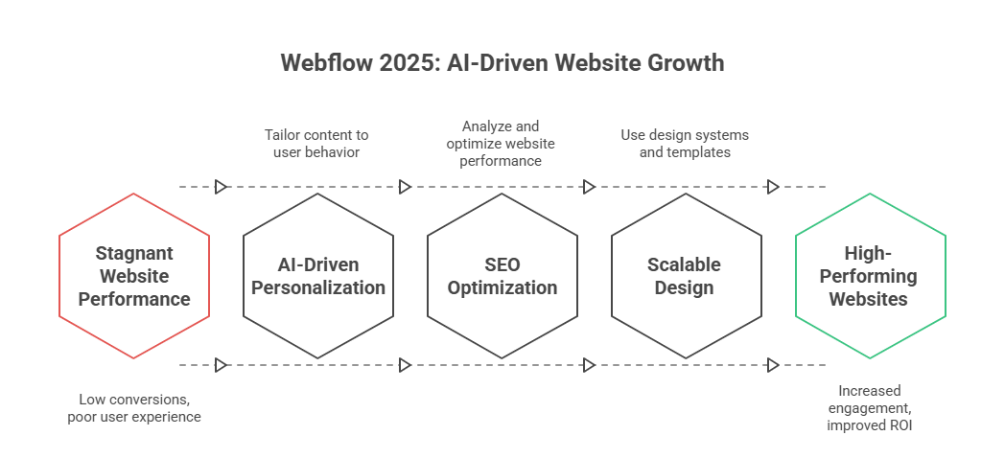
    One of the most significant growth signals for Webflow in 2025 is AI-driven personalization. Platforms like Webflow now allow marketers to dynamically tailor content based on user behavior and preferences. By integrating AI, teams can deliver relevant experiences without code, reducing the bottleneck of manual content updates. Designers and developers can combine AI with visual web development and motion design to create immersive digital experiences that resonate with audiences.

    Benefits for Marketing Leaders and Teams

    • Deliver content-rich, personalized experiences across entire websites.
    • Automate repetitive tasks, freeing teams to focus on strategy and design.
    • Improve ROI by increasing engagement and conversion through smarter, data-driven personalization.

    SEO Optimization and Analytics Integration

    In 2025, SEO rankings are increasingly tied to data and user engagement. Webflow’s new tools make it simple to analyze and optimize websites using integrated analytics, allowing marketers to track performance in real-time. Whether you use Webflow for scalable websites or smaller webflow sites, having built-in insights reduces reliance on third-party tools and empowers non-developers to make informed decisions.

    Key Takeaways for SEO in Webflow

    • Leverage analytics to understand user behavior and optimize layout and content placement.
    • Combine dynamic content with AI-driven strategies to improve search visibility.
    • Ensure future-proof websites by aligning design systems, templates, and reusable components with evolving website trends.

    Designing Scalable, Data-Driven Web Experiences

    Webflow’s 2025 state highlights the importance of design and development workflows that support scalable websites. From core areas like accessibility and inclusive design to backend logic and content management, Webflow provides tools to iterate efficiently. Freelancers, teams, and agencies can leverage reusable components and curated collections to streamline projects, ensuring future-proof websites that meet modern web standards.

    Practical Applications

    • Use design systems and templates to maintain consistency across large projects.
    • Integrate analytics to continuously refine digital experiences.
    • Adopt AI and automation for dynamic content, ai-driven personalization, and smarter team collaboration.

    Takeaways:

    By focusing on AI-driven personalization, integrated analytics, and SEO optimization, Webflow in 2025 enables marketers and designers to build content-rich, scalable websites without code. These innovations help teams analyze and optimize continuously, delivering relevant experiences that drive growth, improve ROI, and future-proof web projects.

    Conclusion

    Webflow in 2025 clearly demonstrates that the future of websites is no longer just about aesthetics—it’s about building smarter, scalable, and data-driven digital experiences. By leveraging AI-driven personalization, integrated analytics, and SEO optimization, businesses can create marketing websites that not only engage users but also deliver measurable ROI. Thoughtful webflow design, professional development, and ongoing maintenance ensure your site remains reliable, future-proof, and optimized for growth.

    Marketing leaders and teams who use Webflow effectively can streamline workflows, reduce dependency on developers, and implement dynamic content strategies that respond to real-time user behavior. Small, targeted investments in design systems, templates, and AI integrations can yield outsized results, making modern web development both efficient and impactful.

    Ultimately, the growth signals for Webflow in 2025 point toward a future where content-rich, scalable websites powered by AI and analytics become the standard. By embracing these capabilities, businesses can stay ahead of website trends, improve user experience, and make confident, data-driven decisions for long-term success.

    Are you ready to take your website to the next level why not contact Integriti Studio today and see how we can help?

    Frequently Asked Questions (What webflow  2025 growth signals for the future)

    What is the future of Webflow?

    The future of Webflow is promising, as it continues evolving into a full-fledged no-code platform for designers and developers. In 2025, its focus on AI-driven design, real-time collaboration, and scalable workflows enables businesses to build responsive, visually compelling websites efficiently, bridging creativity with production-ready functionality.

    Should I learn Webflow in 2025?

    Yes, learning Webflow in 2025 is valuable. Its no-code capabilities, AI-driven design tools, and real-time collaboration features empower designers and developers to build responsive, scalable websites efficiently. Mastering Webflow can enhance your skillset, improve workflow efficiency, and open opportunities in modern web design and digital agencies.

    Is web design still in demand in 2025?

    Yes, web design remains in high demand in 2025. Businesses increasingly prioritize user experience, responsive design, and AI-driven functionality. Skilled designers who can create visually appealing, optimized, and future-ready websites are essential for brand growth, digital engagement, and maintaining a competitive edge in the evolving online marketplace.

    What will marketing look like in 2025?

    Marketing in 2025 will be data-driven, AI-powered, and highly personalized. Brands will leverage advanced analytics, automation, and real-time collaboration tools to deliver targeted campaigns across multiple channels. Creative content, seamless user experiences, and predictive insights will define strategies, making marketing more efficient and measurable than ever.

  • Shopify in 2025 the updates that quietly changed ecommerce

    Shopify in 2025 the updates that quietly changed ecommerce

    Shopify in 2025 the updates that quietly changed ecommerce

    Why do some ecommerce brands grow steadily while others struggle, even on the same platform? The difference is rarely the tool itself—it’s how you use it. In 2025, Shopify introduced a series of quiet but meaningful changes that reshaped how modern ecommerce businesses operate, scale, and compete. These updates didn’t arrive with noise, yet their impact on performance, flexibility, and long-term growth has been significant.

    Shopify in 2025 introduced subtle yet powerful updates that improved ecommerce performance, flexibility, and scalability. These changes focused on smarter workflows, better platform stability, and future-ready features, helping businesses build sustainable growth without complexity while adapting to modern commerce demands.

    Website success today is influenced by far more than themes or apps. Factors like clean development, fast-loading experiences, reliable integrations, and thoughtful architecture directly affect how users engage and convert. Professional development ensures your Shopify setup is not only functional but built to evolve, especially as ecommerce demands become more complex in 2025. Good design, ongoing support, and consistent maintenance often deliver more value than flashy features—especially when even a basic monthly investment compared to enterprise-level builds can shape results.

    This blog explores how Shopify evolved in 2025, the role of ai in shaping smarter ecommerce decisions, and why these updates matter for sustainable digital commerce. You’ll learn what changed, why it matters, and how the right approach helps future-proof your business in 2025 and beyond.

    Shopify in 2025: Quiet Updates Reshaping Modern Ecommerce

    Shopify in 2025: Quiet Updates Reshaping Modern Ecommerce

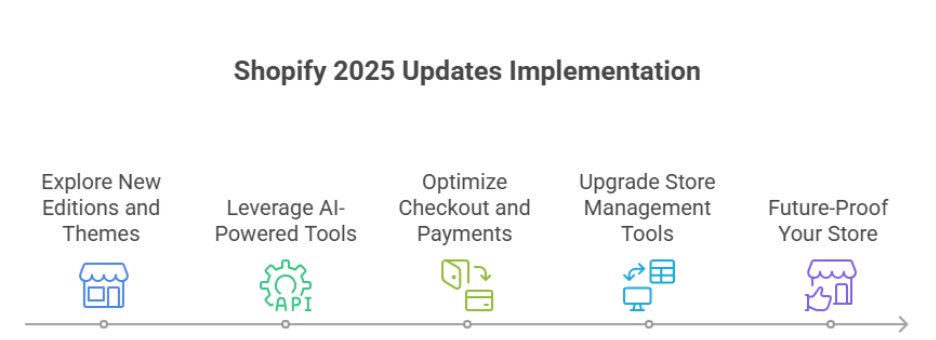
    In 2025, Shopify quietly rolled out updates that improve efficiency, automation, and user experience. These changes help merchants scale and optimize their stores without complicated processes. Here’s a step-by-step breakdown.

    Step 1: Explore Shopify’s New Editions and Themes

    • What’s new: Shopify editions and new themes provide modern, flexible storefronts.
    • Why it matters: Faster, visually appealing stores improve customer experience and reduce bounce rates.
    • Pro tip: Choose themes that balance design with speed for higher conversions.

    Step 2: Leverage AI-Powered Tools

    • Shopify’s AI and the AI store builder help automate tasks like content creation, personalized recommendations, and product descriptions.
    • Impact: Saves time, reduces errors, and allows merchants to use Shopify more efficiently.
    • Pro tip: Test AI-generated suggestions but keep human oversight for brand voice.

    Step 3: Optimize Checkout and Payments

    • Shopify Payments and updated checkout flows streamline the process and reduce abandoned carts.
    • Shop Pay improvements make transactions faster and smoother.
    • Pro tip: Monitor average order value and conversion metrics after implementing checkout updates.

    Step 4: Upgrade Store Management Tools

    • POS upgrades and admin dashboard improvements simplify daily operations.
    • Refund processes are faster, and analytics are easier to track.
    • Certified Shopify Plus merchants can access scalable B2B commerce workflows.

    Step 5: Future-Proof Your Store for 2026

    • Shopify evolves continuously with AI-driven automation, better storefront builders, and industry-aligned tools.
    • Merchants who use Shopify efficiently now will be ready for higher conversions and growth in the next year.

    Are Shopify 2025 updates quietly holding back growth?

    Even as Shopify continues to evolve in 2025, some updates may unintentionally limit growth for merchants who aren’t leveraging them effectively. Understanding these subtle limitations is key for ecommerce brands seeking to scale without unnecessary friction.

    Checkout Flows – Efficiency vs. Complexity

    Checkout upgrades introduced in Shopify have streamlined the purchasing process, but merchants must evaluate whether their current setup maximizes efficiency. Complex apps or workarounds can slow down checkout, increasing friction for customers. Implementing smart checkout flows ensures fewer abandoned carts while maintaining fast, secure transactions.

    Onboarding and Store Setup – Time Matters

    For new merchants or ecommerce companies expanding into new markets, Shopify’s onboarding and setup process is fast but sometimes requires workarounds to achieve full functionality. Missing these nuances may prevent merchants from leveraging the latest features like headless commerce or advanced personalization.

    Performance and Core Web Vitals

    Even with core web vitals improvements in Shopify, stores may underperform if themes or integrations aren’t optimized. Slow loading times or poorly coded apps can limit conversion potential without compromising the user experience.

    Long-Term Growth Avoiding Hidden Barriers

    While Shopify introduced helpful features in 2025, growth can still be unintentionally restricted if updates aren’t fully leveraged. Strategic planning, automation, and thoughtful use of personalization help merchants launch a store, improve UX, and scale without losing momentum.

    Conclusion

    The updates Shopify introduced in 2025 quietly reshaped ecommerce, offering tools and features that improve efficiency, automation, and scalability. However, these changes alone do not guarantee growth how you use Shopify, optimize checkout flows, leverage AI-powered tools, and maintain strong core web vitals directly impacts results.

    Merchants who actively explore new Shopify editions and themes, streamline onboarding, and implement thoughtful workflows can reduce friction, improve customer experience, and achieve higher conversions. At the same time, overlooking these subtle updates or relying on workarounds may unintentionally hold growth back, even on a leading ecommerce platform.

    Ultimately, success in Shopify 2025 depends on a strategic, proactive approach: combining smart use of technology, personalization, and professional development to launch a store, optimize performance, and scale without stress. By understanding and applying these quiet updates effectively, your business can stay competitive, future-proof operations, and position itself for long-term growth in 2026 and beyond.

    Want expert guidance on leveraging Shopify 2025 updates for your business? Contact Integriti Studio today to get started.

    Frequently Asked Questions (Shopify in 2025 the updates that quietly changed ecommerce)

    Is Shopify still relevant in 2025?

    Yes, Shopify remains highly relevant in 2025. Continuous updates, AI-powered tools, and enhanced e-commerce features help businesses streamline operations, optimize user experience, and scale efficiently. Brands that leverage Shopify’s integrations, analytics, and customizable workflows maintain a competitive edge in an evolving digital marketplace.

    What is Shopify and how does it work in 2025?

    Shopify in 2025 is a comprehensive e-commerce platform that enables businesses to create, manage, and scale online stores. It works by combining AI-driven tools, customizable themes, secure payment gateways, and seamless integrations, allowing merchants to optimize workflows, manage products, and enhance user experience efficiently.

    What is the outlook for Shopify in 2025?

    The outlook for Shopify in 2025 is strong, driven by AI-powered tools, enhanced integrations, and improved scalability for merchants. Businesses using Shopify can expect streamlined operations, better analytics, and more efficient workflows, positioning the platform as a leading solution for both new and established e-commerce ventures.

    Why are businesses moving from Drupal to Shopify in 2025?

    In 2025, businesses are moving from Drupal to Shopify for faster setup, user-friendly management, and superior e-commerce capabilities. Shopify’s AI tools, seamless integrations, and scalable workflows make online store management easier, while Drupal’s complexity and maintenance demands push site owners toward a more efficient, growth-focused platform.

  • Webflow in 2025 What Changed for Designers and Teams 

    Webflow in 2025 What Changed for Designers and Teams 

    Webflow in 2025 What Changed for Designers and Teams 

    Why do some websites built in 2025 outperform others, even when using the same tools like WordPress or Webflow? The difference often lies in how teams leverage modern platforms to optimize performance, ensure SEO readiness, and deliver a seamless user experience. For designers and teams, Webflow in 2025 is no longer just a visual builder it’s a full-fledged environment that combines no-code flexibility with production-ready capabilities. Real-time collaboration, built-in animations, clean code, and a responsive layout framework allow you to maintain creative control while scaling efficiently. 

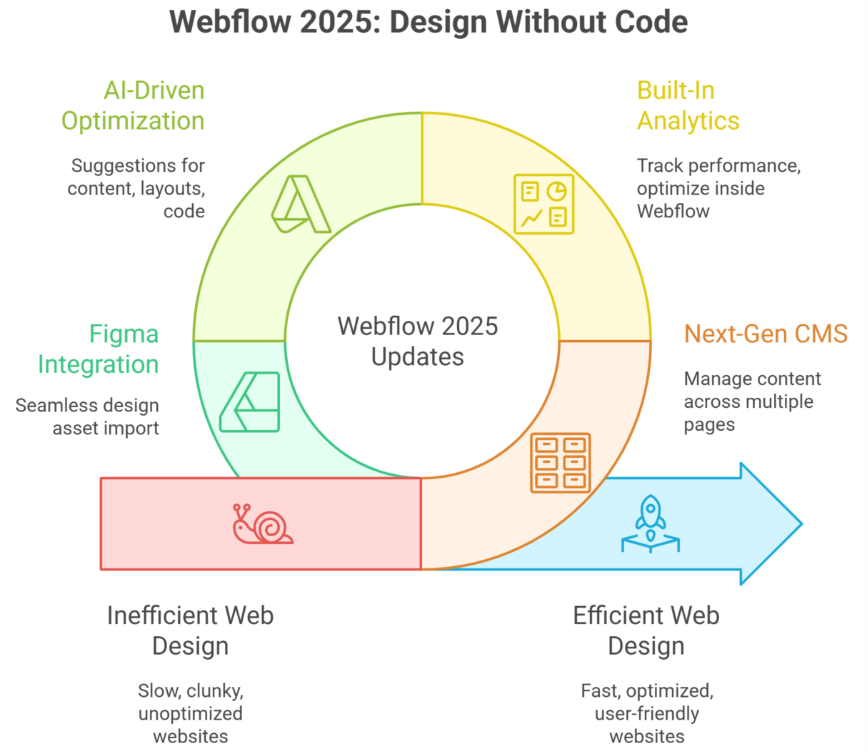
    In 2025, Webflow transformed for designers and teams by combining no-code flexibility with production-ready features. Real-time collaboration, built-in animations, responsive layouts, and clean code streamline workflows, while AI assistants, Figma integration, and scalable Webflow CMS enable faster, SEO-optimized websites with full creative control. 

    Professional development and thoughtful maintenance have become crucial. A well-planned Webflow CMS structure or optimized landing pages can mean the difference between a slow, clunky site and a high-converting digital asset. Even basic support packages now often start around a few hundred dollars monthly, reflecting the true value of design, optimization, and ongoing updates. 

    This blog will explore what changed in Webflow for designers and teams in 2025, including workflow improvements, AI assistant integration, advanced SEO strategies, Figma-to-Webflow design translation, and tips to maximize creative control while keeping your projects production-ready. 

    Next-Gen CMS and Built-In Analytics Optimize Webflow 

    Next-Gen CMS and Built-In Analytics Optimize Webflow 

    Webflow’s 2025 updates have redefined how designers and developers manage dynamic content and analyze performance. By combining a next-gen CMS with built-in analytics, teams can now build, optimize, and personalize websites without coding, while maintaining full design freedom and efficiency. 

    Streamlined CMS for Scalable Webflow Sites 

    Webflow’s CMS now allows marketing teams and developers to manage multiple CMS items effortlessly. From blogs to product pages, each CMS content block can be structured with a consistent design system, ensuring responsive websites that maintain visual consistency. Integrations like Figma to Webflow translation make importing design assets seamless, enabling designers to move from prototype to live site without losing fidelity. 

    Managing Multiple CMS Items Efficiently 

    Managing multiple CMS items is simplified with Webflow Canvas, where designers can see real-time previews of each item in context. This approach reduces errors, improves content workflows, and ensures every piece of content aligns with the site’s overall layout and brand standards. 

    Built-In Analytics for Data-Driven Decisions 

    With Webflow Analyze, teams can track core metrics like Core Web Vitals, user behavior, and SEO performance directly within the site builder. This enables marketing teams to make informed decisions, personalize content, and continuously optimize Webflow sites for higher conversions. Unlike relying on external analytics tools, built-in reporting saves time and ensures data accuracy. 

    Leveraging AI Tools for Performance 

    Webflow’s AI tools can now suggest optimizations for CMS content, responsive layouts, and even custom code snippets. These enhancements help teams reduce manual work while maintaining design freedom and keeping sites production-ready. 

    What’s New in Webflow 2025 

    The Webflow Conf 2025 highlighted several new features, including: 

    1. Advanced features for personalization and user segmentation 
    1. Enhanced design freedom for designers and developers 
    1. Seamless integration of webflow university tutorials for rapid learning 
    1. New tools for optimizing multi-page responsive websites 

    Pros and Cons of Webflow CMS 

    Pros: 

    • Complete design freedom 
    • Scalable CMS with personalization options 
    • Real-time analytics through Webflow Analyze 
    • Efficient Figma to Webflow workflows 

    Cons of Webflow: 

    • Some advanced features may require familiarity with custom code 
    • Managing multiple webflow accounts can be complex for larger teams 
    • Slight learning curve for non-technical marketing teams 

    Webflow in 2025: Key Features for Designers’ Success 

    • Next-Gen CMS enables seamless management of content and design across multiple pages. 
    • Built-in CMS supports dynamic content like blogs, portfolios, and e-commerce items. 
    • Built-in analytics allows designers to track performance and optimize websites inside Webflow without third-party tools. 
    • Reduced back-and-forth between designers and developers for faster project delivery. 
    • Websites without writing code can be created using the visual website builder and visual web development platform. 
    • CSS Grid and enhanced layout options enable precise, responsive, and scalable designs. 
    • Custom Webflow components allow tailored solutions for enterprise and client-specific projects. 
    • Additional features like animations, interactive elements, and AI-driven suggestions improve engagement and workflow efficiency. 
    • Efficient handling of multiple projects simultaneously for agency and enterprise teams. 
    • Content and design remain fully integrated, ensuring design consistency across next-gen CMS structures. 
    • 2025 updates bring enhanced key features for creative freedom, scalability, and production-ready websites. 

    Conclusion 

    Webflow in 2025 has evolved from a simple visual website builder into a robust visual web development platform that empowers designers and teams to create responsive websites efficiently. With next-gen CMS, built-in analytics, AI-driven optimization, and seamless Figma to Webflow workflows, teams can manage multiple projects, maintain creative control, and ensure high-performing, SEO-optimized websites without writing code. Features like CSS Grid, interactive components, and real-time previews streamline collaboration, reduce the back-and-forth between designers and developers, and enable scalable, production-ready solutions. Whether for enterprise teams or marketing-driven projects, Webflow’s 2025 updates provide the tools needed to deliver exceptional web experiences. 

    Now, here’s a practical question for users to explore: 

    How would you structure a multi-page Webflow site using next-gen CMS and built-in analytics to optimize both user experience and SEO performance across multiple projects? 

    Frequently Asked Questions (Webflow in 2025 What Changed for Designers and Teams )

    Should I learn Webflow in 2025?

    Yes, learning Webflow in 2025 is a smart move for designers and agencies. It enables faster development, clean production-ready code, strong SEO control, and real-time collaboration. Webflow is especially valuable for building high-performance marketing websites without heavy reliance on developers.

    What is the web design trend in 2025?

    In 2025, web design trends include immersive 3D and AR elements, micro-interactions and motion UI, AI-assisted design and personalization, minimalist yet dynamic layouts, dark mode options, voice-activated interfaces, and accessibility-first, performance-focused sites that load fast and engage users deeply.

    What is the future of Webflow?

    The future of Webflow in 2025 is strong, as it evolves into a full no-code production platform. With AI-assisted design, enhanced CMS capabilities, faster performance, real-time collaboration, and seamless integration with marketing and eCommerce tools, Webflow empowers designers and teams to build scalable, high-quality websites efficiently.

    Is web design still in demand in 2025?

    Yes, web design is still in high demand in 2025. Businesses, eCommerce, and digital platforms need engaging, fast, and accessible websites. Demand is driven by AI-enhanced experiences, mobile-first design, SEO optimization, and interactive interfaces, making skilled web designers essential for modern digital growth.

  • What WordPress Taught Us in 2025 About Better Websites 

    What WordPress Taught Us in 2025 About Better Websites 

    What WordPress Taught Us in 2025 About Better Websites

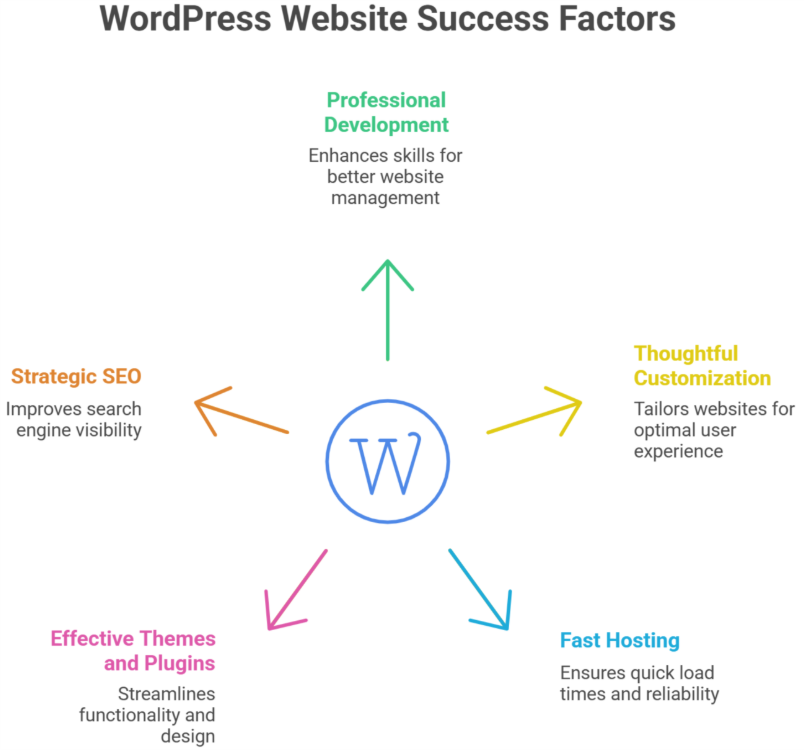
    Why do some WordPress websites consistently outperform others, even when built on the same platform? In 2025, the answer goes beyond simply choosing a website builder. Factors like professional development quality, thoughtful customization, fast hosting, effective use of themes and plugins, and strategic SEO all shape website performance. Even small differences in coding standards or plugin choices can influence load times, conversion rates, and user experience. 

    In 2025, WordPress taught us that website success depends on more than the platform itself. High performance, effective SEO, smart use of themes and plugins, professional development, and ongoing maintenance are key. A well-built WordPress website delivers better user experience, higher conversions, and long-term business value. 

    Working with professionals ensures that your WordPress site not only looks polished but functions seamlessly, with ongoing support and maintenance that protect your investment. High-quality design, robust plugins, and tailored customization are no longer optional—they directly impact your website’s ability to engage visitors and generate results. For perspective, basic professional development for a WordPress website often starts in the hundreds of dollars, while fully optimized ecommerce setups or customizations can scale higher depending on complexity. 

    This blog will explore what WordPress taught us in 2025 about building better websites. You’ll discover actionable insights on performance optimization, leveraging the right plugins, designing for usability, and maintaining long-term SEO and functionality. By the end, you’ll understand how to make informed choices when you use WordPress to grow your online presence effectively. 

    Why WordPress Thrives in 2025 for SEO 

    Why WordPress Thrives in 2025 for SEO 

    WordPress continues to dominate as the platform of choice for websites worldwide, and its SEO capabilities are a major reason why. In 2025, businesses, developers, and marketers recognize that WordPress gives you the tools to build websites that are not only visually appealing but also optimized for search engines. From flexible themes to advanced plugins, WordPress thrives by making SEO implementation accessible and effective. 

    Built-In SEO Advantages 

    One of the reasons WordPress is the best platform for SEO is its inherent structure. WordPress websites have clean, crawlable code, mobile-friendly themes, and semantic HTML—all crucial for search engine ranking. With thousands of free plugins and themes available, WordPress makes it easy to optimize meta tags, URLs, and content without deep coding knowledge. 

    Plugins That Enhance SEO 

    Tools like Yoast SEO, Rank Math, and other WordPress plugins help implement seo best practices efficiently. A well-chosen WordPress plugin can guide you through keyword optimization, XML sitemaps, structured data, and more. These capabilities make WordPress still worth using for both new websites and established online stores. 

    Flexibility for Different Types of Websites 

    Whether you are launching a blog, ecommerce site, or corporate website, WordPress can handle your needs. Self-hosted WordPress offers unmatched customization, letting you make WordPress development decisions that directly improve SEO performance. With headless WordPress, builders like Elementor, and new features in block editors, WordPress gives you the tools to tailor your site for both users and search engines. 

    Professional WordPress Hosting and Speed 

    Website speed and hosting are critical for SEO, and WordPress hosting providers now specialize in fast, secure, and optimized environments. WordPress websites benefit from caching, CDN integration, and automated updates that support both performance and search visibility. 

    Future of WordPress: Website Builder for Any Type 

    WordPress remains one of the most versatile platforms, allowing businesses and individuals to build websites globally with unmatched flexibility. Its future as a website builder is promising, catering to all kinds of websites from blogs and portfolios to ecommerce stores while supporting both beginners and professional developers. 

    Build Websites Without Coding 

    • WordPress excels in enabling users to build a site without writing a single line of code. 
    • Tools like the WordPress editor and page builders like Elementor allow you to design pages visually, giving a better user experience for both creators and visitors. 
    • Thousands of free and premium plugins like WooCommerce extend functionality, letting you manage online stores, memberships, and more. 

    SEO and Optimization Made Easy 

    • Plugins like Yoast SEO simplify search engine optimization, helping your website rank higher in search engines like Google. 
    • WordPress delivers the tools to optimize content, meta descriptions, and site structure, making it a choice for website owners who value performance. 

    Managed Hosting and Performance 

    • Managed WordPress hosting ensures fast load times, security, and automatic updates, reducing technical overhead. 
    • Websites using managed solutions enjoy stability, scalability, and better SEO results. 

    Global Community and Continuous Growth 

    • WordPress has a massive global community, offering support, tutorials, and innovations. 
    • With plenty of free resources and professional guidance, WordPress remains the best platform to build websites of any type. 
    • The ecosystem continues to evolve, making WordPress a reliable choice for website builders worldwide. 

    Conclusion 

    WordPress in 2025 continues to prove why it is the best choice for building websites of any type. From robust SEO capabilities and flexible themes to powerful plugins and managed hosting, WordPress delivers the tools and features needed for high-performing, user-friendly websites. Its ease of use, combined with a massive global community and ongoing innovation, ensures that businesses can create, optimize, and maintain websites efficiently. 

    With professional development, thoughtful customization, and best practices in SEO and performance, WordPress still remains a top platform for achieving long-term digital success. 

    So, if WordPress gives you everything you need, why do some websites still underperform? 

    Frequently Asked Questions (What WordPress Taught Us in 2025 About Better Websites )

    What is the future of WordPress in 2025?

    In 2025, WordPress stays dominant as the world’s top CMS with strong market share and growth. It evolves with AI-powered tools, full-site editing, headless options, better performance, and security, making sites faster and smarter for blogs, businesses, and eCommerce.

    What is the best way to build a website in 2025?

    The best way to build a website in 2025 is to choose the right platform based on goals WordPress, Webflow, or Shopify—focus on performance, mobile-first design, SEO, and accessibility, and use AI tools, clean code, and professional customization to ensure scalability, speed, and long-term growth.

    Which of these is a future of WordPress?

    The future of WordPress includes AI-powered content creation, full-site editing, improved performance and security, headless WordPress adoption, and deeper SEO integration. These advancements allow businesses to build faster, more scalable, and highly customizable websites while maintaining flexibility for evolving digital and marketing needs in 2025 and beyond.

    Is WordPress the future of web design?

    WordPress remains a strong part of the future of web design, but not the only one. In 2025, its flexibility, open-source ecosystem, AI integrations, and customization options keep it relevant, while modern tools like Webflow and headless frameworks complement different design and performance needs.

  • What worked on shopify in 2025 (and what failed) 

    What worked on shopify in 2025 (and what failed) 

    What worked on shopify in 2025 (and what failed)

    Why do some shopify businesses grow steadily while others struggle to generate consistent results? Why does one shopify store achieve higher conversion, even when selling similar products? The difference is rarely the platform itself. Performance is shaped by multiple factors website structure, development quality, load speed, data-driven decisions, and how effectively the checkout experience is optimized. 

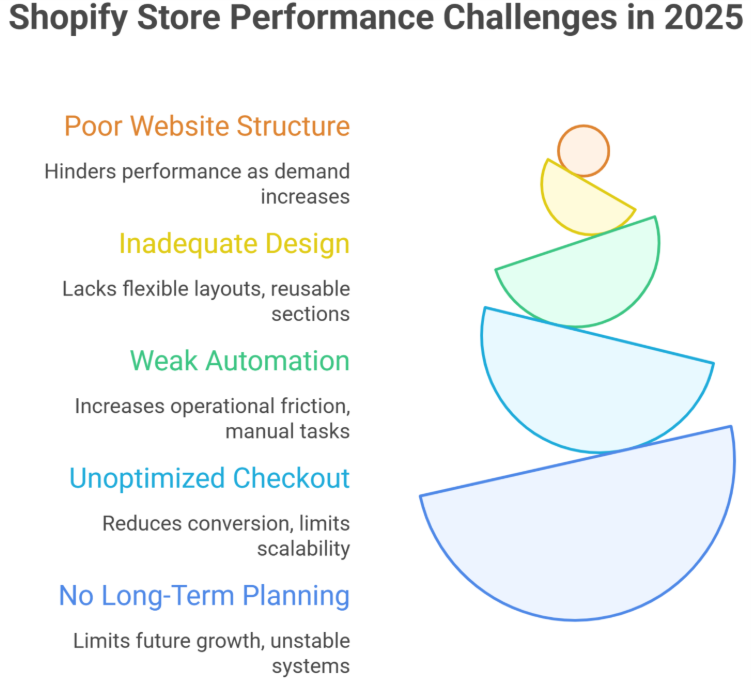
    In 2025, Shopify worked best when businesses focused on performance-driven design, optimized checkout, automation, and data-based decisions. Stores failed when relying on poor development, bloated apps, weak conversion strategy, and no long-term planning. Success came from scalable builds, not shortcuts. 

    In 2025, shopify continued to evolve, but success depended on how professionally it was implemented. Businesses that invested in thoughtful design, reliable support, and ongoing maintenance saw stronger outcomes than those relying on quick setups or shortcuts. A well-built shopify solution typically ranges from a basic setup to a professionally developed system with advanced functionality, long-term support, and measurable returns. The upfront cost may vary, but the long-term value comes from stability, adaptability, and informed decision-making powered by analytics. 

    This blog explores what truly worked on shopify in 2025, what failed to deliver results, and how smart development choices directly impact growth, efficiency, and sustainable success. 

    What Worked on Shopify in 2025 for Scalable Growth 

    What Worked on Shopify in 2025 for Scalable Growth 

    Step 1: Build a Strong Foundation 

    In 2025, scalable growth on Shopify started with structure. Every successful shopify business focused on clean architecture that could optimize performance as demand increased. Poor foundations are a key reason shopify stores fail when growth begins. 

    Step 2: Design for Scalability 

    A scalable Shopify setup avoided unnecessary complexity. Flexible layouts, reusable sections, and performance-first logic allowed store owners to grow without rebuilding their systems later. 

    Step 3: Implement Smart Automation 

    Effective automation reduced operational friction. Order handling, customer communication, and reporting workflows were streamlined so teams could focus on strategic decisions instead of manual tasks. 

    Step 4: Optimize for Conversion 

    High-performing brands continued to optimize product pages, navigation, and checkout flow. These improvements directly supported stronger conversion while maintaining long-term scalability. 

    Step 5: Plan for Sustainable Growth 

    Many store owners learned that rushing a launch limits future growth. Brands that planned early avoided the pattern where many shopify stores fail during scaling and instead built systems ready for long-term success. 

    The Hidden Shopify Decisions That Drove Real Conversion 

    Strategic Choices Most Store Owners Miss 

    • Many store owners focus on visuals, but conversion is driven by structure and decision flow. 
    • Poor early decisions explain why shopify stores fail, even when traffic is strong. 
    • A conversion-focused shopify business aligns design, logic, and data from day one. 

    Conversion Starts With Structure 

    • A scalable setup allowed brands to grow without rebuilding systems. 
    • Weak foundations are a reason many shopify stores fail as traffic increases. 
    • Planning for scalability early protected long-term performance. 

    Product-Level Decisions That Matter 

    • Clear product pages reduced hesitation and improved buying confidence. 
    • Well-written product descriptions guided decisions without overwhelming users. 
    • Teams continued to optimize layouts based on behavior, not assumptions. 

    Automation That Supported Conversion 

    • Smart automation reduced friction across the buying journey. 
    • Automated workflows helped a shopify business respond faster to customer actions. 
    • Over-automation, however, was avoided excessive tools are why shopify stores fail operationally. 

    Balancing Growth and Control 

    • A scalable system ensured growth did not harm performance. 
    • Thoughtful automation supported operations without replacing strategy. 
    • Maintaining scalability allowed teams to optimize experiences consistently. 

    Why Some Stores Converted and Others Didn’t 

    • Many store owners chased trends instead of fundamentals. 
    • Many store setups lacked testing and refinement. 
    • Successful brands continued to optimize, stayed scalable, and avoided the patterns where shopify stores fail repeatedly. 

    Conclusion 

    The results from Shopify in 2025 made one thing clear: success depended on strategy, structure, and execution not the platform alone. Businesses that invested in scalable architecture, professional development, and continuous optimization achieved stronger conversion and long-term growth. Those who rushed launches or relied on shortcuts often faced performance limits as demand increased. 

    Many Shopify stores failed due to poor planning, bloated systems, and the absence of expert guidance. Visual design without structure, automation without strategy, and growth without scalability consistently led to lost opportunities. 

    So the real question is this: if your Shopify store is not converting, scaling, or performing as it should do you need another platform, or do you need a development partner like Integriti Studio to fix what’s holding it back? 

    Frequently Asked Questions (What worked on shopify in 2025 (and what failed)

    Is Shopify still profitable in 2025?

    Yes Shopify is still profitable in 2025. It has reported consistent revenue growth and positive free-cash-flow margins, marking multiple consecutive profitable quarters and continued bottom-line strength as the company grows.

    Why does the Shopify store fail?

    Most Shopify stores fail due to poor product research, weak branding, slow website performance, lack of SEO, and ineffective marketing. Many owners rely only on ads without optimizing user experience, pricing strategy, or conversion funnels, leading to low trust, high bounce rates, and unsustainable costs.

    What is Shopify and how does it work in 2025?

    Shopify is a cloud-based eCommerce platform that lets businesses create, manage, and scale online stores. In 2025, it works with AI-powered tools, built-in payments, automation, and analytics, enabling sellers to manage products, marketing, orders, and customer experience from one dashboard efficiently.

    Why did Shopify fall?

    Shopify “fell” mainly because its stock and market sentiment weakened, not because the business completely collapsed. Investors got worried by slowing growth, high valuation multiples, rising costs (especially big AI investments), and competition, leading to downward pressure on its share price.

  • How Smart Shopify Stores Won in 2025 

    How Smart Shopify Stores Won in 2025 

    How Smart Shopify Stores Won in 2025 

    Why do some Shopify stores consistently outperform others, even when selling similar products? The answer lies in more than just design it’s about performance, strategy, and professional execution. In 2025, smart Shopify stores are winning by leveraging AI tools, AI-powered automation, and precise analytics to optimize user experience, increase conversion rates, and scale efficiently. 

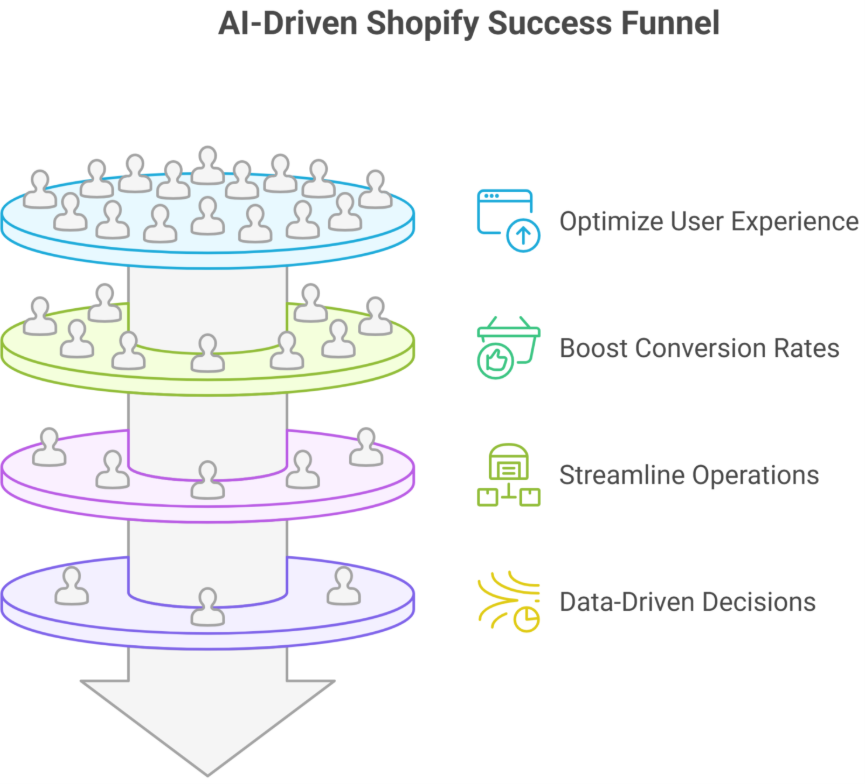
    Smart Shopify stores won in 2025 by leveraging AI-powered tools, automation, and analytics to optimize user experience, boost conversion rates, and scale efficiently. Professional design, ongoing support, and personalized features like AI-driven chatbots helped stores increase AOV, forecast trends, and maximize ecommerce performance consistently. 

    You’ll often see that factors like site speed, mobile responsiveness, and intuitive navigation can make or break a store’s success. Professional development ensures these elements are implemented correctly, while ongoing support, maintenance, and thoughtful design create real value for your customers. Even basic enhancements like AI-driven chatbots or personalized product recommendations can boost your average order value (AOV) and overall ecommerce performance. Typical professional development and optimization projects start around $3,000–$5,000, reflecting the tangible impact of quality work on conversion and scaling potential. 

    This blog will explore how the most successful Shopify stores in 2025 use AI-powered tools to automate tasks, forecast trends, and personalize user experiences. You’ll discover actionable strategies to optimize your Shopify store, improve analytics, and harness the power of automation to maximize conversion and growth. 

    Why Smart Shopify Stores Thrive with AI in 2025 

    Why Smart Shopify Stores Thrive with AI in 2025 

    In 2025, smart Shopify stores leverage AI to optimize operations, improve customer experience, and boost ROI. Generative AI and AI-powered Shopify apps help store owners automate workflows, forecast trends, and deliver personalized experiences at scale. 

    Streamlined Workflows with AI 

    AI transforms inventory management, order tracking, and customer support in real-time, allowing Shopify store owners to focus on growth rather than manual tasks. Shopify’s ecosystem makes it easy for merchants to implement these tools efficiently. 

    Data-Driven Decisions 

    AI provides instant insights into sales trends, product performance, and customer behavior. Smart Shopify stores in 2025 use analytics to reshape strategies, improve ROI, and maintain a competitive edge. 

    Personalized Customer Experience 

    AI-driven chatbots and personalized recommendations enhance engagement and support. Shopify store owners can deliver tailored experiences that increase conversion rates and average order value. 

    Shopify Magic in Action 

    Combining AI apps and smart workflows creates “Shopify magic” automation that feels seamless. Store owners can forecast demand, manage inventory, and interact with customers more efficiently than ever. 

    Early Adoption Benefits 

    Shopify still offers huge opportunities for merchants who adopt AI. Early integration leads to optimized operations, better customer support, and sustainable growth for e-commerce businesses. 

    Advantages of AI Shopify Store for Higher Conversion 

    Using Shopify with AI tools helps store owners drive higher conversions, optimize operations, and deliver personalized customer experiences. AI improves workflows, enhances product recommendations, and supports smarter decision-making for better ROI. 

    1. Personalized Shopping Experiences 

    • Product Recommendations: Intelligent AI analyzes customer behavior to suggest products, boosting average order value (AOV) and lifetime value. 
    • Dynamic Product Pages: AI improves product descriptions and UX design, reducing bounce rates and guiding customers to complete purchases. 

    2. Smarter Customer Engagement 

    • AI-Powered Chatbots: Provide instant support, resolve queries, and enhance customer experience. 
    • Abandoned Cart Recovery: AI automates follow-ups through email or notifications, recovering potential lost sales. 

    3. Operational Efficiency 

    • Inventory Management: AI monitors stock levels, predicts stockouts, and prevents overstock. 
    • Point of Sale Optimization: AI streamlines online and in-store operations, increasing operational efficiency. 

    4. Data-Driven Growth 

    • SEO and Marketing Insights: AI analyzes competitor pricing and customer trends to optimize marketing campaigns. 
    • Performance Forecasting: Helps store owners understand customer lifetime value and plan strategic growth. 

    Conclusion 

    Smart Shopify stores in 2025 are winning not by chance, but through strategic use of AI-powered tools, automation, and data-driven insights. From streamlining workflows and improving operational efficiency to delivering personalized shopping experiences, AI enables store owners to optimize every aspect of their online store. By leveraging AI-driven chatbots, personalized product recommendations, and real-time analytics, merchants can increase conversion rates, boost average order value, and scale their e-commerce business efficiently. 

    The success of these stores also highlights the importance of professional development, thoughtful design, and ongoing support. Even relatively small enhancements—like AI-powered automation or improved UX—can have a measurable impact on customer experience and ROI. 

    For Shopify store owners looking to stay competitive in 2025, embracing AI is no longer optional it’s a strategic advantage. Integriti Studio can help you implement these solutions, optimize your Shopify store, and ensure every element of your e-commerce strategy drives growth, efficiency, and higher conversions. 

    So, how can your Shopify store leverage AI to optimize performance, increase conversions, and stay ahead in 2025? That’s exactly what Integriti Studio can help you achieve. 

    Frequently Asked Questions (How Smart Shopify Stores Won in 2025)

    Is Shopify still profitable in 2025?

    Yes Shopify is still profitable and growing in 2025. It’s reporting strong revenue growth (over 30% YoY) and consistent double‑digit free cash flow margins, showing continued financial strength and demand from merchants worldwide.

    What is the Shopify Build Award 2025?

    The Shopify Build Award 2025 is an annual recognition by Shopify that celebrates the most innovative apps, themes, and custom storefronts built on its platform. Winners are selected for exceptional design, performance, and impact on merchants, highlighting top developer creativity and technical excellence.

    What is Shopify and how does it work in 2025?

    In 2025, Shopify is a leading e-commerce platform that allows businesses to create online stores without coding. It works by providing hosted storefronts, integrated payment processing, AI-powered marketing tools, and automation for inventory, shipping, and customer management, enabling merchants to sell efficiently across multiple channels.

    Why are businesses moving from Drupal to Shopify in 2025?

    Businesses are moving from Drupal to Shopify in 2025 because Shopify offers lower maintenance costs, hosted infrastructure, built‑in security, and easier scalability, reducing technical burdens. It also provides a large app ecosystem and unified commerce tools that let teams focus on growth instead of complex custom code.

  • How wordpress sites really evolved in 2025 

    How wordpress sites really evolved in 2025 

    How wordpress sites really evolved in 2025 

    Why do some businesses see strong returns from their WordPress investment while others struggle to scale, convert, or even stay stable? The answer is rarely the platform itself. Performance gaps usually come from development quality, structure, and long-term planning—not from using the wrong system. 

    WordPress sites in 2025 evolved through better performance standards, cleaner development practices, and smarter use of modern tools. Businesses focused more on speed, scalability, and user experience, treating WordPress as a long-term platform rather than just a quick website solution. 

    WordPress matured into a more disciplined, business-focused ecosystem. In 2025, a well-built wordpress site depended on clear architecture, thoughtful customization, reliable hosting providers, and clean php foundations. Speed, seo readiness, and measurable user experience became outcomes of professional decisions, not afterthoughts. When budgets are unclear, even a typical setup ranging from basic builds to premium implementations can deliver very different results based on expertise. 

    WordPress continues to power serious digital operations because wordpress still rewards strategic thinking. A second wordpress site built with the same tools can outperform the first when design, support, and maintenance are handled correctly. WordPress today is less about shortcuts and more about precision. 

    Why Businesses Still Rely on WordPress Websites Today

    Why Businesses Still Rely on WordPress Websites Today

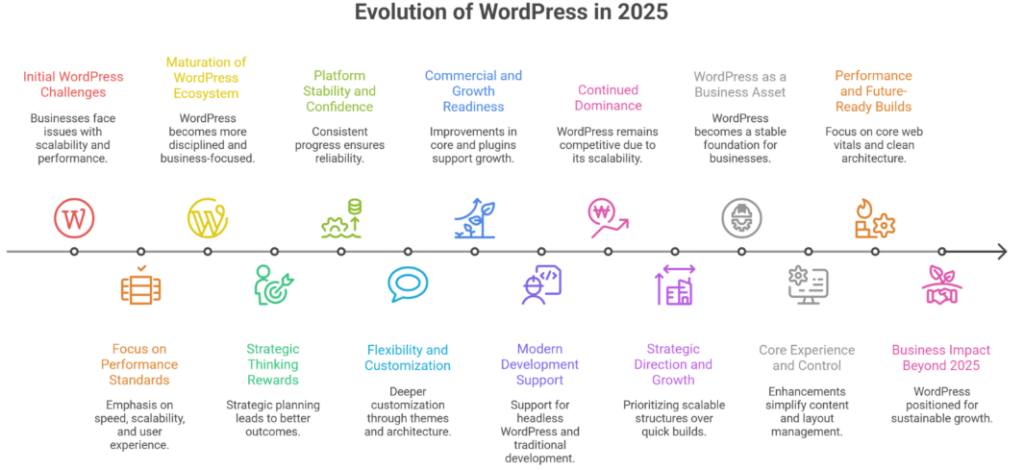
    Step 1: Platform Stability and Long-Term Confidence 

    Updates shared during state of the word 2025 and earlier state of the word sessions showed consistent progress, not disruption. The word 2025 recap reinforced that wordpress is still built for longevity, making it a reliable foundation for growing businesses. 

    Step 2: Flexibility Beyond a Basic Website Builder 

    Compared to a typical website builder, WordPress allows deeper customization using wordpress themes and scalable architecture. Many high-performing platforms run on wordpress because it adapts as business needs evolve. 

    Step 3: Commercial and Growth Readiness 

    With ongoing improvements to wordpress core, businesses extend functionality through wordpress plugins and woocommerce without sacrificing performance. This ecosystem explains the strong market share WordPress maintains today. 

    Step 4: Modern Development Without Lock-In 

    Support for headless wordpress and traditional web development gives teams freedom to build smarter. In wordpress in 2025, this balance is why wordpress powers serious digital operations. 

    Step 5: Why It Continues to Win 

    wordpress isn’t restrictive it scales. wordpress still wins because it offers control, flexibility, and a clear path forward. wordpress websites built with purpose remain competitive, raising the question businesses now ask: what’s next? 

    What WordPress Sites Will Look Like Next After 2025 

    Strategic Direction and Platform Growth 

    • Businesses using wordpress will prioritize scalable, performance-driven structures over quick builds. 
    • wordpress  reflects the broader future of shaping digital strategies in 2025 and beyond. 
    • WordPress continues evolving as a dependable website platform for long-term growth. 

    WordPress as a Business Asset 

    • Many organizations rely on wordpress as a stable foundation rather than a temporary solution. 
    • For small businesses, this means predictable costs, easier expansion, and reduced platform switching. 
    • WordPress remains relevant because it adapts to changing business needs. 

    Core Experience and Site Control 

    • Enhancements inside the wordpress dashboard simplify content and layout management. 
    • Full site editing enables consistent design control without complex redevelopment. 
    • As an open source content management system, WordPress aligns with the values of the open web. 

    Performance and Future-Ready Builds 

    • Future WordPress sites emphasize core web vitals, clean architecture, and maintainable setups. 
    • Modern builds reduce dependency on outdated plugins and focus on stability. 
    • These changes define what modern wordpress looks like for serious businesses. 

    Business Impact Beyond 2025 

    • wordpress today is positioned for sustainability, not experimentation. 
    • Its continued role in the wider web ecosystem shows why WordPress remains a practical, future-ready choice well beyond 2025. 

    Conclusion 

    WordPress in 2025 proved that long-term success is not driven by the platform alone, but by how intentionally it is planned, built, and maintained. Businesses that invested in structure, performance, and professional development saw WordPress evolve from a simple website tool into a reliable digital foundation. Those results came from cleaner architecture, smarter customization, and decisions aligned with real business goals—not shortcuts. 

    As WordPress matured, it became clear that scalability, stability, and user experience are outcomes of disciplined execution. From improved core capabilities to modern workflows and future-ready builds, WordPress now supports growth at every stage. When treated as a strategic asset rather than a quick solution, it continues to deliver measurable value. 

    Looking ahead, WordPress remains positioned for sustainable growth beyond 2025.  

    Is your WordPress site fully optimized for speed, scalability, and modern workflows—and are you leveraging expert guidance from Integriti Studio to unlock its full growth potential? 

    Frequently Asked Questions (How wordpress sites really evolved in 2025 )

    What is the future of WordPress in 2025?

    In 2025, WordPress continues to evolve as a flexible, AI-friendly website builder. With faster performance, improved security, and seamless integration with automation tools, it supports both small businesses and large enterprises. Its future lies in smart, scalable websites that balance design, speed, and functionality for long-term growth.

    Is WordPress a good career in 2025?

    Yes, WordPress remains a strong career choice in 2025. With growing demand for custom websites, e-commerce, and AI-integrated solutions, skilled developers, designers, and SEO specialists can build profitable opportunities. Continuous learning and mastering advanced plugins, performance optimization, and security practices make WordPress expertise highly valuable.

    How many websites use WordPress in 2025?

    In 2025, about 43–44% of all websites globally use WordPress, which translates to roughly 500–600 million websites powered by the platform worldwide, making it the most widely used web platform on the internet.

    How to build a WordPress website in 2025?

    To build a WordPress website in 2025, choose a reliable hosting provider and install WordPress. Select a responsive theme, customize it with the block editor or AI-assisted tools, add essential plugins for SEO, security, and performance, then create content. Finally, optimize and launch for mobile and speed.