Category: Shopify

  • Integrating Shopify With Your Existing Tech Stack A Guide To Seamless Digital Strategy 

    Integrating Shopify With Your Existing Tech Stack A Guide To Seamless Digital Strategy 

    Integrating Shopify With Your Existing Tech Stack A Guide To Seamless Digital Strategy 

    Why do some Shopify stores struggle to deliver consistent performance? Multiple factors influence website efficiency, from poorly optimized tech stack to lack of real-time automation or scalable workflows. You can’t rely solely on design professional development, ongoing maintenance, and support directly impact how your Shopify store performs and how your customers experience your e-commerce platform. With smart Shopify integration services, even small budgets starting around a few hundred dollars can streamline operations, automate inventory management, and customize workflows for your business. This guide explores how you can leverage Shopify Plus and custom e-commerce solutions to seamlessly integrate with your existing tech stack, creating a scalable digital strategy that drives results. 

    Seamlessly integrate Shopify with your tech stack to streamline e-commerce, automate processes, enhance scalability, and leverage custom digital strategy solutions. 

    How To Seamlessly Integrate Shopify With Your Tech Stack 

    Assess Your Current Technology Stack 

    Before you integrate Shopify, evaluate your existing technology stack. Identify key components such as your management system, third-party apps, payment processing tools, and customer data sources. Understanding these elements ensures a seamless integration that aligns with your business needs and supports scalability. 

    Leverage Shopify’s Tools and APIs 

    Shopify provides robust APIs and apps to integrate Shopify with other systems. Tools like Shopify Flow allow you to automate processes, manage workflows, and maintain accurate customer profiles. Integrating email, SMS, and data analysis tools helps you optimize your Shopify tech stack and deliver a personalized shopping experience. 

    Optimize Workflows for Scalability 

    A Shopify tech stack should grow with your customer base. Align workflows across inventory, payment processing, and analytics to streamline operations. Custom solutions or third-party apps can enhance efficiency, automate repetitive tasks, and improve the overall shopping experience for your online business. 

    Maintain and Monitor Performance 

    Continuous monitoring is key. Regularly review integrations, customer data, and workflow efficiency to ensure your Shopify store remains agile, scalable, and capable of meeting evolving business demands. This approach guarantees long-term success and maximizes ROI. 

    Leveraging Shopify Plus For Scalable E-Commerce Solutions Effectively 

    • Understand the Power of Shopify Plus 
    • Shopify Plus enables Shopify merchants to scale their online business with advanced tools, automation, and APIs. 
    • Its robust platform allows you to integrate your online store with existing technology stack for seamless operations. 
    • Automate Processes with Shopify Flow 
    • Use Shopify Flow to automate processes like order routing, inventory updates, and customer segmentation. 
    • Align workflows across payment processing, email and SMS campaigns, and customer profiles to save time and reduce errors. 
    • Leverage Apps and Custom Solutions 
    • Integrate Shopify apps or custom solutions to extend functionality, from apps like Back In Stock to specialized data analysis tools. 
    • Access the Shopify App Store to connect tools and services that improve the shopping experience. 
    • Enhance Customer Data and Insights 
    • Collect and analyze customer data to gain a real-time view of your customer base. 
    • Use Shopify analytics to align business decisions with customer behavior and optimize your tech stack. 
    • Optimize Payment Processing and Checkout 
    • Streamline payment processing for high-volume sales while maintaining a seamless user experience. 
    • Align checkout flows to reduce cart abandonment and boost conversions for your online business. 
    • Maintain a Strong Online Presence and Scalability 
    • Customize your Shopify store to reflect your brand, design, and user experience goals. 
    • Ensure the technology stack with Shopify supports growth, real-time data access, and seamless integrations for long-term scalability. 
    • Professional Guidance and Case Studies 
    • Consider expert Shopify solutions for migration to Shopify Plus or complex integrations. 
    • A case study approach can help you see how other Shopify merchants successfully build relationships with their customers and scale efficiently. 

    Conclusion 

    Integrating Shopify with your existing tech stack is no longer optional it’s essential for scalable, efficient, and customer-focused e-commerce. By assessing your technology stack, leveraging Shopify’s APIs and Flow, automating processes, and aligning workflows, you can streamline operations, enhance the shopping experience, and grow your customer base. Shopify Plus, combined with custom solutions and apps, ensures your online business remains agile, data-driven, and ready to scale. Continuous monitoring and optimization of workflows, payment processing, and customer data guarantee long-term success and maximize ROI. 

    Ready to see how Integriti Studio can transform your Shopify store overnight? 

    Frequently Asked Questions (Integrating Shopify With Your Existing Tech Stack A Guide To Seamless Digital Strategy )

    What is the tech stack for Shopify?

    The tech stack for Shopify includes Ruby on Rails backend, Liquid templating, React for Polaris, MySQL, Redis, and cloud infrastructure powered by Google Cloud.

    How to integrate with Shopify?

    Integrate with Shopify using APIs, webhooks, or apps. Connect inventory, payment, and analytics systems, customize workflows, and ensure secure, real-time data synchronization across platforms.

    What is Shopify’s marketing strategy?

    Shopify’s marketing strategy focuses on content marketing, SEO, social media advertising, partnerships, affiliate programs, email campaigns, and community engagement to attract, convert, and retain merchants globally.

    Is WordPress or Shopify better for SEO?

    WordPress is better for SEO due to flexible plugins, customizable structure, and advanced optimization options, while Shopify offers simpler SEO but limited technical control.


     

  • Guide To Shopify Page Speed Optimization How To Hit Sub-1-Second Loads

    Guide To Shopify Page Speed Optimization How To Hit Sub-1-Second Loads

    Guide To Shopify Page Speed Optimization How To Hit Sub-1-Second Loads 

    Why does website performance vary so drastically across Shopify stores? Many factors influence site speed and page speed, from poorly coded Shopify themes to unoptimized images or excessive Shopify apps. As a custom web design company, we know that professional development, mobile optimization, and ongoing maintenance directly impact user experience web design and overall SEO. Small improvements, like lazy loading or image compression, can dramatically improve load time, often for budgets starting around $1,000–$2,000 for basic setups. This blog explores Shopify speed optimization strategies, from technical fixes to high converting websites, helping you achieve a Shopify store speed under one second while enhancing conversions. 

    To achieve sub-1-second loads for your Shopify store, focus on Shopify speed optimization through image optimization, lazy loading, and streamlined Shopify themes. Regularly monitor site speed with Google PageSpeed Insights, reduce unnecessary Shopify apps, and implement mobile optimization to enhance user experience web design and boost SEO. 

    Improve Shopify SEO with Fast Store and Core Web Vitals 

    A fast-loading Shopify store is no longer optional it directly impacts SEO, user experience web design, and conversions. Core Web Vitals measure page performance, including loading speed, interactivity, and visual stability. Optimizing these factors ensures your Shopify store ranks higher on search engines while delivering seamless experiences that keep customers engaged. 

    Why Speed Matters for Shopify SEO 

    Search engines like Google prioritize fast-loading websites. Poor Shopify store speed can hurt rankings, reduce visibility, and negatively affect your ecommerce website design efforts. A slow store frustrates users, increasing bounce rates and reducing chances of turning visitors into customers. 

    Steps to Optimize Your Shopify Store for SEO 

    1. Audit Core Web Vitals 

    Use Google PageSpeed Insights to check metrics like Largest Contentful Paint (LCP), First Input Delay (FID), and Cumulative Layout Shift (CLS). These highlight areas where your user experience web design can be improved for both desktop and mobile visitors. 

    2. Streamline Shopify Themes and Apps 

    Choose lightweight, optimized Shopify themes. Limit unnecessary Shopify apps, as too many plugins can slow down high converting websites. Each addition should have a clear ROI, maintaining a balance between functionality and speed. 

    3. Optimize Images and Product Pages 

    Compress images, implement lazy loading, and optimize product page layouts to reduce page load times. Optimized images not only boost shopify store speed but also improve results-driven web design, ensuring a visually appealing store without performance trade-offs. 

    4. Mobile Optimization 

    With increasing mobile traffic, a fast, responsive Shopify store is crucial. Mobile optimization improves user experience web design, supports SEO, and contributes to high converting websites by making browsing and checkout seamless. 

    5. Monitor and Maintain Performance 

    Regularly review core web vitals and shopify store performance. A custom web design company can help implement ongoing performance optimization, ensuring your ecommerce website design remains fast, efficient, and aligned with results-driven web design strategies. 

    Benefits of a Fast Shopify Store 

    Optimizing for speed and Core Web Vitals leads to: 

    • Better SEO rankings and visibility 
    • Enhanced user experience web design 
    • Higher conversion rates and high converting websites 
    • Long-term performance sustainability for your Shopify store 

    Shopify Store Speed Optimization: Why Site Speed Matters 

    In today’s competitive ecommerce landscape, a slow Shopify store can directly impact sales, customer satisfaction, and overall store performance. Website speed isn’t just a technical factor it’s a key part of user experience web design. A store that loads quickly keeps visitors engaged, encourages repeat purchases, and contributes to high converting websites. 

    Why Site Speed Matters for Shopify Stores 

    When your shopify website takes too long to load, customers may abandon their carts, leading to lost revenue. A delay in page load time can frustrate users, reduce engagement, and harm your brand reputation. Fast loading stores are essential for results driven web design, helping your ecommerce website design meet both customer expectations and business goals. 

    Google also considers page speed in ranking websites, so shopify website speed optimization improves your visibility and supports shopify seo success. A well-optimized store ensures better performance without compromising design or functionality. 

    Common Performance Issues 

    Many slow Shopify stores experience issues like: 

    • Heavy or unoptimized themes 
    • Large images and videos 
    • Excessive third-party apps 
    • Unused Shopify sections 

    Identifying these performance issues is the first step to improve your Shopify store’s performance and optimize your Shopify store for speed. 

    How to Optimize Your Shopify Store 

    To speed up your store and make your store faster, consider these steps: 

    1. Use Shopify automatically uses a CDN for faster content delivery 
    1. Compress images and videos without losing quality 
    1. Limit unnecessary apps and scripts 
    1. Optimize your theme and Shopify sections 
    1. Test your store with tools like Google PageSpeed Insights for performance data 

    Conclusion 

    Optimizing your Shopify store’s speed is no longer optional it’s a critical factor for user experience web design, high converting websites, and overall store performance. From Shopify speed optimization strategies like image compression, lazy loading, and streamlined themes, to monitoring Core Web Vitals and reducing unnecessary apps, every small improvement contributes to faster shopify website loads, better SEO rankings, and higher conversions. 

    A fast, responsive store not only delights your customers but also strengthens your ecommerce website design and ensures long-term sustainability. By regularly auditing your shopify store performance and applying targeted performance optimization techniques, you can create a store that performs seamlessly across devices, delivering results driven web design and exceptional shopping experiences. 

    So, if you want to improve your Shopify store’s performance and achieve a store that loads under a second, do you think contacting Integriti Studio could be the smartest next step for your business? 

    Frequently Asked Questions (Guide To Shopify Page Speed Optimization How To Hit Sub-1-Second Loads)

    How do I optimize my Shopify page speed?

    Optimize images, remove unused apps, use lightweight themes, enable lazy loading, minify code, reduce redirects, and leverage Shopify’s built-in performance tools.

    How to optimize page loading speed?

    Compress images, enable caching, minify CSS and JavaScript, reduce redirects, use a CDN, optimize server response time, and remove unnecessary scripts.

    How to make subpages in Shopify?

    Create a page, then assign it as a child under Navigation by nesting it beneath a parent menu item main.

    What is a good Shopify speed score?

    A good Shopify speed score is above 70, while 80 or higher is excellent for performance, SEO rankings, and user experience.

  • Sleek Shopify Theme for Optimal Premium Shopping Experience 

    Sleek Shopify Theme for Optimal Premium Shopping Experience 

    Sleek Shopify Theme for Optimal Premium Shopping Experience 

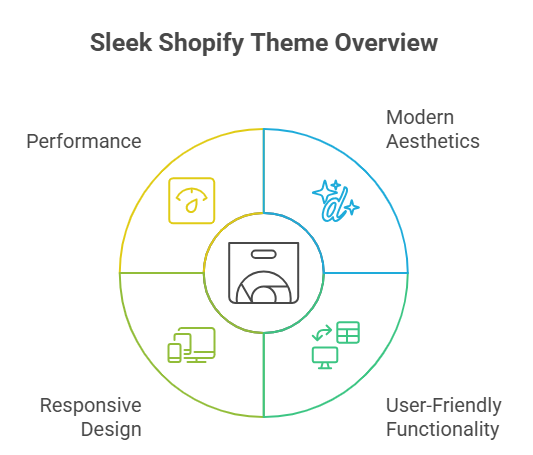
    Why do some Shopify businesses convert visitors effortlessly while others struggle to drive sales? The answer often lies in performance-focused design, professional development, and long-term maintenance. Choosing a sleek shopify theme is not only about visuals; it directly affects loading speed, layout clarity, and the overall shopping experience. 

    A sleek Shopify theme enhances shopping experience through clean design, fast loading, and optimized layouts, helping businesses improve conversions, build trust, and drive consistent online sales. 

    A sleek shopify theme helps your Shopify store stay fast, clean, and conversion-ready. When a shopify theme is professionally built, it supports smoother navigation, better structure, and reliable updates. Many brands invest in premium development because even a modest pricing difference can improve stability, reduce technical issues, and increase sales over time. Smart theme choices also strengthen customer trust and usability. 

    This blog explores how a sleek shopify theme improves performance, why professional Shopify development matters, and how the right sleek shopify theme supports scalable growth for a successful online business. 

    Why a Sleek Shopify Theme Improves Conversion and Sales

    Why a Sleek Shopify Theme Improves Conversion and Sales

    Choosing the right sleek shopify theme can significantly impact your Shopify store’s conversion rates and overall sales. A well-designed theme is more than just aesthetic—it improves user experience, streamlines navigation, and provides an optimal shopping environment for your customers. Here’s how it works, step by step. 

    Step 1: Clean Design for Better Engagement 

    A sleek shopify theme uses a clean design that highlights products without overwhelming users. By focusing on simplicity and clarity, your shopping experience becomes intuitive, making it easier for customers to browse, add items to their cart, and complete purchases. A clean design for boosted sales ensures that every visual element, from buttons to product showcases, encourages action rather than distraction. 

    Step 2: Optimized Navigation and Layout 

    Navigation plays a key role in conversion. A sleek shopify theme provides intuitive navigation, well-structured menus, and responsive layouts. Features like zoom on product images, mobile compatibility, and organized sections allow users to explore your store efficiently. Optimizing these elements reduces bounce rates and keeps customers engaged longer. 

    Step 3: Built-In Performance and Flexibility 

    Modern ecommerce website templates in a sleek shopify theme come with built-in features that optimize loading speeds, checkout efficiency, and SEO readiness. Themes often include documentation and presets for faster configuration and easy customization, allowing your Shopify store to launch quickly while maintaining high-converting standards. 

    Step 4: Enhancing the Shopping Experience 

    By combining visual appeal, responsive design, and smooth navigation, a sleek shopify theme elevates the shopping experience. Customers enjoy a seamless journey from product discovery to checkout. The theme’s advanced features and flexibility also support customization, ensuring your store aligns with your brand identity while improving customer satisfaction. 

    Step 5: Long-Term Conversion Benefits 

    Investing in a sleek shopify theme doesn’t just improve immediate sales; it enhances long-term growth. Optimized user experience, visual hierarchy, and professional design reduce bounce, increase engagement, and encourage repeat purchases. Properly chosen shopify store themes create a foundation for scalability, making your e-commerce operations efficient, future-proof, and profitable. 

    Conclusion 

    A sleek Shopify theme is more than just a visually appealing template it’s a strategic investment in your store’s performance, conversions, and long-term growth. By prioritizing clean design, optimized navigation, built-in performance, and a seamless shopping experience, businesses can boost sales, build customer trust, and create a scalable online presence. Professional theme development ensures your store remains fast, flexible, and future-ready, turning casual visitors into loyal customers. 

    So, why wait what’s stopping you from contacting Integriti Studio today? 

    Frequently Asked Questions (Sleek Shopify Theme for Optimal Premium Shopping Experience )

    What is the benefit of Shopify premium theme?

    A Shopify premium theme enhances website performance, offers professional design, improves user experience, boosts conversions, ensures responsiveness, supports customization, and provides reliable updates and long-term maintenance.

    How to optimize a Shopify theme?

    Optimize a Shopify theme by improving site speed, using clean code, compressing images, implementing responsive design, enhancing SEO, minimizing apps, and ensuring smooth navigation for better user experience.

    How does the Shopify theme work?

    A Shopify theme controls a store’s design, layout, and functionality by using templates, CSS, HTML, and JavaScript, enabling responsive, customizable, and interactive shopping experiences.

    How do you approach customizing a Shopify theme for a client’s specific needs?

    Customizing a Shopify theme involves understanding client goals, adjusting layouts, colors, and fonts, adding apps, optimizing functionality, ensuring responsiveness, and testing for a seamless user experience.

  • Optimized Shopify Ecommerce Stores For Seo 

    Optimized Shopify Ecommerce Stores For Seo 

    Optimized Shopify Ecommerce Stores For Seo

    Why do some Shopify businesses fail to gain visibility despite solid products? The answer lies in how Optimized Shopify Ecommerce Stores For Seo are built. Strong seo depends on smart optimization, proper keyword use, and a shopify store structure that helps search engine algorithms understand your ecommerce content. When you optimize each product page with clear product descriptions, effective meta description, and clean technical setup, search results and organic traffic improve naturally. 

    Optimized Shopify Ecommerce Stores For Seo improve visibility, organic traffic, and conversions by combining technical optimization, smart keywords, fast performance, and professional Shopify store development. 

    Professional development ensures your online store delivers speed, usability, and long-term performance. Optimized Shopify Ecommerce Stores For Seo focus on user experience, resolve seo issues, and use seo strategies supported by shopify apps and tools like Google. 

    This blog explains how Optimized Shopify Ecommerce Stores For Seo are created, how Optimized Shopify Ecommerce Stores For Seo improve growth, and which optimization choices drive sustainable ecommerce success. 

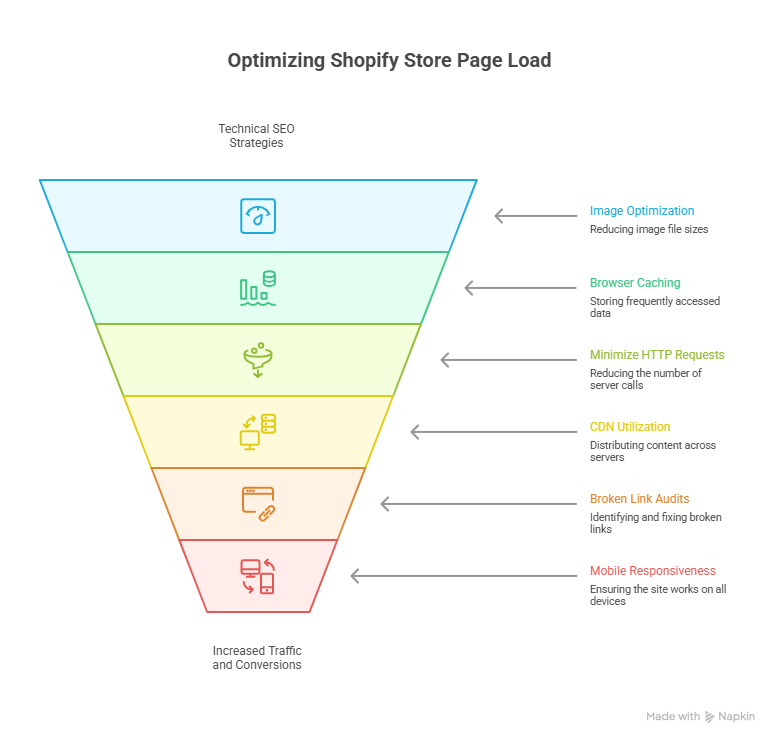
    Technical SEO Strategies To Optimize Shopify Store Page Load 

    Technical SEO Strategies To Optimize Shopify Store Page Load 

    Fast performance is a defining factor behind Optimized Shopify Ecommerce Stores For Seo. When page load is slow, an ecommerce store loses visibility, engagement, and trust. Technical SEO focuses on strengthening the foundation of an ecommerce store so search engines and users experience speed, stability, and clarity. Below are practical steps agencies follow when building Optimized Shopify Ecommerce Stores For Seo that perform consistently. 

    Step 1: Build a Speed-Focused Technical Foundation 

    Technical seo starts with minimizing unnecessary scripts, reducing file sizes, and managing server requests. A lightweight structure helps an ecommerce store load faster and reduces seo issues that affect crawl efficiency. For Optimized Shopify Ecommerce Stores For Seo, faster page load sends a positive signal to search engines and directly improves search rankings. 

    Step 2: Improve Core Performance Metrics 

    Page speed is closely tied to core web vitals, which measure loading, interaction, and visual stability. Agencies monitor these metrics to ensure the ecommerce store meets performance benchmarks. Addressing layout shifts, image rendering, and script delays strengthens Optimized Shopify Ecommerce Stores For Seo while supporting long-term seo value. 

    Step 3: Optimize Theme and Code Structure 

    A well-coded Shopify theme reduces bloat and improves load efficiency. Clean HTML, compressed assets, and efficient CSS allow an ecommerce store to scale without performance loss. This approach aligns with shopify seo standards and ensures Optimized Shopify Ecommerce Stores For Seo remain stable as content grows. 

    Step 4: Strengthen Internal Architecture 

    Clear internal linking helps distribute authority and improves crawl paths across the ecommerce store. Structured navigation ensures important pages load quickly and are easily indexed. These refinements are essential when building Optimized Shopify Ecommerce Stores For Seo that support both usability and discoverability. 

    Step 5: Monitor and Refine Continuously 

    Ongoing audits identify performance gaps before they become growth barriers. Using professional workflows, agencies apply shopify seo tips to resolve technical inefficiencies and prevent recurring seo issues. This continuous refinement is what separates average builds from Optimized Shopify Ecommerce Stores For Seo. 

    Shopify SEO Tips For Product Page Optimization Success 

    Optimizing each product page is key for any ecommerce store aiming for better visibility, higher conversions, and long-term seo success. Below are actionable shopify seo tips for product page optimization: 

    1. Optimize Your Shopify Theme for Speed and SEO 

    • Choose a lightweight shopify theme to improve page load times and user experience. 
    • A well-coded theme supports technical seo and ensures your shopify store’s pages load efficiently. 
    • Fast page load enhances seo value and sends a positive signal to search engines like Google. 

    2. Use Technical SEO for Product Pages 

    • Implement structured data and schema to strengthen technical seo. 
    • Address seo issues like duplicate content or missing tags. 
    • Monitor core web vitals to ensure pages are stable and responsive. 
    • A technically sound page reduces errors and helps shopify store’s organic traffic grow consistently. 

    3. Optimize Your Shopify Store’s Content 

    • Create unique product descriptions and titles for seo for shopify. 
    • Include primary keywords to boost your seo. 
    • Add relevant images with proper alt text to improve accessibility and seo value. 
    • A complete, optimized product page supports seo for your shopify store and enhances conversions. 

    4. Strengthen Internal Linking 

    • Use internal linking to connect related products, collections, and categories. 
    • Helps search engines crawl the ecommerce store efficiently. 
    • Improves shopify store for seo by distributing page authority to important product pages. 
    • Reduces seo issues by ensuring no page is orphaned or hidden. 

    5. Maintain Fast Page Load Across Devices 

    • Optimize images, compress files, and remove unnecessary scripts to improve page load. 
    • Ensure the store loads quickly on mobile and desktop for better user experience. 
    • Slow loading pages can hurt search rankings and signal poor seo value to search engines. 

    6. Use Shopify SEO Apps and Tools 

    • Install seo apps for automated improvements like meta tags, structured data, and image optimization. 
    • Monitor performance with tools like Google Analytics or tools like Google Pagespeed Insights. 
    • These tools help optimizing your shopify store and resolving seo issues quickly. 

    7. Monitor SEO Performance Continuously 

    • Track keyword rankings, organic traffic, and product page performance. 
    • Regular audits ensure the store’s seo remains effective and your shopify store’s organic traffic grows. 
    • Address seo issues promptly to maintain consistent seo success for your ecommerce store. 

    Conclusion 

    Optimizing a Shopify store for SEO is not a one-time task it’s an ongoing process that combines technical seo, fast page load, structured content, smart keyword use, and continuous monitoring. Optimized Shopify Ecommerce Stores For Seo deliver better visibility, higher organic traffic, and improved conversions by focusing on both user experience and search engine requirements. From building a speed-focused foundation to refining product pages, strengthening internal linking, and using seo apps, every step ensures your ecommerce store stays competitive and sustainable. Professional development and well-executed shopify seo tips make the difference between an average store and a successful Shopify store that scales with growth. 

    Who should you contact at Integriti Studio to start optimizing your Shopify store today? 

    Frequently Asked Questions (Optimized Shopify Ecommerce Stores For Seo)

    How to SEO optimize a Shopify store?

    Optimize a Shopify store by using keywords in titles, descriptions, meta tags, alt text, clean URLs, fast loading, mobile-friendly design, quality content, and backlinks.

    Is Shopify good for SEO?

    The best SEO tool for Shopify is Avada SEO Suite for all‑in‑one optimization, followed by Yoast SEO and TinyIMG for metadata and speed improvements. For deeper keyword research and analytics, Semrush or Google Search Console are top choices too.

    Which SEO tool is best for Shopify?

    The best SEO tool for Shopify is Avada SEO Suite for comprehensive optimization, with Yoast SEO, TinyIMG, Semrush, and Google Search Console also excellent for keywords and performance.

    What’s the best SEO strategy for eCommerce websites?

    The best SEO strategy for eCommerce websites includes keyword research, optimized product pages, quality content, fast loading speed, mobile-friendly design, structured data, backlinks, and regular performance analysis.

  • Conversion Focused Shopify Store Development Services 

    Conversion Focused Shopify Store Development Services 

    Conversion Focused Shopify Store Development Services

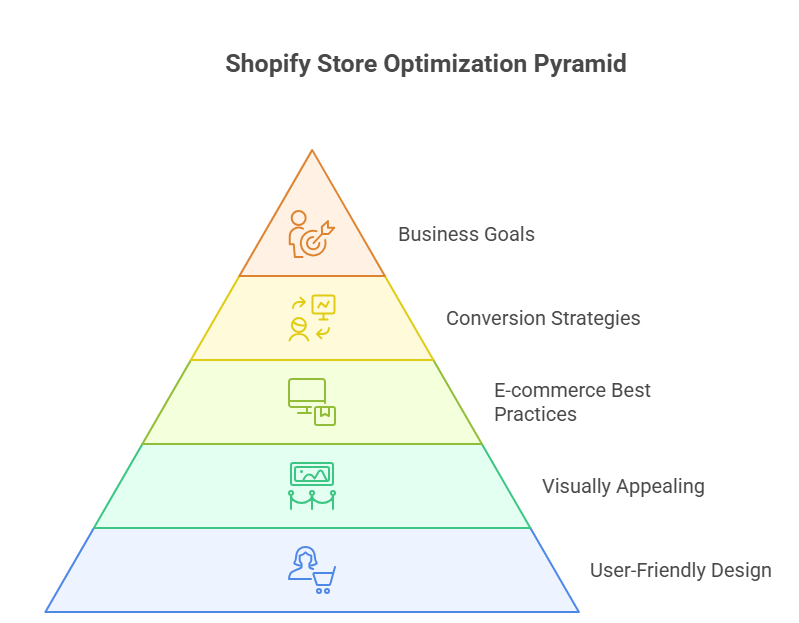
    Why do some ecommerce brands generate steady sales while others struggle to turn traffic into revenue? The difference often lies in how a shopify store is planned, built, and optimized for real user behavior. A high-performing shopify store is not just about visuals; it is about speed, structure, scalability, and how smoothly users move toward conversion. 

    Conversion focused Shopify store development services build fast, scalable ecommerce experiences that guide users, optimize design, improve performance, and turn traffic into long-term business growth. 

    Website performance is influenced by multiple factors, including clean code, reliable integrations, secure architecture, and thoughtful UX decisions. This is where a professional development service becomes critical. An experienced developer understands how website development impacts trust, usability, and long-term growth across competitive ecommerce markets. From checkout flow to mobile optimization, every element of a shopify store should support measurable conversion outcomes. 

    Investing expert development also delivers real value beyond launch. A well-built shopify store often requires predictable budgets, such as initial setup ranging from a few thousand dollars, followed by ongoing support and optimization to protect performance. This is especially important for scalable platforms like shopify plus, where stability and flexibility directly affect revenue. 

    Smart Shopify Development Process For Scalable Ecommerce Growth 

    Smart Shopify Development Process For Scalable Ecommerce Growth 

    A scalable ecommerce business is never built on guesswork. It follows a structured development process designed to support growth, performance, and long-term stability. Below is a step-by-step breakdown of how a shopify store development service creates a foundation that supports scale while protecting your investment. 

    Step 1: Business Discovery And Technical Planning 

    Every successful build starts with clarity. Business goals, target customers, and revenue objectives are mapped before a single line of code is written. This stage ensures the store architecture supports expansion, compliance, and future integrations while aligning with professional shopify standards. 

    Step 2: UX Strategy And Conversion-Oriented Structure 

    Scalability depends on how users move through your store. Navigation, page hierarchy, and content flow are planned to support user intent and reduce friction. This strategic approach helps create a high-performing shopify store that is intuitive today and adaptable tomorrow. 

    Step 3: Core Development And Platform Configuration 

    This phase focuses on building stable functionality using Shopify best practices. Clean code, performance optimization, and modular components ensure the store remains flexible as product catalogs, traffic, and operations grow. A reliable shopify store development service prioritizes maintainability over shortcuts. 

    Step 4: Performance, Security, And Quality Assurance 

    Testing is essential to growth-readiness. Load handling, mobile responsiveness, checkout stability, and security checks are validated to meet high-performing shopify benchmarks. These checks reduce risk during marketing campaigns and seasonal traffic spikes. 

    Step 5: Launch, Optimization, And Continuous Support 

    Growth does not stop at launch. Ongoing monitoring, performance tuning, and feature enhancements are part of long-term development solutions. This structured shopify development process ensures your store evolves with customer behavior and business demands. 

    Professional Shopify Plus Website Development Solutions By Expert Developers 

    Structured Planning That Supports Growth 

    Aligning Business Goals With Technology 

    Every project begins with aligning business objectives to technical requirements. A professional shopify approach ensures your store architecture supports growth, integrations, and operational efficiency. At this stage, the development process focuses on defining scalability needs, traffic expectations, and future expansion plans. 

    Building For Performance And Stability 

    Creating A High-Performing Foundation 

    A reliable shopify store development service prioritizes performance from day one. Clean architecture, optimized workflows, and tested configurations contribute to a high-performing shopify store that can handle growth without disruption. This phase reinforces professional shopify standards while maintaining flexibility. 

    Development With Long-Term Vision 

    Rather than short-term fixes, experienced teams follow a proven shopify development process that supports updates, enhancements, and scaling. This structured development process reduces technical debt and ensures your store remains competitive as the business evolves. 

    Optimization, Testing, And Continuous Improvement 

    Ensuring Sustainable Results 

    Testing, optimization, and refinement are essential to maintaining a high-performing shopify presence. A dependable shopify store development service validates performance, security, and usability before launch, then continues refining post-launch through measurable improvements. 

    Supporting Ongoing Business Success 

    Effective development solutions extend beyond launch. Regular monitoring and optimization protect your investment and help maintain a high-performing shopify store over time. By following a disciplined shopify development process, brands achieve predictable growth backed by scalable development solutions. 

    Conclusion 

    Conversion-focused Shopify store development is not a one-time task it is a strategic investment in long-term ecommerce performance. From planning and UX structure to clean development, testing, and continuous optimization, every stage of the development process directly impacts scalability, stability, and revenue. A professionally built Shopify store aligns technology with business goals, ensuring performance, security, and flexibility as your brand grows. 

    Choosing the right Shopify store development service means prioritizing structured workflows, proven development solutions, and a mindset focused on measurable results. High-performing Shopify stores are created through disciplined processes, expert execution, and ongoing refinement not shortcuts. When done correctly, your store becomes a growth asset that supports consistent conversion, protects your investment, and adapts to evolving customer behavior. 

    Are you ready to partner with Integriti Studio to build a Shopify store that actually converts? 

    Frequently Asked Questions (Conversion Focused Shopify Store Development Services)

    How to optimize conversion for Shopify store?

    Optimize conversions by improving site speed, mobile UX, clear CTAs, trust badges, simplified checkout, social proof, compelling product pages, transparent pricing, support, and A/B testing.

    What are the limitations of Shopify dev store?

    Shopify dev stores can’t process real payments, remove password protection, use paid apps long-term, access live sales data, or transfer ownership without upgrading.

    How to create a high converting Shopify store?

    Create a high-converting Shopify store with fast loading speed, mobile-first design, clear value proposition, strong CTAs, trust badges, optimized product pages, and smooth checkout.

    How much does a Shopify developer charge per hour?

    Shopify developers typically charge about $15–$200+ per hour, depending on experience and location junior $15–$50, mid-level $50–$100, senior/experts $100–$200+.

  • B2B Shopify Plus: Scaling Custom Pricing and Wholesale Workflows without Apps 

    B2B Shopify Plus: Scaling Custom Pricing and Wholesale Workflows without Apps 

    As B2B commerce matures, many Shopify Plus merchants reach a breaking point. What started as a simple wholesale extension of a DTC store. It becomes an operational bottleneck filled with brittle apps, inconsistent pricing logic and manual approvals. At scale, these shortcuts do way more harm than good. 

    For enterprise level B2B brands. The real challenge is not enabling wholesale features. It is doing so in a way that preserves performance, security and operational clarity. This without adding unnecessary dependencies. 

    Shopify Plus, when used correctly, already provides the primitives needed to build robust B2B workflows without any third party apps. 

    Why Apps Stop Working at Scale 

    Apps are appealing early on because they abstract complexity. However, as order volumes increase and pricing logic becomes more nuanced. These abstractions break down. 

    Common failure points include: 

    • Pricing conflicts across customer segments 
    • Latency introduced into storefront rendering 
    • Limited control over approval and onboarding flows 
    • Inability to enforce contract specific pricing rules 
    • Poor integration with internal ERP or CRM systems 

    This is why more mature brands are moving toward Shopify Plus B2B custom pricing without apps. Relying instead on native capabilities and custom logic. 

    Rethinking Wholesale as a Controlled System 

    Wholesale is not just discounted pricing. It is a controlled ecosystem with specific rules around who can buy, what they can buy and at what price. 

    To support this, merchants need: 

    • Customer level pricing entitlements 
    • Tier based pricing models 
    • Controlled access to product catalogs 
    • Approval based onboarding 
    • Clear separation between retail and wholesale experiences 

    Achieving this reliably requires treating wholesale as its own workflow rather than an extension of retail. 

    This mindset shift is foundational to scaling wholesale workflows on Shopify Plus

    Using Shopify Plus Scripts for Pricing Logic 

    One of the most underutilized tools in Shopify Plus is Scripts. These allow merchants to apply pricing logic at checkout based on customer tags, cart contents, quantities, or contract rules. 

    With Shopify Plus Scripts for custom tier pricing, teams can implement: 

    • Volume based discounts 
    • Contract specific pricing 
    • Customer group pricing overrides 
    • Conditional discounts tied to product categories 

    Because Scripts run natively at checkout, they avoid performance penalties and eliminate dependency on external pricing engines. 

    Building a Dedicated B2B Experience 

    Many B2B brands make the mistake of serving wholesale buyers through the same storefront as retail customers. This leads to confusion, cluttered UX and accidental exposure of pricing. 

    A better approach is custom B2B portal development for Shopify, where wholesale users access a tailored interface designed around their needs. 

    This can include: 

    • Login gated catalogs 
    • Account specific pricing visibility 
    • Reorder focused UX 
    • Invoice friendly checkout flows 
    • Role based access for buyers within the same organization 

    This separation improves both buyer experience and internal control. 

    When Headless Becomes the Right Choice 

    For businesses with complex pricing, large catalogs, or regional wholesale rules, storefront flexibility becomes critical. 

    In these cases, headless Shopify Plus for B2B wholesale enables teams to: 

    • Fully control pricing presentation logic 
    • Integrate deeply with ERP and inventory systems 
    • Optimize performance for large catalogs 
    • Build custom approval and onboarding journeys 
    • Enforce access rules at the API level 

    Headless does not replace Shopify. It extends it by decoupling frontend experience from backend commerce logic. 

    Automating Trade Account Applications 

    Manual wholesale onboarding does not scale. Email based approvals introduce delays and errors that frustrate buyers and internal teams alike. 

    With automating B2B trade applications on Shopify, merchants can: 

    • Capture structured trade data 
    • Validate business credentials 
    • Auto assign customer tags and permissions 
    • Trigger pricing entitlements programmatically 
    • Sync approved accounts to internal systems 

    This transforms wholesale onboarding from a manual process into a predictable workflow. 

    Operational Benefits Beyond Pricing 

    Moving away from apps delivers benefits beyond cleaner pricing logic. 

    Teams often see: 

    • Faster storefront performance 
    • Fewer checkout conflicts 
    • Easier debugging and maintenance 
    • Better compliance with enterprise security standards 
    • Reduced monthly SaaS costs 

    More importantly, ownership of core logic returns to the business rather than being outsourced to opaque third party tools. 

    How Integriti Studio Approaches B2B Shopify Plus Builds 

    At Integriti Studio, we help B2B brands design Shopify Plus architectures that prioritize control and scalability. 

    Our approach focuses on: 

    • Native Shopify Plus capabilities 
    • Custom pricing logic using Scripts and APIs 
    • Purpose built B2B portals 
    • Optional headless architectures when justified 
    • Automation across onboarding and operations 

    This ensures wholesale systems grow with the business instead of becoming constraints. 

    Final Perspective 

    B2B commerce on Shopify Plus does not require a stack of apps to succeed. With the right architectural decisions, brands can build scalable, secure and flexible wholesale systems using the platform itself. 

    The key is treating wholesale as a system, not a feature. When pricing, access and workflows are designed intentionally, Shopify Plus becomes a powerful foundation for long term B2B growth. 

  • Factors That Will Influence Shopify Store Performance In 2026 

    Factors That Will Influence Shopify Store Performance In 2026 

    Factors That Will Influence Shopify Store Performance In 2026

    Why do some Shopify stores convert consistently while others struggle to retain customers? The answer often lies in the combination of optimization, load time, checkout design, and overall conversion rate management. Factors such as product page layout, site speed, core web vitals, and strategic use of analytics directly influence your store’s performance. Understanding shopper behavior and implementing professional development practices ensures your Shopify store in 2026 meets evolving customer expectations. 

    In 2026, Shopify store performance will depend on site speed, seamless checkout, AI-powered optimization, and effective conversion rate strategies. Personalization, analytics, and UX improvements will influence repeat purchases and engagement, while professional store development and ongoing support ensure your Shopify site meets evolving shopper expectations and drives sustained growth. 

    Investing in a professionally developed Shopify site covering everything from initial audit and layout planning to ongoing maintenance, speed optimization, and personalized experiences can significantly improve conversion and encourage repeat purchases. Even modest budgets for enhancements like streamlined checkout, intuitive funnels, and personalization demonstrate the tangible value of good design and ongoing support. Many store owners see measurable ROI from packages that combine analytics, UX improvements, and strategic optimization without major upfront costs. 

    Shopify Store Optimization To Boost Conversion Rates 2026 

    Shopify Store Optimization To Boost Conversion Rates 2026 

    Optimizing your Shopify store is essential to increase purchase rate, average order value (AOV), and overall store’s performance in 2026. As shopper behavior evolves, brands must adopt AI-powered tools, mobile-first strategies, and targeted conversion rate optimization (CRO) techniques to drive higher conversions. By combining speed, usability, and analytics, you can create a seamless shopping experience that removes friction and boosts shopify traffic. 

    Prioritize Shopify Speed Optimization 

    Site speed is one of the most critical factors affecting conversions, especially on mobile. Implement cache strategies, compress images, and optimize theme code to improve LCP and reduce loading times. Fast mobile performance enhances mobile UX, encouraging visitors to add-to-cart and complete purchases efficiently. 

    Implement AI-Powered CRO Tools 

    AI tools and LLMs can analyze customer behavior and suggest improvements for CTAs, product pages, and checkout flows. Leveraging AI-powered personalization increases engagement, boosts average order value, and ensures your store’s performance matters more in 2026. 

    Optimize User Experience and Checkout 

    A mobile-first design, simplified navigation, and privacy policy transparency remove friction and build trust. Clear CTAs, optimized add-to-cart flows, and seamless checkout processes improve purchase rate and higher conversions. Regular shopify analytics review, SEO audits, and faqs integration help you track performance and adapt strategies. 

    Use a Checklist for 2026 

    Maintain a checklist for 2026 covering shopify speed optimization, CRO, SEO, mobile UX, CTAs, and AI-powered personalization. Consistently reviewing this checklist ensures your store’s performance stays competitive and drives measurable growth. 

    AI-Powered Shopify Tools Improve Speed And Checkout 

    Step 1: Enhance Site Speed 

    The first step is to focus on improving load times across your Shopify store using AI-powered tools. By automatically implementing image compression and lazy loading, pages become lighter and faster. Optimizing tap targets for mobile devices ensures that users can interact smoothly without frustration. Faster pages create a frictionless experience, reduce cart abandonment, and improve search visibility, keeping visitors engaged and more likely to complete purchases. 

    Step 2: Personalize Checkout and Recommendations 

    Next, use AI tools to streamline your checkout flow and personalize product suggestions. By analyzing customer behavior, the system can retarget visitors with relevant products and promotions tailored to their preferences. Focusing on high-intent users at this stage helps influence purchase decisions and increases average order value. This personalized approach also contributes to building trust, as shoppers feel the store understands their needs. 

    Step 3: Leverage Data Analysis for Continuous Improvement 

    Finally, continuously monitor your Shopify store using AI-driven data analysis. Examine checkout flow performance, track where users drop off, and identify friction points. By regularly refining product recommendations, cart experiences, and page layouts, you maintain a frictionless, highly optimized Shopify store that maximizes store performance, conversions, and customer satisfaction. 

    Conclusion 

    The performance of your Shopify store in 2026 depends on a combination of site speed, seamless checkout flow, AI-powered optimization, and strategic conversion rate optimization (CRO). By focusing on mobile-first design, personalized recommendations, and continuous data analysis, you can enhance purchase decisions, reduce cart abandonment, and increase average order value. Leveraging AI tools to streamline checkout, optimize product pages, and personalize high-intent experiences not only builds trust but also ensures your store’s performance remains competitive. 

    Regularly reviewing your checklist for 2026, implementing speed enhancements, and monitoring analytics allows you to maintain a frictionless, engaging shopping experience that meets evolving shopper expectations. Investing in professional development and ongoing support ensures measurable ROI while strengthening long-term customer relationships. 

    If you want a Shopify store that truly maximizes conversions and stays ahead in 2026, why not contact Integriti Studio and see how your store can outperform competitors? 

    Frequently Asked Questions (Factors That Will Influence Shopify Store Performance In 2026 )

    How to increase Shopify store performance?

    To increase Shopify store performance, optimize images, use a fast and responsive theme, and minimize apps. Enable caching, lazy loading, and CDN services. Regularly review analytics, streamline checkout, improve SEO, and monitor site speed to enhance user experience, reduce bounce rates, and boost conversions.

    What are the performance issues with Shopify?

    Common Shopify performance issues include slow loading due to unoptimized images, excessive apps, or heavy themes. Other problems are slow checkout, server response delays, poor mobile optimization, and large scripts or third-party integrations. These can hurt user experience, SEO, and overall conversion rates.

    Which of the following is an important factor in optimizing your Shopify dropshipping store for SEO?

    An important factor in optimizing a Shopify dropshipping store for SEO is using relevant keywords in product titles, descriptions, and meta tags. optimizing site speed, creating unique content, improving mobile usability, and building high-quality backlinks all help increase visibility and search engine rankings.

    How to make your Shopify store successful?

    To make your Shopify store successful, focus on high-quality products, clear branding, and a user-friendly design. Optimize for SEO and speed, run targeted marketing campaigns, offer excellent customer service, and use analytics to improve strategies. Consistency, trust-building, and engaging content drive sales and growth.

  • Shopify Platform Shifts Store Owners Should Be Aware of 

    Shopify Platform Shifts Store Owners Should Be Aware of 

    Shopify Platform Shifts Store Owners Should Be Aware of

    Why do some Shopify businesses grow smoothly while others struggle to keep up? The answer often lies in how well you understand the platform changes shaping performance behind the scenes. As a store owner, you are not just managing products you are managing technology, expectations, and long-term scalability across your ecommerce operation. 

    Shopify is constantly evolving, and store owners must adapt to platform shifts like AI integration, app updates, checkout optimization, and mobile improvements. Staying updated prevents common mistakes, enhances customer experience, boosts conversion, and ensures your ecommerce store remains scalable, secure, and competitive in 2025 and beyond. 

    Platform updates, evolving development standards, and smarter use of ai are directly influencing speed, stability, and revenue potential on shopify. Factors such as theme structure, app usage, code quality, and ongoing maintenance all play a role in how efficiently every store performs. Professional development is no longer optional; it directly impacts reliability, security, and future growth. 

    Well-planned design, proactive support, and continuous maintenance create real business value. For example, a professionally maintained shopify store may involve a modest monthly investment often comparable to routine operational costs but it prevents costly issues and performance loss over time. 

    This blog explores the key shopify platform shifts store owners should be aware of, explains how these changes affect decision-making, and outlines smarter development choices that help your business stay competitive as shopify continues to evolve. 

    Shopify ecommerce shifts every store owner must understand today 

    Shopify ecommerce shifts every store owner must understand today 

    Mobile Optimization and Seamless Shopping 

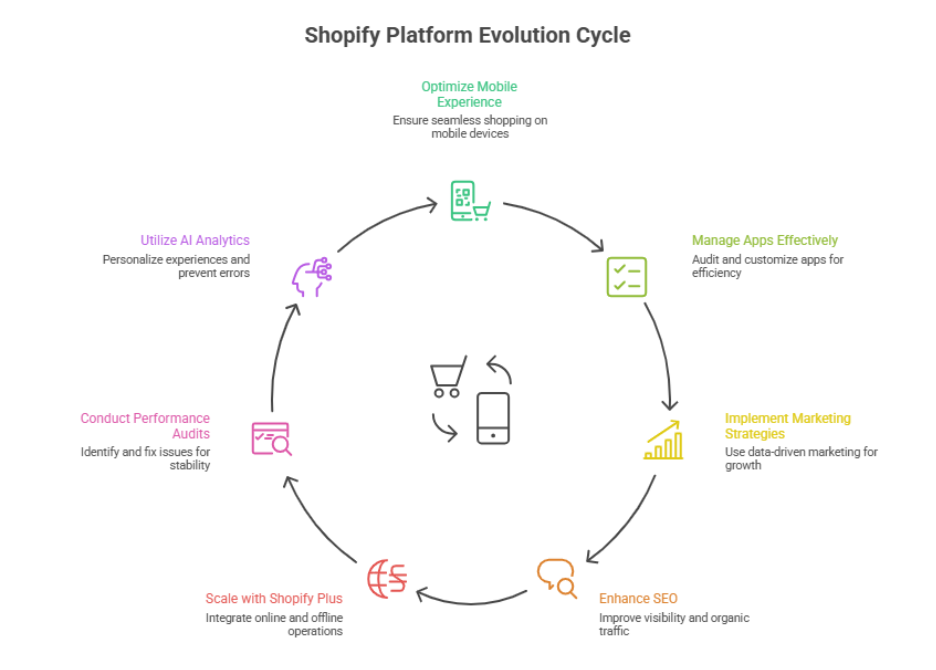
    Mobile optimization is critical for Shopify store owners. Many store owners make the mistake of focusing only on desktop, leading to slow load times and a poor shopping experience. Optimizing your site with tools like Google PageSpeed Insights and Shopify’s mobile features ensures a seamless experience, improving customer trust and conversions. 

    App Management and Customization 

    Using Shopify apps enhances functionality, but many apps or non-essential integrations can cause issues such as performance issues or technical issues. New store owners should regularly audit app usage and focus on customizable solutions that align with business needs while minimizing the total cost of ownership. 

    Upsells, Paid Ads, and Shopify Marketing 

    Effective Shopify marketing includes upsells and paid ads, but store owners make mistakes when these tools are implemented without analyzing key Shopify metrics. Using data-driven strategies helps you make informed decisions, drive shopify orders, and improve customer experience. 

    SEO and Search Engine Optimization 

    Proper search engine optimization is essential for a shopify store’s visibility. Avoid common Shopify mistakes like cluttered pages, poor store look, or missing meta data, which causes issues with rankings. Optimizing product pages, descriptions, and site structure enhances organic traffic and supports improving sales. 

    Shopify Plus and Unified Commerce Platforms 

    Leading Shopify merchants often move to Shopify Plus or unified commerce platforms to integrate in-store and online operations on a single platform. This setup helps Shopify merchants scale efficiently, reduce technical issues, and provide a seamless customer experience across all channels. 

    Performance Audits and Analytics Tools 

    Regular audit of your tech stack and site performance is crucial. Using tools like analytics dashboards enables many store owners to identify common Shopify mistakes and optimize your online store’s performance, ensuring your store’s functionality and revenue potential remain strong. 

    AI optimization analytics improving Shopify store customer experience today 

    Improving your Shopify store with AI optimization analytics can be approached in clear, sequential steps that ensure every visitor has a seamless and engaging experience. 

    Step 1: Centralize Your Analytics in One Platform 

    The first step for any Shopify store owner is to integrate all performance analytics and AI-driven insights into one platform. This centralization provides a comprehensive view of your store’s health, including core web vitals, page load times, and user behavior. Having a single, unified dashboard allows you to monitor traffic patterns and detect potential issues early, helping you avoid mistakes that could create a negative impact on customer experience. 

    Step 2: Understand How Customers Navigate Your Store 

    Next, analyze how visitors move through your store. AI tools can reveal which pages receive the most attention, where customers hesitate, and which paths lead to checkout. This insight allows you to structure your site so customers to find products quickly, making it easier for them to explore your offerings. By understanding these patterns, you can design intuitive navigation that naturally guides visitors toward the products they are most interested in. 

    Step 3: Personalize the Shopping Experience 

    Once navigation insights are in place, the next step is to leverage AI to deliver personalization. By analyzing browsing history, purchase trends, and product preferences, AI can recommend items across the entire product category and highlight products most likely to move into products to cart. Personalization ensures that each visitor encounters content tailored to their needs, while also helping you showcase your products in a way that maximizes engagement and conversions. 

    Step 4: Prevent Errors and Maintain Performance 

    Monitoring site performance continuously is critical. AI analytics can alert you to slow-loading pages, broken links, or checkout issues before they affect customers. By staying proactive, you can avoid breaking essential processes, ensuring that every transaction and interaction runs smoothly. Maintaining optimal core web vitals prevents frustration and helps maintain a positive perception of your store, allowing you to help customers make decisions confidently. 

    Step 5: Optimize Product Visibility and Conversions 

    With a stable and well-performing site, the next step is to optimize product placement and recommendations. AI insights allow you to feature top-selling items across the entire product category while suggesting complementary products that encourage additional purchases. By doing this strategically, customers to find what they need becomes effortless, increasing the likelihood that items move into products to cart. This step ensures that your store is both engaging and conversion-focused. 

    Step 6: Continuously Improve the Customer Experience 

    Finally, AI optimization is not a one-time task. Continuous monitoring of performance analytics allows you to refine your strategy over time. By regularly assessing customer behavior, updating recommendations, and testing new layouts, you can ensure your store consistently delivers a seamless experience. This ongoing process helps you avoid mistakes, prevent create a negative user experience, and consistently help customers make confident purchase decisions, all from one platform. 

    Conclusion 

    Navigating Shopify’s evolving landscape requires more than just managing products it demands understanding platform shifts, optimizing performance, and leveraging AI-driven insights to enhance the customer experience. From mobile optimization and app management to personalized AI recommendations, each element contributes to smoother navigation, higher conversions, and a scalable, secure store. By continuously auditing performance, analyzing customer behavior, and making data-driven decisions, store owners can avoid mistakes, maintain core web vitals, and ensure visitors are guided effortlessly from discovery to products to cart. 

    Investing in professional support and proactive maintenance may seem like an added cost, but it delivers long-term value by preventing downtime, technical issues, and creating a negative user experience. Ultimately, stores that embrace AI optimization analytics and integrate performance analytics into one platform are best positioned to help customers make confident purchasing decisions and showcase their offerings across the entire product category efficiently. 

    if you want your Shopify store to stay competitive and truly maximize its potential, why not reach out to Integriti Studio and see how they can transform your customer experience today? 

    Frequently Asked Questions (Shopify Platform Shifts Store Owners Should Be Aware of)

    What are the issues with Shopify?

    Common issues with Shopify include high transaction fees without Shopify Payments, limited customization compared to open-source platforms, reliance on paid apps for advanced features, slower loading for large stores, and SEO limitations. Additionally, migrating away from Shopify can be complex due to platform-specific data and design structures.

    How to maintain a Shopify store?

    To maintain a Shopify store, regularly update products, prices, and inventory, monitor site performance and loading speed, update apps and themes, back up store data, optimize SEO, ensure smooth payment and checkout processes, and monitor security. Regularly reviewing analytics helps improve user experience and sales.

    What are the challenges of Shopify store owners?

    Shopify store owners face intense competition, rising advertising costs, conversion optimization struggles, technical customization limits, app overdependence, inventory management complexities, cashflow pressure, and retention challenges.

    How do Shopify stores get traffic?

    Shopify stores get traffic through SEO-optimized content, social media marketing, paid ads like Google Ads or Facebook Ads, email marketing, influencer collaborations, and referral programs. Additionally, leveraging Shopify apps for analytics, retargeting, and promotions helps attract, engage, and convert visitors into customers effectively.

  • Shopify Trends To Start Adapting Before 2026 Begins 

    Shopify Trends To Start Adapting Before 2026 Begins 

    Shopify Trends To Start Adapting Before 2026 Begins 

    Why do some brands grow faster on Shopify while others struggle to scale profitably? The difference rarely lies in the platform itself. It comes down to how performance, structure and long-term decisions are handled as competition increases toward 2026. From page speed and optimization to data flow and scalability multiple factors directly influence results across modern ecommerce environments. 

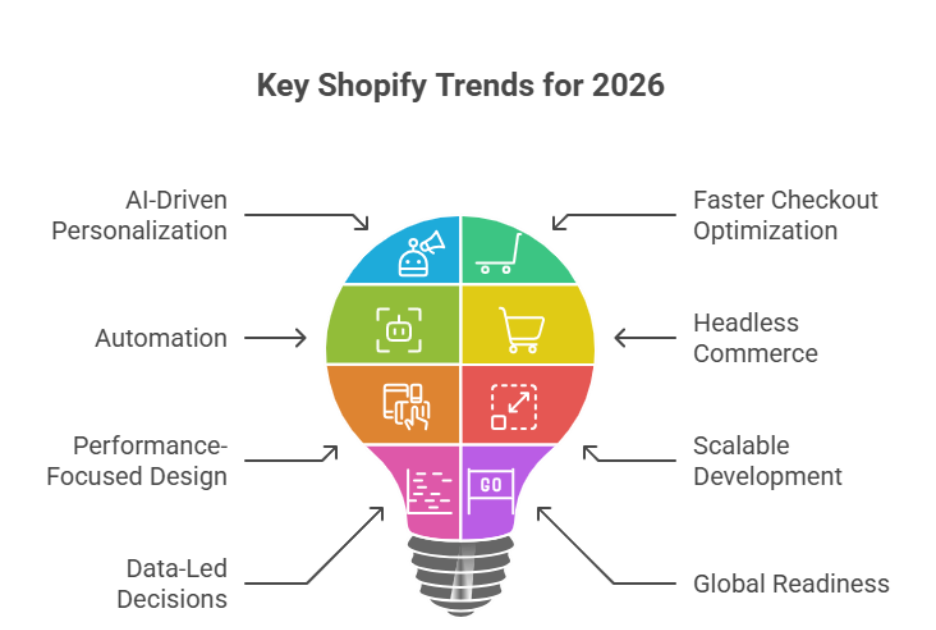
    Shopify trends to start adapting before 2026 include AI-driven personalization, faster checkout optimization automation headless commerce and performance-focused design. Brands investing in scalable Shopify development smarter shopper experiences and data-led ecommerce decisions will stay competitive and future-ready as 2026 approaches. 

    A professionally built Shopify store is no longer just a digital catalog. Strategic development thoughtful design systems, and consistent maintenance create real business value especially as shopper expectations rise in 2026. Smart personalization supported by ai helps brands adapt faster while poor execution increases costs over time. In practice, businesses often invest between $2,000–$5,000 for professional builds to avoid expensive fixes later. Shopify solutions planned correctly protect margins and reduce technical debt as 2026 approaches. 

    This blog breaks down key Shopify trends shaping 2026 explains what matters beyond features and shows how informed decisions help Shopify brands stay competitive resilient and ready for what’s next in 2026. 

    Shopify 2026 FAQ trends to watch shaping ecommerce future 

    Shopify 2026 FAQ trends to watch shaping ecommerce future 

    As 2026 approaches, many Shopify brands ask similar questions about scalability performance, and long-term growth. This faq section highlights the most important trends to watch not as predictions, but as trends shaping how modern ecommerce operates and competes globally. 

    Understanding What’s Driving Shopify in 2026 

    The ecommerce industry is evolving due to changing consumer behavior, rising competition and platform maturity. Insights from google trends show increasing demand for faster experiences, flexible architecture and global selling. These trends for 2026 reflect a clear shift toward smarter systems that support growth efficiency and adaptability. 

    Headless Commerce Becomes Strategic 

    One of the most impactful shifts is headless commerce, allowing brands to separate frontend experiences from backend systems. This approach helps Shopify brands deliver faster interfaces integrate a mobile app and align with unified commerce strategies. For larger operations, solutions like shopify plus make this transition more manageable. 

    Payments, Markets, and Global Readiness 

    Modern shoppers expect diverse payment methods, localized pricing, and seamless international access. Tools such as shopify payments and shopify markets support expansion while reducing operational friction. This enables business owners to respond to market demand and sell in 2026 with confidence. 

    What This Means for Store Owners 

    For every store owner planning a serious business plan, these top shopify development trends are no longer optional. Whether launching a new business, refining a product idea, or scaling an ecommerce store understanding the future of Shopify helps brands stay competitive improve customer experience and drive sustainable sales growth in 2026 Shopify ecosystems. 

    Personalization AI optimization for Shopify store shoppers in 2026 

    Personalization is no longer an advanced feature it is a core expectation. As shopper behavior evolves, AI-led personalization is shaping 2026 by redefining how brands build relevance loyalty and measurable growth across every ecommerce touchpoint. 

    Step 1: Understand Why Personalization Matters 

    In a competitive landscape a generic experience limits performance. AI-driven personalization allows an ecommerce store to respond to browsing behavior purchase history and intent in real time. This creates meaningful interactions that increase engagement and long-term value especially for a new business entering the market. 

    Step 2: Use Data to Guide Smarter Decisions 

    AI analyzes patterns faster than manual review ever could. Using insights from customer actions brands can recommend relevant products, optimize content placement and improve conversion paths. This step is essential to align personalization with real demand rather than assumptions. 

    Step 3: Apply AI Where It Impacts the Shopper Most 

    Focus personalization efforts on product discovery, homepage content and on-site messaging. These areas influence decision-making early and directly support stronger performance without overcomplicating the user journey. 

    Step 4: Operationalize Through Shopify Systems 

    Centralized data and workflows within the shopify admin help manage personalization efficiently at scale. When aligned with collaboration tools such as shopify collective, brands can extend personalization across partners while maintaining consistency. 

    Step 5: Build for Long-Term Growth 

    AI personalization is not a one-time setup it evolves as your business journey grows. When implemented strategically it helps brands adapt to ecommerce trends, respond to global ecommerce sales patterns, and deliver experiences that keep shoppers returning well beyond 2026. 

    Conclusion 

    Adapting to Shopify trends before 2026 is no longer optional it’s essential for brands aiming to stay competitive, scalable and profitable. From AI-driven personalization and headless commerce to optimized checkout experiences and smart use of shopify payments, every decision impacts shopper engagement sales growth and long-term sustainability. Investing in professional development thoughtful design, and robust maintenance ensures your ecommerce store performs at its peak while reducing costly fixes later. By leveraging data, automation, and modern shopify admin tools, brands can respond to evolving customer needs, global market demand, and emerging ecommerce trends, positioning themselves as leaders in 2026 Shopify ecosystems. 

    Now the tricky part are you ready to stay ahead of competitors and grow your Shopify store faster with expert guidance? Maybe it’s time to contact Integriti Studio and see how we can help your business adapt smarter before 2026. 

    Frequently Asked Questions (Shopify Trends To Start Adapting Before 2026 Begins)

    Is Shopify still worth it in 2026?

    Yes Shopify is still worth it in 2026 for many online sellers because it’s easy to set up, scales from small shops to big brands, and offers strong e-commerce tools, AI features, and multi-channel selling support. It has widespread use but costs and limitations should be considered.

    Is Shopify profitable in 2026?

    Yes Shopify is profitable in 2026 with strong revenue and free-cash-flow margins, continuing double-digit profitability even as it grows and invests in AI and expansion.

    What is the future for Shopify?

    The future of Shopify looks strong and evolving: it will keep expanding AI tools for automation, personalization, and store setup, improve omnichannel commerce, support headless and immersive shopping experiences, and grow internationally. It will remain a major e-commerce platform adapting to trends through 2026 and beyond.

    What are the small business trends in 2026?

    Small business trends in 2026 include AI-integration, e-commerce and omnichannel growth, remote/hybrid work, stronger cybersecurity, hyper-personalized customer experiences, and sustainability practices driving growth.

  • What Will Make A Shopify Store Stand Out In 2026

    What Will Make A Shopify Store Stand Out In 2026

    What Will Make A Shopify Store Stand Out In 2026

    Why do some shopify store owners scale rapidly while others struggle to gain traction, even with similar products? The answer is rarely about the tool itself. It comes down to how strategically your shopify store is planned, designed, and managed as competition intensifies in 2026. In a crowded ecommerce space, success depends on far more than simply launching a store.

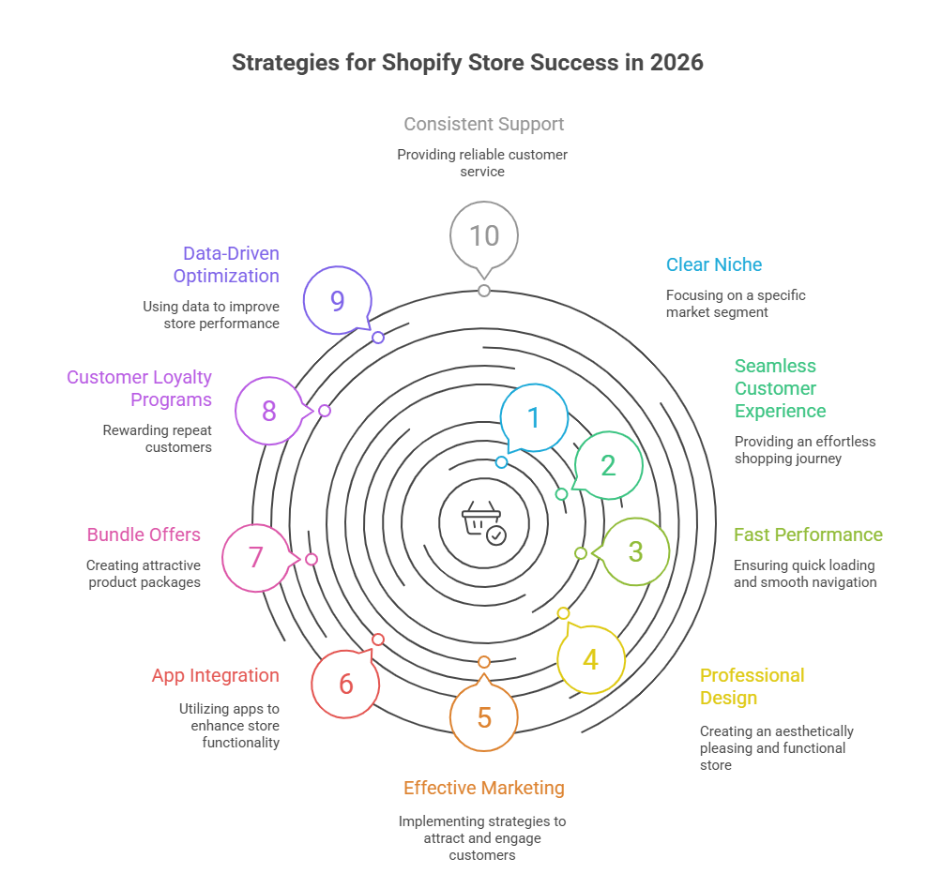
    A Shopify store stands out in 2026 by combining a clear niche, seamless customer experience, fast performance, and professional design. Effective marketing strategies, app integration, bundle offers, and strong customer loyalty programs boost conversions, while data-driven optimization and consistent support ensure long-term shopify business success.

    Performance is shaped by multiple factors, including site speed, design quality, customization, app usage, and ongoing technical support. A successful shopify setup aligns design with a clear niche, seamless functionality, and consistent maintenance. For any shopify business, professional development ensures stability, scalability, and the flexibility needed to adapt to changing buyer expectations in 2026.

    Many businesses underestimate the long-term value of expert design, proactive support, and optimization. While entry-level setups may cost a few hundred dollars, building a competitive foundation requires thoughtful investment to support growth and profitability.

    Shopify Store Strategies That Win Ecommerce Success In 2026

    Shopify Store Strategies That Win Ecommerce Success In 2026

    Launching a shopify store in 2026 requires more than simply listing products. It demands strategic planning, customer-focused design, and consistent optimization. A successful shopify store combines operational efficiency with marketing insight, ensuring your brand competes effectively with top Shopify stores.

    Choose the Right Business Idea and Niche

    The foundation of a thriving Shopify store begins with selecting the right business idea. You need to focus on a niche that meets a specific demand or solves a real problem. By researching competitors and analyzing shopify brands, you can identify market gaps and differentiate your store, which attracts targeted customers and improves the likelihood of higher conversions.

    Build a Shopify Store With Scalability

    When you build a Shopify store, scalability should be a priority. Your store must feature flexible themes, intuitive navigation, and a clean layout that enhances the online business experience. Integrating tools from the Shopify App Store automates workflows, manages inventory, and improves shopify sales. Additionally, mobile optimization and fast loading speeds are critical to maintain a seamless shopping experience for customers.

    Implement Effective Marketing and Offers

    Effective Shopify marketing drives traffic and engages new customers. Strategic campaigns, email marketing, and social media promotions help build visibility, while attractive shopify offers such as bundles or limited-time discounts increase purchase intent. Observing the strategies used by top Shopify stores provides insight into best practices for customer engagement, content, and retention.

    Monitor, Optimize, and Scale

    Continuous monitoring is essential for sustained growth. By analyzing customer behavior, shopify app store insights, and shopify sales trends, you can optimize product pages, checkout flows, and marketing campaigns. Scaling successful strategies while maintaining a consistent and high-quality online business experience ensures long-term loyalty and growth.

    Successful Shopify Business Ideas Choosing Right Niche Products

    Creating a shopify store in 2026 that stands out begins with selecting the right business idea and identifying products that truly resonate with your target audience. For aspiring merchants, a strong niche not only attracts new customers but also differentiates your store from competitors, helping you compete with top Shopify stores and best Shopify stores across the platform.

    Step 1: Identify a Profitable Niche

    The first step in building a successful ecommerce store is pinpointing a niche that meets real customer demand. Start by analyzing shopify brands and stores selling similar products to understand trends, gaps, and opportunities. A well-chosen niche allows you to attract customers, boost engagement, and improve long-term shopify sales.

    Step 2: Choose the Right Products to Sell Online

    Once your niche is defined, focus on selecting products to sell online. Prioritize items that are in demand, have healthy profit margins, and can be supported with attractive shopify offers such as free shipping or bundles. For dropshipping business models, evaluate supplier reliability, shipping times, and product quality to maintain a positive online shopping experience.

    Step 3: Build a Shopify Store Optimized for Growth

    Next, build a Shopify store with a design that reflects your brand identity. Use best Shopify themes for professional store design, integrate essential apps from the Shopify App Store, and optimize your checkout flow to increase shopify sales. Features like automated inventory tracking, loyalty programs, and early access promotions help grow your business and keep new and existing customers engaged.

    Step 4: Market Your Store and Products

    Effective shopify marketing strategies are key to reaching the right audience. Utilize multiple marketing channels such as social media, email campaigns, and content marketing through a shopify blog to reach new audiences. Highlight your unique selling points, shopify offers, and promotional campaigns to encourage repeat purchases and strengthen customer loyalty.

    Step 5: Monitor Performance and Scale Strategically

    Finally, track performance metrics and adjust your strategy as needed. Monitor shopify store’s traffic, conversions, and inventory trends to ensure your store remains competitive. By learning from many shopify merchants and leading Shopify practices, you can continuously refine your offerings, expand your reach, and maintain a memorable store that stands out in 2026.

    Conclusion

    Standing out with a shopify store in 2026 requires more than just listing products it demands strategic planning, a clear niche, seamless customer experience, scalable design, and effective marketing. From selecting the right business idea and products to optimizing your store for growth, every decision impacts shopify sales, customer loyalty, and long-term shopify business success.

    Professional development, consistent monitoring, and data-driven optimization are essential for maintaining a competitive edge. By integrating tools from the Shopify App Store, offering bundles or promotions, and analyzing strategies used by top Shopify stores, you can attract new customers, retain loyal shoppers, and ensure your online business grows sustainably.

    For ambitious merchants, the question is not whether to start, but how to make your store truly stand out. Are you ready to see how Integriti Studio can help your shopify store in 2026 achieve maximum growth and visibility?

    Frequently Asked Questions (What Will Make A Shopify Store Stand Out In 2026)

    What is Shopify prediction for 2026?

    Shopify is expected to grow in 2026 with strong e‑commerce adoption, AI‑driven tools, and expanding international markets. Analysts see continued revenue and merchant base growth, improving margins, and potential stock upside, though valuation risks and competition remain key factors.

    How do I make my Shopify store stand out?

    To make your Shopify store stand out, focus on niche targeting, unique branding, and high-quality visuals. Optimize user experience, implement AI-powered personalization, ensure fast loading and mobile responsiveness, and use social proof and content marketing. Consistency and innovation drive long-term customer trust and loyalty.

    What is the future of Shopify?

    Shopify’s future in 2026 points to deeper AI‑driven commerce, real‑time personalization, global expansion tools, and seamless omnichannel experiences. The platform aims to become an intelligent commerce hub that automates operations, enhances customer journeys, and strengthens merchant growth worldwide.

    Is Shopify still relevant in 2025?

    Yes Shopify is still very relevant in 2025. It powers millions of stores worldwide, holds a large share of the e‑commerce market, continually updates with AI tools and integrations, and remains a top choice for online selling and business growth this year.