Category: Studioblogs

  • WordPress Capabilities That Will Become More Important Over Time 

    WordPress Capabilities That Will Become More Important Over Time 

    WordPress Capabilities That Will Become More Important Over Time 

    Why do some websites built on wordpress remain scalable and efficient, while others struggle to keep up with changing expectations? The answer lies in how well evolving capabilities are understood and implemented over time. As the future of wordpress takes shape, performance differences are increasingly driven by structure, maintenance, and the ability to adapt to smarter technologies like ai. 

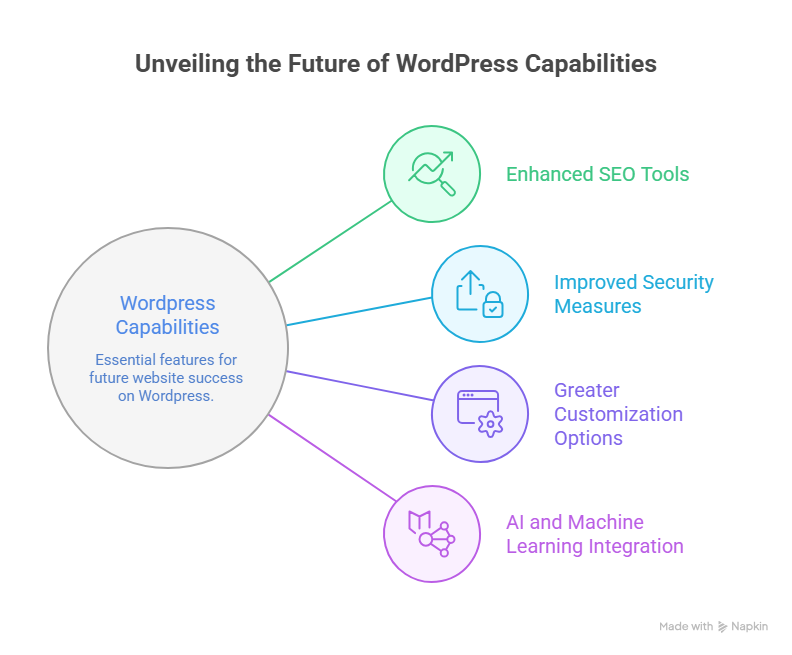
    WordPress capabilities that will become more important include advanced customization, AI-driven features, stronger security, scalable content management, and performance optimization. As the future of WordPress evolves, professional development, reliable plugins, and strategic maintenance will be essential for long-term growth, usability, and competitive advantage. 

    Factors influencing website performance now extend far beyond appearance. Speed, security, flexibility, and long-term adaptability directly affect trust and usability. This is where professional wordpress development becomes critical. When you invest in thoughtful architecture, reliable support, and ongoing maintenance, your site remains user-friendly while supporting business goals. In practical terms, professional services may cost anywhere from a few hundred to several thousand dollars annually often a modest investment compared to the long-term value they protect. 

    Future of WordPress development trends shaping modern website development 
    Future of WordPress development trends shaping modern website development

    The future of WordPress development is rapidly evolving, and staying ahead requires understanding emerging trends and technologies that will define WordPress in 2026. As a content management system, WordPress remains a dominant platform for website development, but its capabilities are expanding beyond traditional blogging into fully customizable, scalable, and secure web solutions. 

    Key Trends Shaping the Future of WordPress 

    One major trend is the rise of headless WordPress, allowing developers to separate the frontend and backend for faster, more flexible user experiences. Integration of the Gutenberg block editor continues to empower WordPress users with drag-and-drop customization, while modern WordPress themes and improved wordpress themes and plugins provide more design flexibility and scalability. 

    Security is also evolving. As threats become more sophisticated, WordPress introduces advanced security features and recommends managed WordPress hosting to safeguard websites without compromising speed or usability. Performance optimization, SEO enhancements, and AI-driven content tools are becoming standard, helping websites maintain strong search engine ranking and better user experience. 

    Shaping the Growth and Evolution 

    The evolution of WordPress reflects a broader shift toward modular, user-friendly, and future-ready solutions. WordPress professionals now focus on leveraging technologies within WordPress to streamline workflows, enhance customization, and provide better scalability for businesses. By tracking key trends and adopting best practices, your website can stay competitive while harnessing the growth of WordPress and its thriving WordPress community. 

    WordPress in 2026 ai security features user-friendly evolution 

    The evolution of WordPress is accelerating, with a clear focus on AI, enhanced security features, and more user-friendly experiences. As a content management system, WordPress remains central to modern website development, empowering businesses to scale efficiently while protecting both data and user trust. Here’s a breakdown of what to expect by 2026: 

    Key Trends Shaping the Future 

    • AI Integration: 
    • WordPress offers AI-driven tools for content creation, SEO optimization, and workflow automation. 
    • Predictive analytics and smart suggestions help WordPress users optimize website development strategies. 
    • Enhanced Security Features: 
    • With threats becoming more sophisticated, security features such as two-factor authentication, automated backups, and real-time monitoring will become standard. 
    • Managed WordPress hosting continues to protect websites without compromising speed or flexibility. 
    • User Experience and Customization: 
    • The Gutenberg block editor and modern WordPress themes provide intuitive user-friendly design tools. 
    • Streamlined wordpress themes and plugins simplify customization, reducing development time while improving overall site aesthetics. 
    • Performance and SEO Optimization: 
    • Faster load times, mobile responsiveness, and optimized layouts support higher search engine ranking. 
    • Technologies within WordPress enable improved accessibility and enhanced workflow for developers and content managers alike. 
    • Community and Ecosystem Growth: 
    • The WordPress community drives innovation, offering resources, training, and updates that keep the platform competitive. 
    • The growth of WordPress ensures a sustainable ecosystem, with new trends to watch continuously shaping the future of web development. 

    Conclusion 

    As WordPress continues to evolve, its future lies in advanced AI integration, robust security features, and a more user-friendly experience. By leveraging modern WordPress themes, reliable plugins, and professional WordPress development, you can optimize performance, improve search engine ranking, and create a scalable, future-ready website. The platform’s ongoing evolution and active WordPress community ensure that staying updated with key trends is essential for long-term success. Investing in strategic customization, managed hosting, and thoughtful workflows not only protects your online business but also enhances usability, trust, and growth potential. 

    Are you ready to future-proof your WordPress site should you contact Integrity Studio today? 

    Frequently Asked Questions (WordPress Capabilities That Will Become More Important Over Time )

    What are the capabilities of WordPress?

    WordPress offers capabilities like custom website creation, content management, and theme customization. It supports plugins for SEO, e-commerce, security, and performance, enabling blogs, business sites, and online stores. Its flexibility allows scalable design, user management, multilingual support, and integration with third-party tools for diverse website needs.

    Which of these is a future of WordPress?

    The future of WordPress lies in headless architecture, AI-driven content management, and advanced block-based editing. Emphasis on speed, security, scalability, and seamless integration with third-party tools will continue, making it a versatile platform for businesses, e-commerce, and creators seeking flexible, modern, and future-proof websites.

    What are the most exciting and useful features of WordPress?

    The most exciting and useful WordPress features include flexible themes and plugins, block-based Gutenberg editor, SEO-friendly structure, and strong community support. It also offers customizable user roles, e-commerce integration, multilingual support, and robust security options, enabling businesses and creators to build scalable, professional, and versatile websites.

    Which is the latest version of WordPress and why is it important to update WordPress regularly?

    The latest WordPress version is 6.9.1. Regular updates ensure security, bug fixes, plugin compatibility, improved performance, new features, and protect your site from vulnerabilities and crashes.

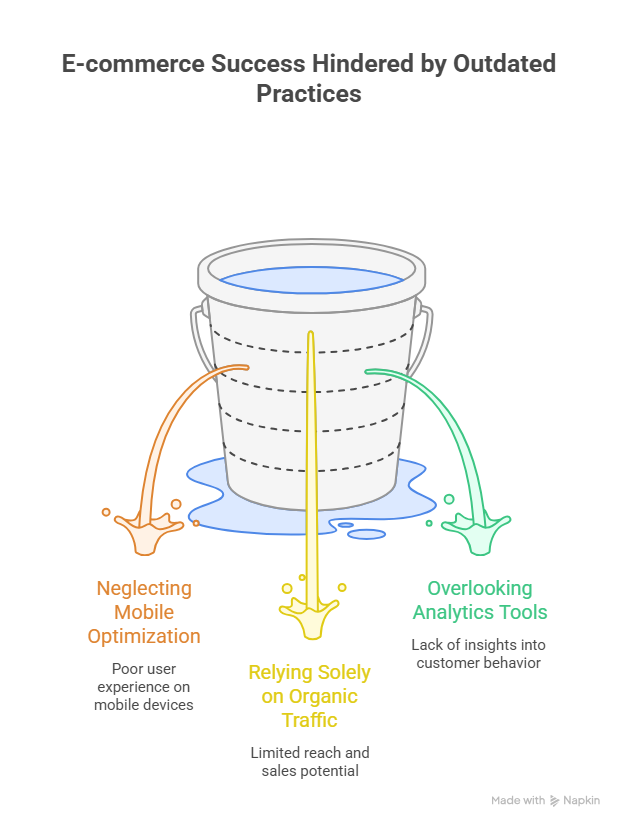
  • Outdated Shopify Practices Store Owners Should Reconsider 

    Outdated Shopify Practices Store Owners Should Reconsider 

    Outdated Shopify Practices Store Owners Should Reconsider 

    Why do some shopify businesses grow steadily while others struggle to scale despite similar products? The difference often lies in outdated decisions that quietly impact performance. As a store owner, you may not realize how older shopify workflows, rushed setups, or neglected updates can hold back your shopify store from reaching its full potential in today’s competitive ecommerce space. 

    Outdated Shopify practices include using unoptimized themes, neglecting site structure, relying on default settings, and skipping ongoing optimization. These choices hurt performance, brand credibility, and scalability. Modern Shopify success requires professional development, strategic customization, faster load times, and continuous improvements aligned with evolving ecommerce standards. 

    Factors influencing website performance go beyond visuals. Poor structure, weak optimization, and unrefined processes affect how your brand is perceived, how users interact with your store, and how effectively search engines evaluate your site. Professional development ensures your shopify setup supports long-term growth, improves optimization, and aligns with modern expectations for speed, reliability, and trust. Many businesses hesitate due to cost, yet typical professional support may range from a few hundred to a few thousand dollars often far less than the revenue lost through inefficiency. 

    New Shopify optimization strategies to boost sales search engine 

    New Shopify optimization strategies to boost sales search engine 

    Modern new shopify optimization is no longer limited to visuals or basic setup. It focuses on aligning performance, usability, and search visibility to drive measurable growth. Many shopify store owners make the mistake of assuming default settings are enough, but real results come from intentional improvements that support both users and search engines. Addressing common shopify gaps early helps prevent scalability issues later. 

    Performance, Structure, and Search Alignment 

    A strong optimization strategy begins with technical clarity. Clean urls, properly structured meta data, and a logical layout allow search engines to understand your store while improving navigation for users. Ignoring these elements is a common pitfall that affects store performance, especially as product catalogs grow. Professional optimization ensures your store avoids unnecessary clutter and delivers a clear first impression. 

    Mobile and Checkout Experience 

    With most purchases happening on mobile phones, a mobile-friendly approach is essential. Slow interfaces, complex checkout flows, or poor mobile experience directly impact whether visitors make a purchase. Reducing friction improves customer experience, lowers bounce rates, and supports better results across all e-commerce stores. 

    Conversion-Focused Enhancements 

    Strategic customization allows your store to guide users naturally toward conversion. Well-placed ctas, relevant upsells, and optimized order value tactics improve revenue without harming trust. Avoiding slow load times and resolving hidden performance issues ensures your online business remains competitive. 

    Common Shopify store mistakes harming brand ecommerce growth optimization 

    Step 1: Ignoring Structural Foundations During Early Setup 

    One of the most common shopify issues begins at the setup stage. With new shopify projects, rushing decisions often leads to weak foundations. This is a pitfall many shopify store owners make, especially when launching an online business quickly. Poor layout, messy urls, and missing meta structure reduce clarity for both users and search engines, weakening brand authority from day one.Many new shopify launches also overlook scalability. As many shopify store owners expand, these early decisions start affecting store performance and limit future growth across e-commerce stores. 

    Step 2: Overcomplicating Design and Customization 

    Excessive customization without strategy creates visual clutter and distracts users. Overdesigned pages often confuse visitors using mobile phones, harming the mobile experience and increasing bounce rates. This is one of the common shopify design mistakes seen across many shopify businesses.A clean, mobile-friendly design improves the first impression, supports the customer experience, and delivers better results across devices. Strategic customization should guide users, not overwhelm them. 

    Step 3: Weak Checkout and Conversion Flow 

    A complicated checkout process is a silent revenue killer. When users struggle to make a purchase, abandoned carts increase and performance issues surface. Repeated checkout friction directly impacts order value and limits your ability to boost sales.Well-placed ctas and thoughtful upsells simplify decision-making while improving trust in your e-commerce presence. 

    Step 4: Performance and Speed Neglect 

    Ignoring slow load times damages credibility and hurts conversions. Poor speed creates friction, affects store performance, and signals low quality to users. Optimized structure and minimal distractions are essential to protect brand perception and sustain long-term growth. 

    Conclusion 

    Outdated Shopify practices rarely fail overnight, but they quietly limit growth, weaken brand trust, and reduce long-term profitability. From poor structural decisions and excessive customization to weak checkout flows and ignored performance issues, each small mistake compounds over time. Sustainable success on Shopify requires intentional optimization, professional development, and continuous improvements aligned with modern ecommerce standards. When your store is built with clarity, speed, and user experience in mind, it becomes easier to scale, improve conversions, and protect your brand’s credibility in a competitive market. 

    Ready to fix what’s holding your Shopify growth back should you contact Integrity Studio now? 

    Frequently Asked Questions (Outdated Shopify Practices Store Owners Should Reconsider )

    What are the challenges of Shopify store owners?

    Shopify store owners face challenges like high competition, managing inventory, and optimizing for SEO and conversions. Other issues include platform fees, integrating third-party apps, ensuring fast page speed, handling customer support, and scaling operations while maintaining a smooth user experience and sustainable profit margins.

    How to recover an old Shopify store?

    To recover an old Shopify store, log in to your Shopify account and check for any paused or archived stores. Restore backups if available, update products, themes, and apps, verify domain settings, and ensure all payment and shipping configurations are current before relaunching the store to customers.

    Why do so many Shopify stores fail?

    Many Shopify stores fail due to poor market research, low-quality products, and weak branding. Other reasons include ineffective marketing, high competition, slow website performance, poor customer experience, and inadequate inventory or fulfillment management, which prevent stores from attracting and retaining customers, ultimately affecting profitability and growth.

    How can I improve my Shopify store?

    You can improve your Shopify store by optimizing site speed, enhancing mobile responsiveness, and refining product pages with clear descriptions and high-quality images. Focus on SEO, effective marketing strategies, user-friendly navigation, and reliable customer support to boost conversions, increase traffic, and ensure long-term growth.

  • How Webflow Development Approaches Are Gradually Evolving 

    How Webflow Development Approaches Are Gradually Evolving 

    How Webflow Development Approaches Are Gradually Evolving 

    Why do some websites built with Webflow scale effortlessly while others struggle to deliver consistent performance? The answer lies in how Webflow development approaches continue to evolve, shaping both the user experience and the technical efficiency of modern web design. Factors such as SEO, optimization, scalability, and integration determine whether your website can maintain fast load times, seamless functionality, and long-term growth. 

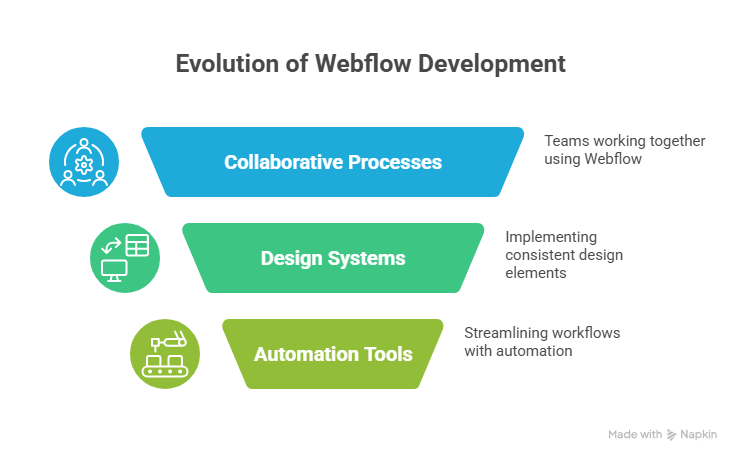
    Webflow development approaches are gradually evolving toward more scalable, no-code, and SEO-optimized solutions. Modern web design now emphasizes seamless integration, faster launch times, and improved user experience, allowing businesses to streamline workflows, reduce reliance on coding, and achieve long-term growth with efficient, future-ready websites. 

    Professional Webflow development ensures your site is not just visually appealing but also strategically structured for performance. Investing in skilled development, thoughtful launch planning, and ongoing maintenance allows you to avoid common bottlenecks and optimize no-code workflows. Typical professional support may range from a few hundred to a few thousand dollars often a modest investment compared to the revenue lost from inefficiencies, slow sites, or poor user experiences. 

    This blog will explore how Webflow development approaches are gradually evolving. You’ll learn about emerging trends, scalable design techniques, advanced integration, and strategies to improve SEO and long-term site performance, empowering your business to stay competitive while maximizing both efficiency and growth. 

    Webflow development trends shaping scalable modern web design 

    Webflow development trends shaping scalable modern web design 

    The landscape of modern web design is evolving rapidly, and Webflow is at the forefront of this change. Businesses today demand websites that are not only visually appealing but also scalable, fast, and optimized for performance. By embracing Webflow development, you can reduce bottlenecks common in traditional approaches while delivering a seamless design and development experience. 

    No-Code Platform Empowering Efficiency 

    Webflow is the future for many businesses because it combines design elements and content management into a no-code platform. This allows teams to scale your website without heavy reliance on traditional web development or extensive coding. Features such as real-time editing and responsive design tools let your site adapt instantly, improving responsiveness and fast load times, which positively impact LCP and core web vitals. 

    Optimized Performance and SEO 

    Performance optimization is critical for both user experience and search engine rankings. With Webflow, pages are automatically structured to reduce load times, prevent bottlenecks, and maintain smooth website loads. Efficient workflows improve bounce rates, support better SEO rankings, and enhance organic traffic. 

    Customization and Professional Support 

    A Webflow development agency or Webflow experts can help you create a custom website tailored to your brand. With access to advanced plugins and the ability to unlock additional features, you can build scalable landing pages and full websites that maintain aesthetic quality, functionality, and speed. 

    No-code tools integration optimizing launch seo and scalability 

    In today’s fast-paced digital landscape, leveraging no-code tools has become essential for businesses building websites efficiently while maintaining high performance and scalability. Unlike traditional approaches, no-code platforms empower teams to launch websites without heavy coding dependencies, ensuring faster go-to-market and simplified maintenance. By integrating these tools strategically, organizations can optimize search engine optimization, enhance fast load times, and set their digital presence up for long-term success. 

    Step 1: Choosing the Right No-Code Platform 

    Selecting a robust no-code platform is the foundation of scalable web development. Platforms like Webflow today are revolutionizing web design by combining intuitive interfaces with professional-grade development capabilities. Key considerations include: 

    • Availability of a free starter plan for testing features. 
    • Ability to unlock additional features such as CMS, e-commerce, and advanced analytics. 
    • Pre-built design elements that accelerate development while maintaining brand consistency. 

    Step 2: Optimizing Site Performance for Fast Load Times 

    Site speed is critical for both user experience and search engine optimization. No-code tools often integrate built-in performance optimization, which allows your website loads quickly across devices. Key strategies include: 

    • Utilizing content delivery networks (CDNs) to deliver content rapidly to global users. 
    • Compressing images and minimizing scripts to reduce page weight. 
    • Prioritizing metrics like LCP (Largest Contentful Paint) and CL (Cumulative Layout Shift) to improve perceived and real performance. 

    Step 3: Enhancing Scalability and Flexibility 

    One of the primary advantages of no-code tools is their inherent scalability. As your website grows, these platforms allow you to: 

    • Easily add new pages, sections, or design elements without a developer. 
    • Implement advanced integrations like marketing automation and analytics, which enables marketing teams to act on user behavior insights. 
    • Maintain a consistent structure while supporting global expansion through global content delivery. 

    Step 4: Leveraging SEO and Conversion Optimization 

    Integrating no-code tools with SEO best practices provides a competitive edge. Steps to maximize visibility include: 

    • Structuring URLs, headings, and metadata effectively for search engine optimization. 
    • Leveraging built-in tools for meta tags, sitemaps, and schema markup. 
    • Performing conversion rate optimization by analyzing user flows and implementing CTAs strategically. 

    Step 5: Continuous Improvement and Monitoring 

    The true benefit of websites without heavy coding lies in ongoing optimization. No-code platforms allow teams to: 

    • Test new design elements without downtime. 
    • Monitor fast load times and LCP metrics continuously. 
    • Adjust strategies based on real-time user behavior insights. 

    Conclusion 

    Webflow development and no-code tools integration are no longer optional they are central to creating websites without traditional coding bottlenecks, ensuring fast load times, improved LCP, and a scalable, future-proof site. By strategically selecting platforms, optimizing performance, leveraging design elements, and continuously monitoring user behavior, businesses can achieve higher conversion rates, streamline workflows, and maximize their digital presence. 

    Investing in professional development, thoughtful launch planning, and unlocking additional features allows teams to combine efficiency with functionality, delivering websites that are both visually appealing and technically robust. In the modern landscape, the difference between a website that thrives and one that struggles often comes down to how effectively no-code tools are integrated into long-term growth strategies. 

    Ready to take your website to the next level and see how Webflow today can transform your business? Or, to make it a little trickier why not contact Integriti Studio and see what they would suggest for your unique goals? 

    Frequently Asked Questions (How Webflow Development Approaches Are Gradually Evolving)

    What is the future of Webflow?

    Webflow’s future looks strong as it continues evolving beyond traditional web design, focusing on no-code development, seamless CMS integration, and scalability for businesses. With growing adoption, advanced SEO features, and a user-friendly interface, it’s positioned to remain a key platform for modern, flexible, and visually-driven websites.

    What are the 7 stages of web development?

    The 7 stages of web development are: 1) Planning – defining goals and requirements, 2) Analysis – understanding target users, 3) Design – creating layouts and UI/UX, 4) Development – coding the website, 5) Testing – fixing bugs and ensuring functionality, 6) Deployment – launching online, 7) Maintenance – ongoing updates and improvements.

    What are the approaches to website development?

    Website development approaches include traditional coding, where developers build from scratch using HTML, CSS, and JavaScript; CMS-based development using platforms like WordPress for faster setup; and no-code/low-code solutions like Webflow or Wix, enabling rapid, visual-driven development with minimal technical expertise.

    How has web development changed?

    Web development has shifted from purely code-based approaches to no-code and low-code platforms, emphasizing speed, scalability, and user experience. Modern practices prioritize responsive design, SEO, and integration with third-party tools, enabling businesses to launch and maintain websites efficiently without heavy reliance on traditional coding.

  • Webflow Practices That Will Remain Relevant Beyond 2026

    Webflow Practices That Will Remain Relevant Beyond 2026

    Webflow Practices That Will Remain Relevant Beyond 2026

    Why do some webflow sites outperform others even when their content or products are similar? The answer often lies in factors influencing website performance clean layout, responsive design, fast load times, and seamless UX all play a role. Businesses that underestimate these elements can struggle with conversion, scaling, and overall ROI, especially when targeting B2B or SaaS audiences. 

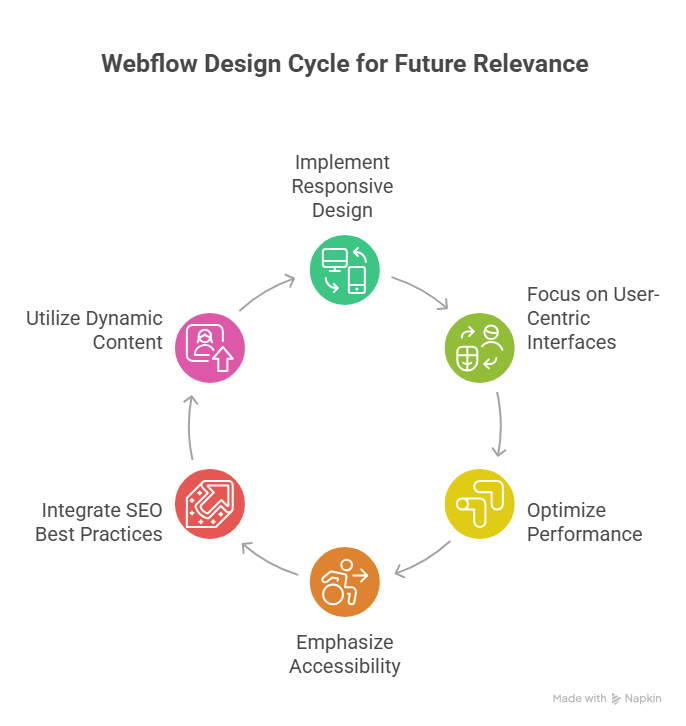
    Webflow practices that will remain relevant beyond 2026 focus on clean, responsive web design, seamless UX, scalable frameworks, and SEO-friendly structures. Prioritizing professional development, ongoing maintenance, and analytics-driven improvements ensures marketing sites and landing pages deliver consistent conversion, ROI, and long-term value for B2B, SaaS, and e-commerce businesses. 

    Investing in professional development ensures your webflow site remains efficient and adaptable. From maintaining design systems and templates to leveraging animations and landing page best practices, ongoing support and maintenance make a measurable difference. For instance, professional agencies may charge anywhere from $2,000–$5,000 for a single high-quality marketing site or redesign, reflecting the value of strategic UX, integrated analytics, and SEO optimization. 

    This blog will explore webflow practices that will remain relevant beyond 2026, highlighting how marketers and designers can unlock long-term success. You’ll learn which best practices, design frameworks, and technical choices support high-performing webflow sites, improve user experience, and ensure your marketing teams achieve sustained ROI well into the future. 

    Webflow Practices Every Web Designer Should Follow Beyond 2026 

    Webflow Practices Every Web Designer Should Follow Beyond 2026 

    Creating webflow sites that remain relevant and high-performing beyond 2026 requires a thoughtful combination of design, technical strategy, and workflow optimization. Whether you are a webflow agency or an independent designer, following proven practices ensures your projects are scalable, maintainable, and conversion-focused, particularly for B2B SaaS companies and SaaS marketing teams. 

    Prioritize Scalable and Maintainable Webflow Development 

    A scalable webflow development approach allows your webflow project to grow alongside your client’s business. This includes structured CMS collections, reusable components, and clear naming conventions. Emphasizing maintainability helps both non-technical marketers and web designers manage content without breaking functionality. Platforms like webflow offer built-in tools to unlock additional features, reducing reliance on external plugins and streamlining workflows for redesigns or migrations to webflow. 

    Optimize Performance and SEO for Every Webflow Site 

    Performance and SEO are critical for B2B and SaaS teams targeting high-converting audiences. Optimizing core web vitals, compressing media, and structuring URLs properly enhances website experience platforms for users and search engines alike. Implementing 301 redirects during redesigns and ensuring proper localization supports global reach, while analytics integration allows teams to measure ROI effectively. 

    Design with User Experience and Brand Identity in Mind 

    Webflow design should balance aesthetic appeal with functional UX. Adopting a design-first mindset ensures web experiences reflect the client’s brand identity while supporting intuitive navigation and conversion-focused layouts. Keeping up with web design trends, exploring design ideas from the webflow community, and referencing top webflow projects can inspire innovative solutions.using templates strategically and built-in webflow features helps web designers deliver consistent, high-quality results for B2B SaaS companies and ecommerce websites. 

    Embrace No-Code Workflows and Webflow Community Resources 

    No-code tools like webflow streamline the workflow, allowing web designers to focus on strategy and UX rather than complex coding. Engaging with the webflow community, reading the webflow blog, and following platform updates help teams stay ahead in what’s next for website builders and web experiences. For SaaS websites or marketing sites, this ensures both performance and scalability while empowering marketing teams to maintain control without relying solely on technical staff. 

    Get Started For Free With Smart Webflow SEO Strategies 

    Implementing effective SEO strategies in Webflow doesn’t have to be complex or costly. By focusing on performance and SEO from the start, you can transform your webflow site into a polished, high-converting platform. These strategies are especially valuable for B2B SaaS companies and growing teams who want to convert visitors into customers while keeping scalability in mind. 

    Step 1: Optimize SEO and Performance from Day One 

    Ensuring performance and SEO go hand-in-hand is crucial. Webflow allows you to manage metadata, alt attributes, and semantic markup seamlessly. Teams that need content at scale can also integrate tools like Contentful or APIs to manage content efficiently without sacrificing speed. Minimalist design combined with fast load times improves user experience and positively impacts search engine rankings. 

    Step 2: Choose the Right Structure for Long-Term Growth 

    Choosing the right CMS structure and layout ensures your site continues to evolve as your business grows. For B2B SaaS companies, this means designing for scalability in mind, building templates that support multiple products or landing pages, and maintaining polished user experience for all visitors. Launching a new webflow site with these principles reduces the need for frequent redesigns. 

    Step 3: Implement Tracking and Analytics 

    To convert visitors into customers, tracking is essential. Integrate analytics to monitor SEO performance, user behavior, and traffic sources. Teams who want actionable insights can use these metrics to refine content strategy, optimize internal linking, and improve on-page SEO elements without relying solely on external consultants. 

    Step 4: Get Started for Free and Iterate 

    Webflow offers the ability to get started for free, allowing marketers and web designers to test SEO strategies without upfront investment. Begin with foundational best practices, track results, and iterate based on performance. By following these steps, growing teams can maintain a site that performs well for both users and search engines while positioning their brand for long-term success. 

    Conclusion 

    Sustaining a high-performing webflow site beyond 2026 requires a careful balance of design, technical strategy, and ongoing optimization. By prioritizing scalable development, polished UX, SEO and performance, and no-code workflows, you can ensure your marketing sites and SaaS platforms remain competitive and deliver consistent ROI. Leveraging analytics, maintaining design systems, and following best practices allows both web designers and growing teams to convert visitors into customers while reducing the need for frequent redesigns. 

    Whether you are launching a new webflow site or planning a redesign, these strategies support long-term growth, brand identity, and user experience. Webflow’s flexibility, combined with professional guidance, ensures your projects continue to evolve seamlessly alongside your business. 

    if you want expert support to implement these practices and unlock your site’s full potential, why not contact Integriti Studio today? 

    Frequently Asked Questions (Webflow Practices That Will Remain Relevant Beyond 2026 )

    Is Webflow still relevant in 2025?

    Yes Webflow is still relevant in 2025. It continues growing in adoption, powering hundreds of thousands of sites with a rising CMS market share and strong no-code design appeal. Its AI, design flexibility, and increasing enterprise use keep it meaningful in web development today.

    What is the future of Webflow?

    The future of Webflow looks strong and innovative beyond 2025. It will keep expanding AI-driven design, automation, and content tools, making websites smarter and faster to build. Webflow is also improving performance, security, enterprise features, CMS flexibility, and integrations, positioning itself as a major no-code/low-code platform for business and advanced web projects.

    What are the web design trends in 2026?

    In 2026 web design trends, expect AI-driven personalization, immersive 3D/AR experiences, voice UI, and micro-animations for engagement. Minimal, performance-first layouts, responsive mobile-first design, and eco-friendly websites will also dominate. Bold typography, organic shapes, and human-centred interfaces are shaping modern aesthetics.

    Is there anything better than Webflow?

    Yes there are platforms often considered “better” than Webflow for specific needs. For example, Wix and Squarespace are easier for beginners with drag-and-drop simplicity, WordPress offers unmatched flexibility with plugins, and Framer gives strong design tools; other options like Webstudio also compete closely.

  • Building A Shopify Store Structure That Supports Sustainable Growth 

    Building A Shopify Store Structure That Supports Sustainable Growth 

    Building A Shopify Store Structure That Supports Sustainable Growth

    Why do some ecommerce brands grow steadily on Shopify while others struggle to scale despite strong products? The answer often lies in how your shopify store is structured, optimized, and maintained over time. A high-performing shopify setup goes beyond visuals it reflects strategic planning, clean architecture, and development choices that support sustainable growth as your business evolves. 

    Building a Shopify store structure that supports sustainable growth requires strategic planning, scalable design, and ongoing optimization. By focusing on performance, SEO, user experience, and professional maintenance, you ensure your Shopify store can handle growth, improve conversions, and support long-term ecommerce success. 

    Website performance is shaped by multiple factors working together, including design consistency, technical structure, load efficiency, and how well your store is built to optimize both search visibility and user experience. Professional development ensures your shopify store remains scalable, secure, and aligned with modern seo and scalability requirements. Strong design, ongoing support, and structured maintenance directly improve conversion and protect long-term performance. Many businesses typically invest a few hundred dollars per month in optimization and support far less than the cost of rebuilding a poorly structured store later. 

    Building a scalable Shopify store structure for sustainable ecommerce growth 

    Building a scalable Shopify store structure for sustainable ecommerce growth 

    Why scalability matters for Shopify success 

    When building a scalable Shopify store, the goal is to create a foundation that supports sustainable ecommerce growth without frequent overhauls. A scalable Shopify store ensures your infrastructure can handle increased traffic, a growing product catalog, and higher order volumes, while maintaining speed, security, and a seamless user experience. Planning for scalability from the start reduces future costs and prevents disruptions as your business expands. 

    Core principles for building a scalable Shopify store 

    1. Modular store architecture: Use flexible templates and modular sections that allow you to add new products, collections, and pages without redesigning the entire site. 
    1. Optimized apps and integrations: Choose apps that integrate efficiently with your store and avoid unnecessary plugins that can slow performance or create conflicts. 
    1. Performance and SEO focus: Ensure product pages, collections, and checkout workflows are optimized to improve load speed and conversion, while aligning with shopify’s SEO best practices. 

    Sustainable ecommerce practices in store design 

    Incorporating sustainable business practices into your store can enhance brand reputation and appeal to eco-conscious consumers. Examples include highlighting sustainable products, using energy-efficient hosting, and reducing digital waste. A sustainable ecommerce approach not only supports environmental responsibility but also builds trust with a loyal customer base. 

    Strategies to scale your Shopify store effectively 

    To scale your Shopify store, invest in professional development services to ensure long-term stability. Regularly review workflows, optimize apps and integrations, and monitor analytics to inform decisions. By building with scalability in mind, your store can grow organically, improve customer retention, and achieve ecommerce success over time. 

    Optimizing Shopify store user experience SEO and conversion scalability 

    Creating a scalable Shopify store isn’t just about adding products it’s about ensuring every aspect of your store drives ecommerce success, improves customer retention, and supports long-term growth. Optimizing user experience (UX), SEO, and conversion processes in a structured, step-by-step manner allows you to scale a Shopify store efficiently while maintaining performance and engagement. 

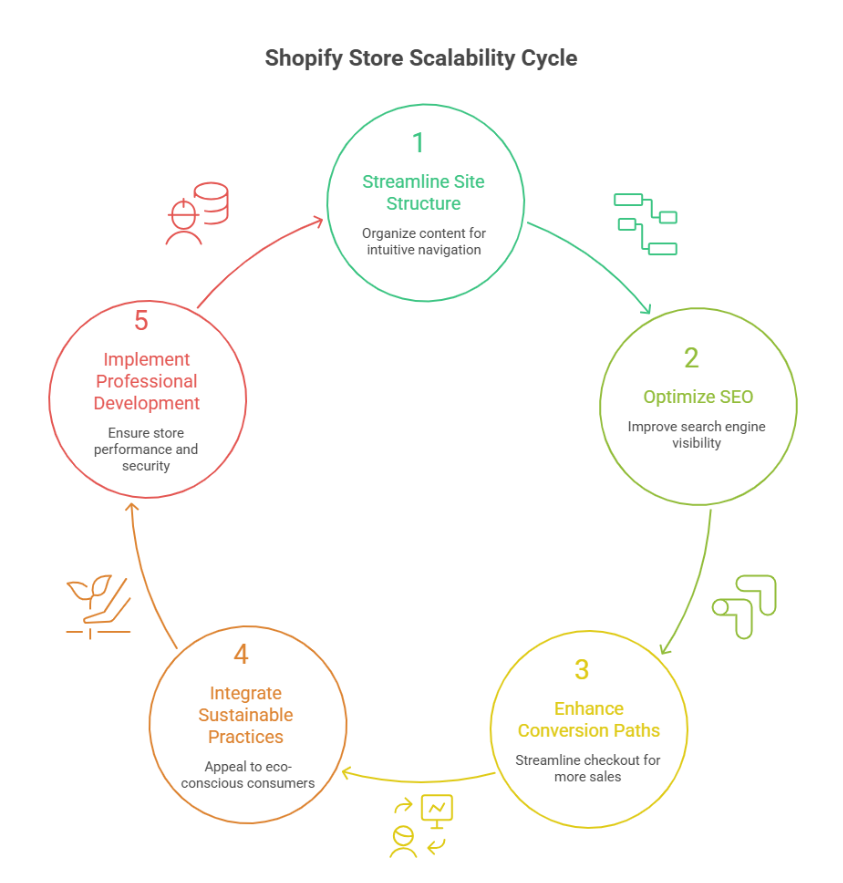
    Step 1: Streamline site structure for better user experience 

    A modular layout makes navigation intuitive and scalable. Organize collections, menus, and product pages logically to ensure a seamless browsing experience. Highlight sustainable products and eco-conscious messaging to appeal to eco-conscious shoppers, improving trust and encouraging repeat purchases. 

    Step 2: Optimize SEO for discoverability 

    Use shopify’s built-in SEO features and carefully structured URLs to improve search rankings. Optimize product titles, meta descriptions, and images to enhance visibility. This helps attract new traffic while also supporting organic growth from existing customers. Implementing proper SEO practices ensures your scalable Shopify store grows sustainably without losing relevance. 

    Step 3: Enhance conversion paths 

    Focus on streamlining checkout flows, optimizing product pages, and improving page speed to maximize conversion. Integrate apps and analytics tools to monitor customer behavior and test actionable strategies. This step ensures your building a scalable Shopify plan converts visitors into loyal buyers efficiently. 

    Step 4: Integrate sustainable business practices 

    Show your commitment to sustainable operations, whether through eco-friendly packaging, energy-conscious hosting, or messaging about sustainable products. Incorporating sustainable practices reinforces brand values, builds a loyal customer base, and supports long-term scalability. 

    Step 5: Implement professional development services 

    Leverage expert development services to audit, optimize, and maintain your store. Regular updates, testing, and apps and integrations ensure your scalable Shopify store remains fast, reliable, and capable of handling growth without compromising user experience or SEO. 

    Conclusion 

    Building a Shopify store that truly supports sustainable growth requires more than attractive design or product variety. It demands a carefully scalable Shopify store structure, optimized user experience, strong SEO, and professional maintenance. By focusing on modular layouts, efficient apps and integrations, streamlined conversion paths, and eco-conscious practices, you ensure your store can handle increasing traffic, improve customer retention, and achieve long-term ecommerce success. Regular audits and professional development services further safeguard performance, allowing your store to grow organically while maintaining reliability, speed, and engagement. 

    Every strategic choice from highlighting sustainable products to optimizing checkout flows contributes to building a sustainable business that appeals to both eco-conscious and loyal shoppers. By combining performance, scalability, and sustainability, your Shopify store becomes a robust platform ready to evolve with your business needs. 

    if building a truly scalable, sustainable Shopify store could transform your growth, why not reach out to Integriti Studio and see how they can help you achieve it?

    Frequently Asked Questions (Building A Shopify Store Structure That Supports Sustainable Growth )

    How to make your Shopify store grow?

    To grow your Shopify store, focus on strong product positioning, fast and mobile-optimized design, SEO-friendly structure, and data-driven marketing. Use email and paid ads strategically, improve conversion rates, analyze customer behavior, and continuously optimize checkout, apps, and performance for long-term scalable growth.

    What is the organizational structure of Shopify?

    Shopify follows a decentralized, product-led organizational structure. Teams are arranged around functions like product development, engineering, design, marketing, sales, and operations. This structure promotes cross-functional collaboration, faster decision-making, innovation, and scalability while supporting millions of merchants globally.

    How to make a retail store more sustainable?

    Make a retail store sustainable by using eco-friendly materials, reducing energy consumption, minimizing waste, sourcing locally, offering reusable packaging, promoting recycling, and adopting green supply chain practices.

    Is Shopify eco-friendly?

    Yes Shopify is considered eco-friendly in several ways. Its platform runs on renewable-energy cloud hosting that is carbon neutral, and it offers tools like the Planet app for carbon-neutral shipping. Shopify also supports sustainable packaging, carbon offset programs, and eco-focused merchant integrations.

  • Common WordPress Website Issues That May Impact Visibility In  2026 

    Common WordPress Website Issues That May Impact Visibility In 2026 

    Common Wordpress Website Issues That May Impact Visibility In 2026

    Why do some businesses struggle to gain visibility on WordPress while others consistently perform better in search results? The difference often lies in how a wordpress website is built, managed, and maintained over time. As 2026 approaches, even a well-designed wordpress site can lose traction due to overlooked technical factors, bloated plugins, weak seo, or poor decisions made inside the admin panel. 

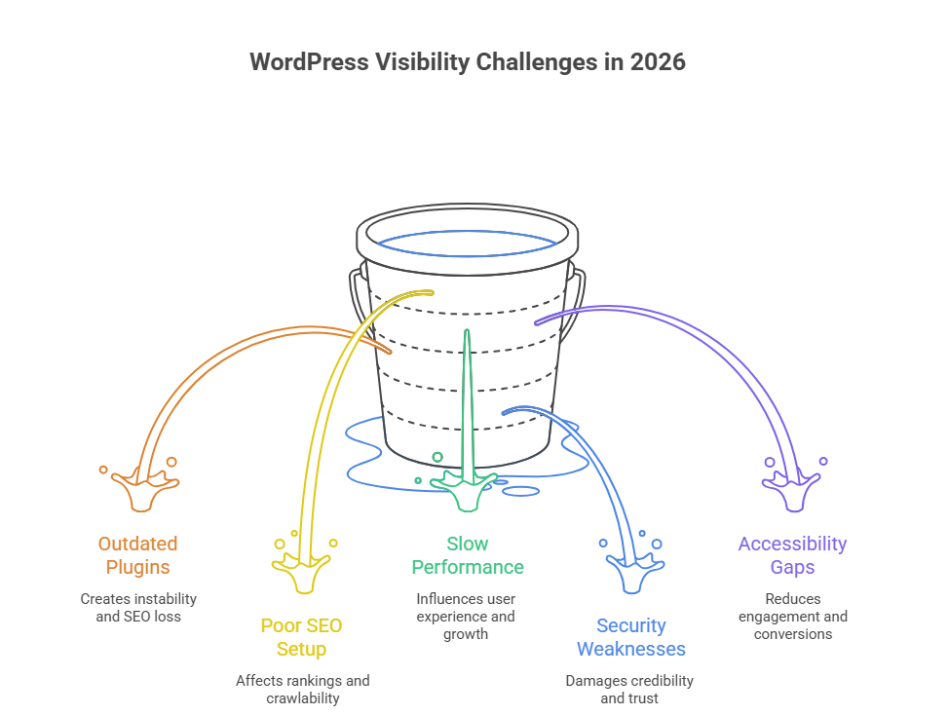
    Common WordPress website issues impacting visibility in 2026 include outdated plugins, poor SEO setup, slow performance, security weaknesses, and accessibility gaps. Without regular updates, professional maintenance, and technical audits, even a well-built WordPress site can lose search engine rankings and user trust. 

    Website performance is influenced by multiple elements working together, including code quality, design structure, hosting environment, and ongoing maintenance. Professional development ensures these components remain aligned, helping you fix issues before they impact rankings or credibility. Smart design choices, reliable support, and routine maintenance directly improve user experience and long-term growth. For example, businesses often invest a few hundred dollars monthly for maintenance and updates, compared to the much higher cost of repairing damage later. 

    Common WordPress site SEO issues affecting visibility in 2026 

    Common WordPress site SEO issues affecting visibility in 2026

    Understanding common WordPress SEO challenges 

    Many visibility problems stem from common WordPress configuration gaps that site owners overlook as their platform grows. These common WordPress issues are not always obvious but can significantly affect rankings, crawlability, and trust signals. For wordpress sites in 2026, search engines are far less forgiving of technical weaknesses, especially when common WordPress practices are not followed correctly. 

    Technical errors that weaken search performance 

    One major issue is broken URLs leading to 404 errors, which interrupt crawl paths and frustrate users. Another frequent concern is outdated plugins, often caused by delayed regular updates, creating instability and SEO loss. Poorly managed plugin or theme choices can also introduce compatibility issues, reducing site efficiency and visibility. 

    Security and accessibility impact on SEO 

    Search engines increasingly evaluate wordpress security as part of ranking signals. Unaddressed security vulnerabilities create a security risk that can damage credibility. At the same time, website accessibility and unresolved accessibility issues affect usability, especially on mobile devices, reducing engagement and conversions. 

    Strategic approach for long-term visibility 

    A structured review of the wordpress core, supported by a skilled wordpress developer, ensures your business website remains stable, compliant, and competitive. Addressing common WordPress mistakes through proactive audits helps protect SEO performance and supports sustainable growth beyond 2026. 

    Plugins admin errors 404 problems and fixes for WordPress 

    Step 1: Review plugin and admin configuration 

    Begin by checking settings inside the wordpress admin area. Many issues start from common mistakes such as activating a plugin or theme that conflicts with the wordpress core. Ensure the configuration supports website accessibility and does not introduce early technical gaps. 

    Step 2: Identify causes of 404 errors 

    Next, audit pages and links producing 404 errors. These often occur after plugin removals, URL structure changes, or failed updates. Persistent 404 issues reduce trust and impact user flow, especially on mobile devices. 

    Step 3: Update or replace outdated plugins 

    Running outdated plugins increases maintenance complexity and creates a serious security risk. Apply regular updates carefully, confirming compatibility before activation. If plugins are no longer supported, replace them with stable alternatives. 

    Step 4: Resolve compatibility and accessibility issues 

    Multiple tools can create compatibility issues that affect layouts, forms, and navigation. Addressing accessibility issues ensures your business website remains usable for all audiences and compliant with evolving standards. 

    Step 5: Apply long-term fixes with professional support 

    Consistent regular updates and expert oversight from a wordpress developer ensure stability. This structured approach prevents admin errors, protects performance, and supports sustainable growth as WordPress environments become more complex. 

    Conclusion 

    As WordPress continues to evolve, visibility challenges in 2026 will be less about the platform itself and more about how strategically it is managed. From outdated plugins and unresolved 404 errors to security gaps and accessibility limitations, small technical oversights can quietly erode search performance and user trust. A successful WordPress strategy requires more than basic setup it demands consistent updates, informed decision-making, and a proactive approach to SEO, security, and performance. 

    When plugin management, admin configurations, and core updates are handled professionally, your website remains stable, accessible, and competitive. Investing in expert support today not only prevents costly fixes tomorrow but also protects long-term growth, credibility, and conversion potential for your business. 

    if these issues are already impacting visibility for many sites, isn’t it time to ask whether partnering with Integriti Studio could be the smarter move for your WordPress success? 

    Frequently Asked Questions (Common Wordpress Website Issues That May Impact Visibility In 2026)

    What are common WordPress issues?

    Common WordPress issues include slow website speed, plugin or theme conflicts, outdated core, plugins, or themes, broken links, security vulnerabilities, white screen of death, database connection errors, poor SEO optimization, and incompatible updates. Regular maintenance, updates, and backups help prevent these problems.

    Is WordPress still in demand in 2025?

    Yes WordPress is still in demand in 2025. It powers about 43 % of all websites worldwide and holds over 60 % of the CMS market, making it the most widely used platform for blogs, business sites, and e‑commerce with WooCommerce.

    Is there a problem with WordPress right now?

    No WordPress itself isn’t having a major global outage right now; status checks show WordPress.com services are up and user reports don’t indicate widespread downtime. However, many individual WordPress sites still face issues like update‑related errors, plugin conflicts, or admin access problems.

    What is the most vulnerable part of a WordPress website?

    The most vulnerable part of a WordPress website is third-party plugins and themes. Poorly coded or outdated plugins often contain security flaws that attackers exploit. Weak login credentials, outdated WordPress core files, and improper permissions also increase the risk of hacking and data breaches.

  • Strategic Considerations For Webflow Projects Heading into 2026 

    Strategic Considerations For Webflow Projects Heading into 2026 

    Why do some webflow sites outperform others in both user experience and conversion? The answer often lies in factors influencing website performance load times, semantic structure, seamless integration, and robust workflow management all play critical roles. As businesses look toward 2026, optimizing your webflow site is no longer optional; it’s essential for measurable results in SEO, UX, and conversion. 

    To succeed with Webflow projects in 2026, focus on optimizing user experience, SEO, and conversion through efficient workflows, semantic layouts, and seamless integrations. Regular audits, performance monitoring, and professional support ensure measurable results, while scalable design and maintenance keep your Webflow site fast, accessible, and future-ready. 

    Professional development remains a cornerstone of success. Investing in skilled webflow designers ensures layouts are both visually compelling and technically sound. Beyond initial design, ongoing support, maintenance, and performance audits drive long-term value, helping you optimize your website efficiently. Even a small investment in these services—typically starting around a few thousand dollars can dramatically improve speed, accessibility, and scalability, delivering a tangible ROI. 

    This blog will explore strategic considerations for webflow projects heading into 2026, covering workflow optimization, SEO best practices, layout and UX improvements, integration strategies, and practical audit techniques. By the end, you’ll understand how to leverage webflow for a powerful, measurable online presence that performs today and scales tomorrow. 

    Key Webflow SEO Strategies For Scalable 2026 Projects 

    Key Webflow SEO Strategies For Scalable 2026 Projects 

    Conduct a Comprehensive Migration or Redesign Audit 

    Before migrating to Webflow or planning a webflow redesign, it’s essential to evaluate your current website. Identify common mistakes, technical debt, and usability issues that could impact SEO and user experience. A thorough migration checklist ensures your Webflow project aligns with business goals, improves online presence, and sets the stage for scalable growth. 

    Evaluate Core Web Vitals and Load Times 

    Improving core web vitals is critical for SEO and visitor retention. Focus on metrics like largest contentful paint, cumulative layout shift, and seconds to load. Use lazy loading, optimized CSS, and streamlined site structure to enhance performance and ensure your Webflow site delivers measurable results in search engines. 

    Optimize On-Page SEO and Content Readability 

    Webflow SEO best practices include semantic HTML, structured headings, alt text for images, and internal linking. Prioritize readability and accessibility to meet customer expectations and improve user experience. AI-driven tools and plugins can help optimize your content for search engines while maintaining a scalable design system. 

    Build a Scalable Framework With Best Practices 

    A scalable Webflow project requires a structured workflow and a consistent design framework. Use Figma or design system guidelines to standardize layouts and responsive design. Focus on accessibility, responsive design, and avoiding overuse of plugins to maintain long-term performance and SEO capabilities. 

    Focus on Conversion and User Experience 

    Turning visitors into customers requires more than technical optimization. Align your webflow development with usability principles, business goals, and design trends. Ensure intuitive navigation, clear calls-to-action, and seamless UX to maximize conversion while maintaining performance and accessibility. 

    Track Analytics and Continuously Optimize 

    Monitoring analytics allows you to refine your Webflow site over time. Track SEO metrics, user engagement, and load times to optimize your website continually. Regular audits and AI-driven performance optimization ensure your online presence remains powerful, measurable, and ready for 2026 trends. 

    Avoid Common Mistakes When Migrating To Webflow Sites 

    Migrating to Webflow can unlock a powerful Webflow project with better scalability, improved SEO capabilities, and enhanced user experience, but it requires careful planning. Avoiding common mistakes ensures your site meets business goals, improves online presence, and converts visitors into customers. Below is a step-by-step guide for a successful migration. 

    Step 1: Conduct a Migration Checklist and Audit 

    Before migrating to Webflow, start with a migration checklist to evaluate your current website. Identify technical debt, broken links, and usability issues. Analyze core web vitals like largest contentful paint and seconds to load to ensure optimal performance. Review webflow SEO, on-page SEO, and accessibility compliance to prevent future issues. 

    Step 2: Plan a Scalable Webflow Framework 

    A scalable Webflow project requires a clear design system and structured framework. Use Figma to standardize layouts, CSS, and responsive design. Prioritize accessibility and readability to improve UX and meet customer expectations. Avoid overloading your site with unnecessary plugins or inconsistent design patterns. 

    Step 3: Optimize Performance and SEO 

    Improving core web vitals, performance and SEO, and on-page SEO ensures your Webflow site ranks well in search engines. Implement lazy loading, clean site structure, and semantic HTML. Use AI-driven tools to optimize content, metadata, and readability. Proper optimization converts more visitors into customers. 

    Step 4: Align With Business Goals and Design Trends 

    Your webflow redesign should align with business goals and current design trends. Maintain usability, intuitive navigation, and clear CTAs. A scalable Webflow project allows you to add new pages and content while maintaining accessibility and SEO best practices. 

    Step 5: Monitor, Audit, and Continuously Improve 

    After migrating to Webflow, continually audit your site structure, core web vitals, and SEO performance. Track analytics to optimize user experience and refine the workflow. Continuous improvement ensures your Webflow site remains fast, accessible, and scalable, delivering measurable business results. 

    Conclusion 

    Successfully executing a Webflow project in 2026 requires more than just moving your website it demands strategic planning, scalable design frameworks, and a focus on SEO, accessibility, and user experience. From conducting thorough migration audits to optimizing core web vitals, implementing webflow SEO best practices, and maintaining a consistent design system, every step contributes to measurable results in conversion, performance, and long-term scalability. 

    By aligning your webflow redesign with business goals, design trends, and accessibility standards, and continuously monitoring analytics, your site can remain fast, responsive, and fully optimized for both visitors and search engines. Leveraging professional development and AI-driven tools ensures that your Webflow site not only meets today’s standards but is also prepared to adapt to the evolving demands of 2026. 

    Frequently Asked Questions (Strategic Considerations For Webflow Projects Heading into 2026)

    What are the 7 major steps to designing a webpage?

    The 7 major steps to designing a webpage are: 1) Define goals and target audience, 2) Plan site structure and layout, 3) Create wireframes and mockups, 4) Design visuals and branding, 5) Develop the website with coding or CMS, 6) Test functionality and responsiveness, 7) Launch and maintain.

    What are the 5 major components of a web page?

    The 5 major components of a web page are: 1) Header – contains navigation and branding, 2) Content main text, images, or videos, 3) Sidebar optional navigation or additional info, 4) Footer – contact info and links, 5) Call-to-Action (CTA) buttons or forms driving user interaction.

    What makes Webflow a strategic choice in 2026?

    Webflow allows rapid, no-code development, highly customizable designs, and scalable CMS options, making it ideal for startups and agencies seeking efficiency and innovation.

    What are the 7 C’s of a website?

    The 7 C’s of a website are: Content relevant information, Context design and layout, Community user interaction, Customization personalized experience, Communication two-way engagement, Connection links to other sites, and Commerce – online transactions. Together, they ensure an effective website.

  • Shopify Platform Shifts Store Owners Should Be Aware of 

    Shopify Platform Shifts Store Owners Should Be Aware of 

    Shopify Platform Shifts Store Owners Should Be Aware of

    Why do some Shopify businesses grow smoothly while others struggle to keep up? The answer often lies in how well you understand the platform changes shaping performance behind the scenes. As a store owner, you are not just managing products you are managing technology, expectations, and long-term scalability across your ecommerce operation. 

    Shopify is constantly evolving, and store owners must adapt to platform shifts like AI integration, app updates, checkout optimization, and mobile improvements. Staying updated prevents common mistakes, enhances customer experience, boosts conversion, and ensures your ecommerce store remains scalable, secure, and competitive in 2025 and beyond. 

    Platform updates, evolving development standards, and smarter use of ai are directly influencing speed, stability, and revenue potential on shopify. Factors such as theme structure, app usage, code quality, and ongoing maintenance all play a role in how efficiently every store performs. Professional development is no longer optional; it directly impacts reliability, security, and future growth. 

    Well-planned design, proactive support, and continuous maintenance create real business value. For example, a professionally maintained shopify store may involve a modest monthly investment often comparable to routine operational costs but it prevents costly issues and performance loss over time. 

    This blog explores the key shopify platform shifts store owners should be aware of, explains how these changes affect decision-making, and outlines smarter development choices that help your business stay competitive as shopify continues to evolve. 

    Shopify ecommerce shifts every store owner must understand today 

    Shopify ecommerce shifts every store owner must understand today 

    Mobile Optimization and Seamless Shopping 

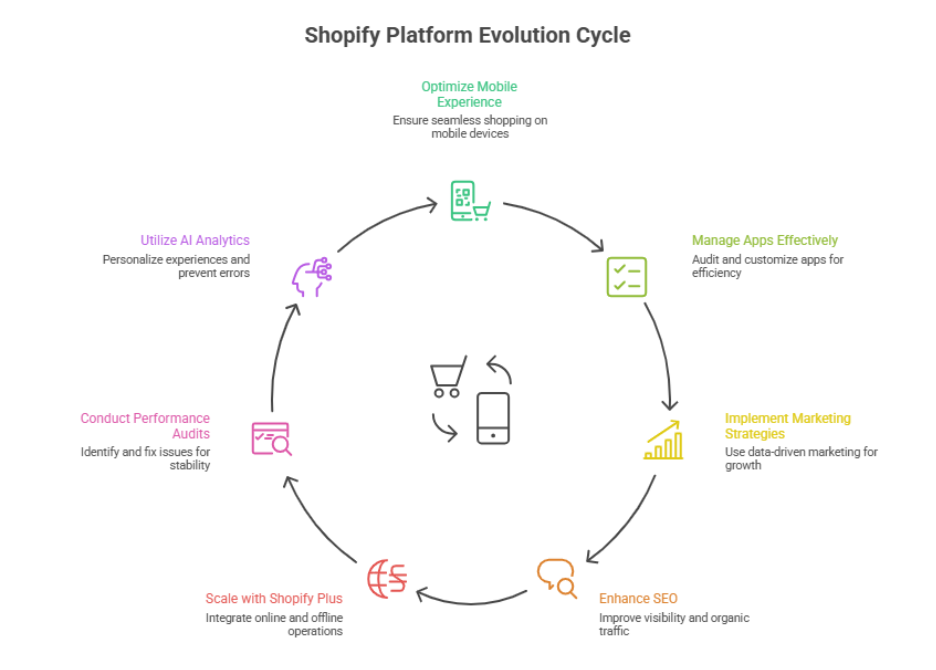
    Mobile optimization is critical for Shopify store owners. Many store owners make the mistake of focusing only on desktop, leading to slow load times and a poor shopping experience. Optimizing your site with tools like Google PageSpeed Insights and Shopify’s mobile features ensures a seamless experience, improving customer trust and conversions. 

    App Management and Customization 

    Using Shopify apps enhances functionality, but many apps or non-essential integrations can cause issues such as performance issues or technical issues. New store owners should regularly audit app usage and focus on customizable solutions that align with business needs while minimizing the total cost of ownership. 

    Upsells, Paid Ads, and Shopify Marketing 

    Effective Shopify marketing includes upsells and paid ads, but store owners make mistakes when these tools are implemented without analyzing key Shopify metrics. Using data-driven strategies helps you make informed decisions, drive shopify orders, and improve customer experience. 

    SEO and Search Engine Optimization 

    Proper search engine optimization is essential for a shopify store’s visibility. Avoid common Shopify mistakes like cluttered pages, poor store look, or missing meta data, which causes issues with rankings. Optimizing product pages, descriptions, and site structure enhances organic traffic and supports improving sales. 

    Shopify Plus and Unified Commerce Platforms 

    Leading Shopify merchants often move to Shopify Plus or unified commerce platforms to integrate in-store and online operations on a single platform. This setup helps Shopify merchants scale efficiently, reduce technical issues, and provide a seamless customer experience across all channels. 

    Performance Audits and Analytics Tools 

    Regular audit of your tech stack and site performance is crucial. Using tools like analytics dashboards enables many store owners to identify common Shopify mistakes and optimize your online store’s performance, ensuring your store’s functionality and revenue potential remain strong. 

    AI optimization analytics improving Shopify store customer experience today 

    Improving your Shopify store with AI optimization analytics can be approached in clear, sequential steps that ensure every visitor has a seamless and engaging experience. 

    Step 1: Centralize Your Analytics in One Platform 

    The first step for any Shopify store owner is to integrate all performance analytics and AI-driven insights into one platform. This centralization provides a comprehensive view of your store’s health, including core web vitals, page load times, and user behavior. Having a single, unified dashboard allows you to monitor traffic patterns and detect potential issues early, helping you avoid mistakes that could create a negative impact on customer experience. 

    Step 2: Understand How Customers Navigate Your Store 

    Next, analyze how visitors move through your store. AI tools can reveal which pages receive the most attention, where customers hesitate, and which paths lead to checkout. This insight allows you to structure your site so customers to find products quickly, making it easier for them to explore your offerings. By understanding these patterns, you can design intuitive navigation that naturally guides visitors toward the products they are most interested in. 

    Step 3: Personalize the Shopping Experience 

    Once navigation insights are in place, the next step is to leverage AI to deliver personalization. By analyzing browsing history, purchase trends, and product preferences, AI can recommend items across the entire product category and highlight products most likely to move into products to cart. Personalization ensures that each visitor encounters content tailored to their needs, while also helping you showcase your products in a way that maximizes engagement and conversions. 

    Step 4: Prevent Errors and Maintain Performance 

    Monitoring site performance continuously is critical. AI analytics can alert you to slow-loading pages, broken links, or checkout issues before they affect customers. By staying proactive, you can avoid breaking essential processes, ensuring that every transaction and interaction runs smoothly. Maintaining optimal core web vitals prevents frustration and helps maintain a positive perception of your store, allowing you to help customers make decisions confidently. 

    Step 5: Optimize Product Visibility and Conversions 

    With a stable and well-performing site, the next step is to optimize product placement and recommendations. AI insights allow you to feature top-selling items across the entire product category while suggesting complementary products that encourage additional purchases. By doing this strategically, customers to find what they need becomes effortless, increasing the likelihood that items move into products to cart. This step ensures that your store is both engaging and conversion-focused. 

    Step 6: Continuously Improve the Customer Experience 

    Finally, AI optimization is not a one-time task. Continuous monitoring of performance analytics allows you to refine your strategy over time. By regularly assessing customer behavior, updating recommendations, and testing new layouts, you can ensure your store consistently delivers a seamless experience. This ongoing process helps you avoid mistakes, prevent create a negative user experience, and consistently help customers make confident purchase decisions, all from one platform. 

    Conclusion 

    Navigating Shopify’s evolving landscape requires more than just managing products it demands understanding platform shifts, optimizing performance, and leveraging AI-driven insights to enhance the customer experience. From mobile optimization and app management to personalized AI recommendations, each element contributes to smoother navigation, higher conversions, and a scalable, secure store. By continuously auditing performance, analyzing customer behavior, and making data-driven decisions, store owners can avoid mistakes, maintain core web vitals, and ensure visitors are guided effortlessly from discovery to products to cart. 

    Investing in professional support and proactive maintenance may seem like an added cost, but it delivers long-term value by preventing downtime, technical issues, and creating a negative user experience. Ultimately, stores that embrace AI optimization analytics and integrate performance analytics into one platform are best positioned to help customers make confident purchasing decisions and showcase their offerings across the entire product category efficiently. 

    if you want your Shopify store to stay competitive and truly maximize its potential, why not reach out to Integriti Studio and see how they can transform your customer experience today? 

    Frequently Asked Questions (Shopify Platform Shifts Store Owners Should Be Aware of)

    What are the issues with Shopify?

    Common issues with Shopify include high transaction fees without Shopify Payments, limited customization compared to open-source platforms, reliance on paid apps for advanced features, slower loading for large stores, and SEO limitations. Additionally, migrating away from Shopify can be complex due to platform-specific data and design structures.

    How to maintain a Shopify store?

    To maintain a Shopify store, regularly update products, prices, and inventory, monitor site performance and loading speed, update apps and themes, back up store data, optimize SEO, ensure smooth payment and checkout processes, and monitor security. Regularly reviewing analytics helps improve user experience and sales.

    What are the challenges of Shopify store owners?

    Shopify store owners face intense competition, rising advertising costs, conversion optimization struggles, technical customization limits, app overdependence, inventory management complexities, cashflow pressure, and retention challenges.

    How do Shopify stores get traffic?

    Shopify stores get traffic through SEO-optimized content, social media marketing, paid ads like Google Ads or Facebook Ads, email marketing, influencer collaborations, and referral programs. Additionally, leveraging Shopify apps for analytics, retargeting, and promotions helps attract, engage, and convert visitors into customers effectively.

  • Preparing Your WordPress Website For Long-Term Changes After 2025 

    Preparing Your WordPress Website For Long-Term Changes After 2025 

    Preparing Your Wordpress Website For Long-Term Changes After 2025

    Why do some WordPress websites struggle with performance while others thrive? The answer often lies in the combination of underlying factors influencing website performance, from outdated plugins to poorly configured caching and slow page load times. If you want your WordPress site to remain competitive after 2025, understanding these elements is crucial. 

    To prepare your WordPress website for long-term changes after 2025, focus on regular updates to the WordPress core, plugins, and themes, implement strong website maintenance practices, optimize page load and user experience, and use professional development strategies. This ensures security, SEO performance, and a reliable online presence. 

    Professional development and careful attention to your WordPress core, plugins and themes, and page builders are no longer optional they directly impact your user experience, SEO, and the ability to keep your site secure from data loss or broken links. Even a live site with basic optimization can see significant gains with proper maintenance, including regular backups, security plugins, and performance optimization measures. For reference, professional WordPress maintenance and updates can range from a few hundred to over a thousand dollars annually, depending on the complexity of your website. 

    This comprehensive guide will walk you through everything needed to prepare your WordPress website for long-term success. You will learn how to update WordPress safely, manage plugins, enhance user experience, and implement website maintenance strategies that ensure your online presence remains strong well beyond 2025. 

    Choosing The Right WordPress Theme And Page Builder 

    Choosing The Right WordPress Theme And Page Builder

    Understand Theme Compatibility And Design Trends 

    Choosing a WordPress theme that aligns with the latest WordPress version and current design trends is crucial. Compatibility ensures smooth integration with plugins and avoids security risks or compatibility issues. A flexible theme also helps future-proof your WordPress website for 2025 and beyond, supporting long-term success. 

    Evaluate Page Builder Features And Flexibility 

    Selecting the right page builder simplifies content management while minimizing custom coding. Look for builders that integrate with the WordPress dashboard, support backup plugin workflows, and enable safe testing in maintenance mode. This ensures your WordPress speed and functionality remain consistent as your site grows. 

    Plan For Updates And Regular Maintenance 

    Even a strong theme and builder require consistent WordPress maintenance. Updating core WordPress, plugins, and themes while keeping a copy of your website is essential to prevent data loss. Proper WordPress backup routines and expert WordPress practices ensure your website remains secure, fast, and ready for long-term success. 

    Balance Design, Performance, And Future-Proofing 

    The ideal combination of theme and page builder should optimize user experience, WordPress powers, and WordPress speed while allowing flexibility for major updates. By planning ahead, you can future-proof your WordPress site, ensuring it stays secure, visually appealing, and functional well into 2025 and beyond. 

    Essential Steps To Maintain Your WordPress Website Effectively 

    Maintaining aWordPress website effectively is crucial for long-term success. Website owners who prioritize regular maintenance in 2025 can avoid downtime or data loss, improve WordPress speed, and keep up with evolving design trends. Below, we explain in steps how to maintain your WordPress site efficiently. 

    Step 1: Back Up Your Site Regularly 

    Before making any updates, always create a copy of your website. Regular WordPress backup ensures that in case of errors, hacks, or server issues, your site can be restored quickly. Use a reliable backup plugin to automate this process. Keeping multiple backups stored in secure locations is essential to protect your long-term success. 

    Step 2: Update WordPress Core, Themes, and Plugins 

    Keeping WordPress core updated is critical for security and performance. Update WordPress core and your WordPress theme regularly to prevent security risks and compatibility issues with plugins. Using maintenance mode while updating prevents visitors from experiencing a broken site. Always ensure your WordPress dashboard reflects the latest updates and check your WordPress version before applying major changes. 

    Step 3: Optimize WordPress Speed 

    WordPress speed directly affects user experience and search rankings. Optimize your site by implementing caching, compressing images, and reviewing your hosting environment. Keep your WordPress site fast across mobile devices by testing page load times and minimizing unnecessary scripts. 

    Step 4: Secure Your WordPress Site 

    Security is key to protecting your dedicated WordPress site. Limit access to your WordPress dashboard, use strong passwords, enable SSL, and monitor for potential security risks. Regular core WordPress updates and a proactive approach will help ensure your WordPress powers a safe browsing experience. 

    Step 5: Maintain Content and Design Trends 

    Updating your content and staying aligned with modern design trends helps website owners engage visitors effectively. Content management should include refreshing old posts, optimizing SEO, and ensuring your WordPress theme is visually appealing and responsive on mobile devices. 

    Step 6 : Test and Plan for Long-Term Success 

    Regular testing of site functionality, forms, and checkout processes ensures your website might perform smoothly under all scenarios. Keeping a log of updates, backups, and changes supports long-term success and allows website owners to plan future improvements confidently. 

    Step 7: Leverage Expert WordPress Support 

    While many tasks can be handled without coding knowledge, partnering with an expert WordPress developer can help with WordPress installation, theme customization, and major updates. This ensures your site remains secure, optimized, and ready to stay ahead in 2025. 

    Conclusion 

    Preparing your WordPress website for long-term changes after 2025 requires more than occasional updates. By carefully managing the WordPress core, themes, plugins, and page builders, implementing consistent backups, optimizing speed, maintaining security, and staying aligned with design trends, website owners can ensure long-term success. Regular testing, proactive maintenance, and leveraging expert support make your WordPress site resilient, fast, and future-ready. 

    With these strategies, your website won’t just survive it will thrive, providing a secure, seamless, and engaging experience for your visitors well beyond 2025. 

    Are you ready to make your WordPress site future-proof, or should you contact Integriti Studio to handle it for you? 

    Frequently Asked Questions (Preparing Your Wordpress Website For Long-Term Changes After 2025)

    How do you make changes to your WordPress website?

    To make changes to your WordPress website, log in to your WordPress dashboard, navigate to the section you want to edit (Pages, Posts, Appearance, or Plugins), make the desired changes using the editor or customizer, then save or publish your updates to reflect them live.

    How to redesign an existing WordPress website?

    To redesign an existing WordPress website, start by backing up your site, then choose a new theme or page builder. Update your layout, colors, and content as needed. Test functionality, responsiveness, and plugins, then launch the redesigned site while ensuring SEO and performance remain intact.

    What steps would you take to update or maintain a WordPress website?

    To update or maintain a WordPress website, regularly back up your site, update WordPress core, themes, and plugins, check for broken links, optimize performance, monitor security, and review content for accuracy. Testing changes before publishing ensures smooth functionality and long-term website stability.

    How do you stay current with the latest developments and updates to WordPress?

    To stay current with WordPress updates, regularly follow the official WordPress blog, subscribe to newsletters, join WordPress forums and communities, attend webinars or WordCamps, and monitor plugin and theme developer updates. Testing new features on a staging site also helps understand changes before applying them live.

  • Webflow In 2026 What Designers and Businesses Should Plan For 

    Webflow In 2026 What Designers and Businesses Should Plan For 

    Webflow In 2026 What Designers and Businesses Should Plan For

    Why do some websites convert better than others, even when they use the same website builders? The difference often comes down to factors influencing website performance: site speed, responsive layout, optimized SEO, clean integration, and the overall user experience. For designers and businesses preparing for 2026, understanding these factors is crucial to creating a scalable, high-performing Webflow site that drives measurable results. 

    Webflow in 2026 will demand a focus on scalable web design, seamless integration, and optimized user experience. Designers and businesses should prioritize professional development, leverage Webflow agencies for advanced projects, and invest in support, maintenance, and SEO to ensure high-performing Webflow sites that drive conversions and long-term growth. 

    Investing in professional development ensures you or your team can leverage the full potential of Webflow, from building landing pages that convert to crafting brand identity-driven web design. A small investment in skilled support, regular updates, and proper maintenance ranging from a few hundred to a few thousand dollars annually can prevent costly rebuilds, improve conversion, and save time over the long term. 

    This blog explores what designers, Webflow agencies, and businesses should plan for in 2026. You will learn how using Webflow effectively can enhance SaaS websites, B2B platforms, and marketing initiatives, while practical tips on setup, animation, HubSpot integration, and professional support demonstrate how smart web development choices support long-term business success. 

    Webflow Design Trends Every Agency Should Follow In 2026 

    Webflow Design Trends Every Agency Should Follow In 2026 

    Minimalist and Interactive Design 

    A minimalist design continues to dominate Webflow in 2026, emphasizing clean layouts, whitespace, and intuitive navigation. When paired with interactive websites, it creates engaging web experiences that capture attention without overwhelming visitors. Agencies leveraging technical Webflow features can implement subtle animations, hover effects, and dynamic interactions, ensuring Webflow websites feel modern, polished, and conversion-focused. 

    UX and UI Optimization 

    Strong UX design and UI refinement are essential for measurable results. Webflow has become a go-to platform for agencies because it allows seamless integration of analytics, core web vitals, and CRO tools. Optimized UX improves visitor retention and conversions, while intuitive UI simplifies website management for clients, marketers, and content teams, enhancing overall performance. 

    Scalable and Custom Development 

    As enterprise brands and B2B SaaS clients demand more complex websites, custom development within Webflow development becomes critical. Creating custom websites ensures projects are scalable, maintainable, and tailored to client needs. Agencies that combine templates with bespoke design deliver measurable results while reducing development time and supporting long-term growth. 

    Ecommerce and Enterprise Solutions 

    With the growth of Webflow enterprise partner programs, agencies can build ecommerce and high-value custom websites for enterprise clients. Modern Webflow websites support secure integration, robust analytics, and optimized performance. By focusing on speed, usability, and conversion, top Webflow agencies ensure every website project meets client objectives and long-term business goals. 

    Community and Knowledge Sharing 

    The Webflow community remains an invaluable resource for design agencies and development agencies. From free starter plan templates to detailed case studies, connecting with peers helps teams adopt the best Webflow design practices, solve technical challenges, and deliver high-quality website design and UX design across modern websites. 

    Best Webflow Approach To UI And Web Design 

    Strategic UI Planning 

    • Webflow has become the go-to platform for creating interactive, responsive, and polished web experiences. 
    • Focus on UI that drives engagement and conversion through thoughtful layout and navigation. 
    • Ensure the site is built for scale, allowing growth and updates without redesign. 
    • Align UI elements with business goals and brand identity. 
    • Optimize UI for desktop, tablet, and mobile devices. 

    Thoughtful Web Design Integration 

    • Combine web design with interactive elements and micro-animations to enhance UX without distractions. 
    • Prioritize readability and strategic use of whitespace in layouts. 
    • Ensure modern websites remain visually appealing, fast, and functional. 
    • Make designs adaptable to future updates or additional features. 

    Choosing the Right Webflow Agency 

    • If you are looking for a Webflow partner, choose an agency with both creative and technical expertise. 
    • Agencies that offer ongoing support and support and maintenance ensure your site stays secure, optimized, and updated. 
    • Verify if the agency can unlock additional features through custom Webflow development. 
    • Confirm the agency’s experience in building scalable Webflow sites that meet long-term business objectives. 

    Aligning Web Design With Business Goals 

    • Focus on user experience and measurable outcomes such as CRO and engagement. 
    • Ensure your Webflow site aligns with your brand and supports marketing or sales objectives. 
    • Partner with agencies to build Webflow sites built for scale and reliable performance. 
    • Ongoing support and maintenance help maintain long-term site functionality and growth. 

    Conclusion 

    As Webflow in 2026 evolves, designers, businesses, and Webflow agencies must focus on creating scalable, high-performing websites that combine thoughtful UI, engaging web design, and robust technical development. Following trends like minimalist and interactive design, UX and UI optimization, and custom development ensures your website projects are not only visually appealing but also conversion-focused and maintainable over the long term. 

    Partnering with the right Webflow agency can help you unlock additional features, provide ongoing support, and maintain support and maintenance, making sure your site stays built for scale while aligning perfectly with your brand and business objectives. By investing in professional development, leveraging the Webflow community, and applying best practices, businesses can future-proof their Webflow sites while driving measurable results. 

    Whether you’re building SaaS websites, B2B platforms, or enterprise projects, a thoughtful approach to webflow development and strategic design and development is key to staying competitive in 2026. 

    If you want a professional team to help implement these strategies efficiently, why not contact Integriti Studio and see how they can elevate your Webflow projects? 

    Frequently Asked Questions (Webflow In 2026 What Designers and Businesses Should Plan For)

    What is the future of Webflow?

    Webflow’s future looks strong and growing as it evolves beyond simple site building into an AI‑powered, no‑code/low‑code web and digital experience platform. It’s gaining enterprise adoption, deeper automation, design freedom, and tool integrations, positioning itself as a major player in modern web development and no‑code innovation.

    What are the web design trends for 2026?

    Web design trends for 2026 AI-driven personalization, dark mode focus, immersive 3D, micro-interactions, voice UI, minimalist layouts, accessibility emphasis, fast load speeds, bold typography, and dynamic storytelling.

    Are Webflow designers in demand?

    Yes Webflow designers are in demand in 2025–26 because businesses increasingly want custom, responsive websites without heavy coding, boosting opportunities for freelancers and full‑time roles. Salaries and freelance rates are strong, and Webflow usage and job growth continue rising in the web design market.

    Are Webflow designers in demand?

    Yes Webflow designers are in high demand in 2026 due to no-code adoption, fast prototyping, client preference for customizable sites, and businesses seeking scalable, visually rich web experiences.